Rules
Belfast hairdressing rules, blending UK and Irish training and regulations
Belfast hairdressing regulations blend UK and Irish training, council licensing and environmental health, plus cross-border product rules and UK GDPR duties.
What to take away
- Belfast hairdressing regulations sit on Northern Ireland legislation, not the Great Britain rulebook, so check the source of each duty before you act.
- Belfast City Council handles registration, licensing and environmental health inspections for salons in the city.
- UK and Irish hairdressing qualifications are both recognised in Belfast salons, and qualification levels help you compare them fairly.
- Product and chemical rules can differ on either side of the border, so verify before you buy or import.
- UK GDPR, insurance and client records are separate duties that sit alongside your cutting and colouring work.
How Northern Ireland hairdressing rules differ from Great Britain
If you run a salon in Belfast, the first thing to understand is that your legal rulebook is not the same as the one used in England, Scotland or Wales. Northern Ireland legislation is made and published separately, and that affects how you register, how you are inspected and how you handle products.
The starting point for any salon owner is the Northern Ireland legislation collection, which sets out the statutes that apply here. Read it before you assume a GB rule applies.
Great Britain has its own framework for hairdressing, built around local authority licensing, health and safety law and trading standards. Northern Ireland has its own versions of many of these duties, and they do not always match.
For example, registration and inspection of premises are handled by Belfast City Council rather than a GB-style unitary authority. If you have moved from Manchester or London, do not carry your old assumptions across the Irish Sea.
The practical difference shows up in three places. First, your council contact is different. Second, some product and waste rules are set by Northern Ireland departments rather than UK-wide bodies. Third, training pathways often include Irish awards as well as UK ones.
None of this is difficult, but it does mean you should check the Northern Ireland source rather than a GB guide.
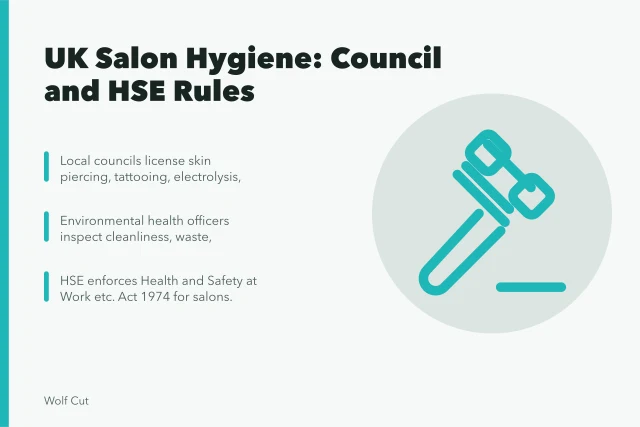
One more difference is the regulator map. The Health and Safety Executive (HSE) covers workplace safety and COSHH in Northern Ireland, but some environmental health functions sit with local councils. Belfast City Council is your main point of contact for hygiene inspections, registration and public health complaints.
If you are unsure who to ask, start with the council and ask which department owns your query.
Qualifications: UK and Irish awards recognised in Belfast salons
Belfast sits close to the border, and many stylists train on one side and work on the other. That means salons here regularly see both UK and Irish hairdressing qualifications. UK awards come from Ofqual-regulated awarding bodies such as City & Guilds and VTCT.
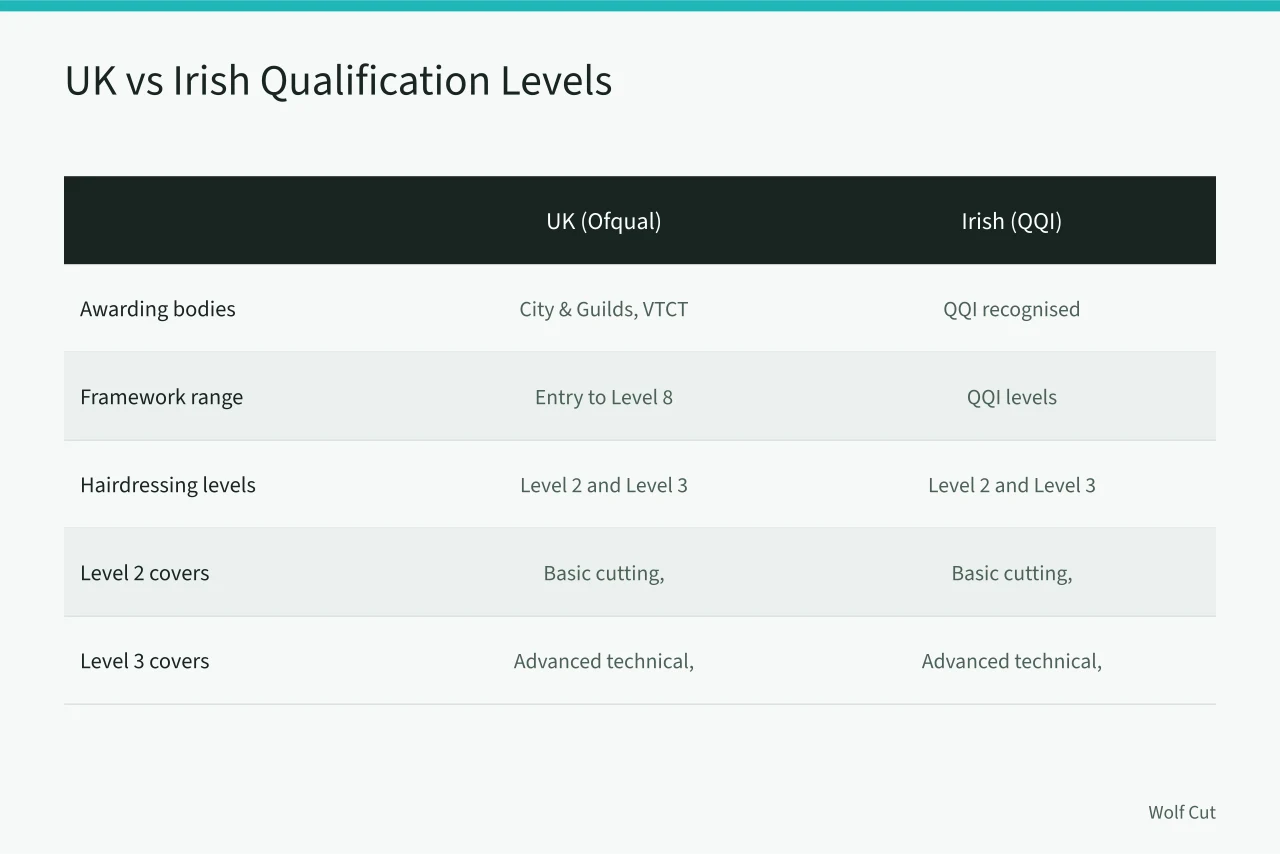
Irish awards come from Quality and Qualifications Ireland (QQI) and its recognised providers. Both can be valid for employment, but you need to know what level each one sits at.
Qualification levels are the common language. The UK framework runs from Entry level to Level 8, and hairdressing qualifications typically sit at Level 2 and Level 3. Level 2 covers basic cutting, colouring and client care. Level 3 adds more advanced technical work and often supervisory duties.
You can compare UK and Irish awards using the What qualification levels mean: Overview - GOV.UK guidance, which explains what each level represents.
When you hire, ask for the certificate and the awarding body. Check the level, not just the title. A Level 3 Irish award and a Level 3 UK award should cover similar ground, but the units may differ.
If a stylist is moving from a junior role to a senior chair, map their units against your salon's tasks. This is also useful for insurance, because some policies ask for evidence of competence.
Apprenticeships are another route. In Northern Ireland, apprenticeships are administered through the Department for the Economy, and hairdressing apprenticeships combine on-the-job training with a recognised qualification. If you take on an apprentice, you will need to work with a training provider and release them for off-the-job learning.
The paperwork is similar to GB, but the funding and oversight bodies are Northern Ireland ones.
For continuing professional development, both UK and Irish short courses are accepted. Keep certificates for colour, chemical straightening and any advanced cutting. These records help if a client complains or an insurer asks questions. They also support your salon's reputation for safe practice.
Licensing and environmental health duties for Belfast salons
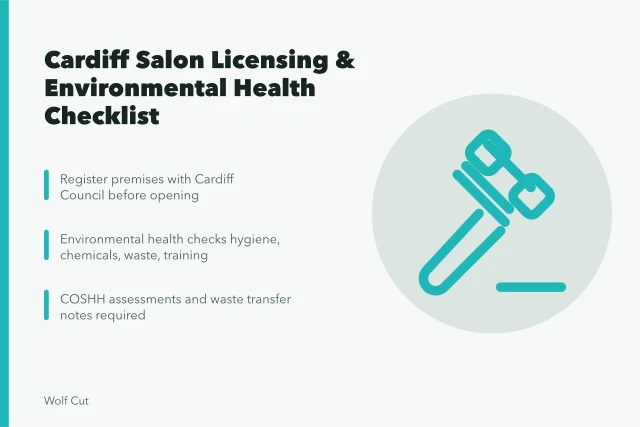
Belfast City Council is the licensing and environmental health authority for salons in the city. If you open a new salon or take over an existing one, contact the council early. You may need to register the premises, and you will certainly be subject to hygiene inspections.
The council also handles complaints about noise, waste and public health matters. To find the right department, use the Find your local council - GOV.UK tool and select Belfast.
Environmental health officers inspect salons for cleanliness, waste disposal, pest control and water supply. They will look at how you clean tools, how you store chemicals and how you manage sharps.
A good starting point is our scissor cutting techniques compared, which sets out a one-way tool path from dirty to clean. Inspectors are not looking for perfection, but they are looking for a system you can explain.
Registration is not the same as a licence. Some activities, such as piercing or certain skin treatments, need a separate licence. Hairdressing itself is generally not licensed in Northern Ireland, but the premises must still meet health and safety and environmental health standards.
If you are unsure, ask the council whether your specific services need a licence. Do not assume that a GB licence covers you here.
Waste is a common inspection point. Hair, foil, colour tubes and chemical waste must be segregated and collected by a licensed waste carrier. You should keep waste transfer notes. Environmental health officers may ask to see them.
If you use a mobile service, you still have a duty to dispose of waste correctly, and you should not put chemical waste in domestic bins.
Health and safety duties also apply. You must carry out a risk assessment, provide training, and control exposure to hazardous substances under COSHH. HSE is the enforcing authority for most workplace safety matters in Northern Ireland, while the council handles public health and hygiene. Keep your risk assessments written down and review them when you change products or processes.
Product and chemical regulations that cross the border
Belfast salons often buy products from both UK and Irish suppliers. That is convenient, but it means you need to check that each product is compliant for use in Northern Ireland. Cosmetic products are regulated under a UK-wide framework, but the Northern Ireland Protocol has created some differences for goods moving into Northern Ireland from Great Britain.
In practice, this can affect labelling, notifications and the responsible person for a product.
If you buy from a GB supplier, check that the product is intended for the Northern Ireland market. Some products may need a UK responsible person and a Northern Ireland-specific notification.
If you buy from an Irish supplier, the product should already meet EU-derived rules that apply in Ireland. The safest approach is to ask your supplier for a safety data sheet and confirmation that the product can be lawfully sold in Northern Ireland.
Chemical treatments such as colour, bleach and straightening products carry extra duties. You must follow the manufacturer's instructions, carry out patch tests where required, and store products safely. COSHH assessments should be in place for every hazardous substance you use.
If you mix products, make sure you understand the risks and record your assessment. Our article on haircut guideline covers the equipment side, but chemicals need their own controls.
Disposal matters too. Leftover colour, developer and other chemicals should not go down the sink in large quantities. Use a licensed waste contractor and follow council guidance. If you are unsure, ask Belfast City Council's environmental health team. They would rather answer a question than investigate a pollution incident.
Insurance, data protection and client records in Belfast
Insurance is a commercial necessity, not a legal requirement, but most salons carry it. Public liability and professional indemnity cover are standard. If you employ staff, you need employer's liability insurance by law.
Check that your policy covers the services you actually offer, including any chemical treatments. If you work across the border, tell your insurer, because your policy may not automatically cover work in Ireland.
Data protection is a legal duty. If you keep client records, you are a data controller under the UK GDPR. That means you must have a lawful basis for processing, keep data secure, and respect client rights. The UK GDPR guidance and resources from the Information Commissioner's Office explains your obligations.
For a salon, the main points are consent for marketing, secure storage of consultation records, and a retention policy.
Client records should include consultation notes, patch test results, colour formulas and any adverse reactions. Keep them accurate and up to date. If a client asks to see their records, you must respond within one month.
If you use a booking system, check that it complies with UK GDPR and that data is stored securely. Do not keep records longer than necessary. A common retention period is six years for insurance purposes, but check with your insurer.
Our how to build a low taper covers consent, access and records for each client. Use it to make sure you capture the right information before you start cutting. If a client has a reaction, record it and report it if required.
Our article on clipper cutting guide explains when to report and how to manage lice, broken skin and other issues.
Practical steps for salons blending both systems
If you are setting up or running a Belfast salon that draws on both UK and Irish practice, work through these steps in order.
- Register with Belfast City Council and confirm which services need a licence.
- Check every stylist's qualification level and keep copies of certificates.
- Write COSHH assessments and risk assessments for all products and processes.
- Set up a waste contract with a licensed carrier and keep transfer notes.
- Review your insurance to cover all services and cross-border work.
- Put a UK GDPR-compliant client record system in place.
- Train staff on your cleaning, consultation and reporting procedures.
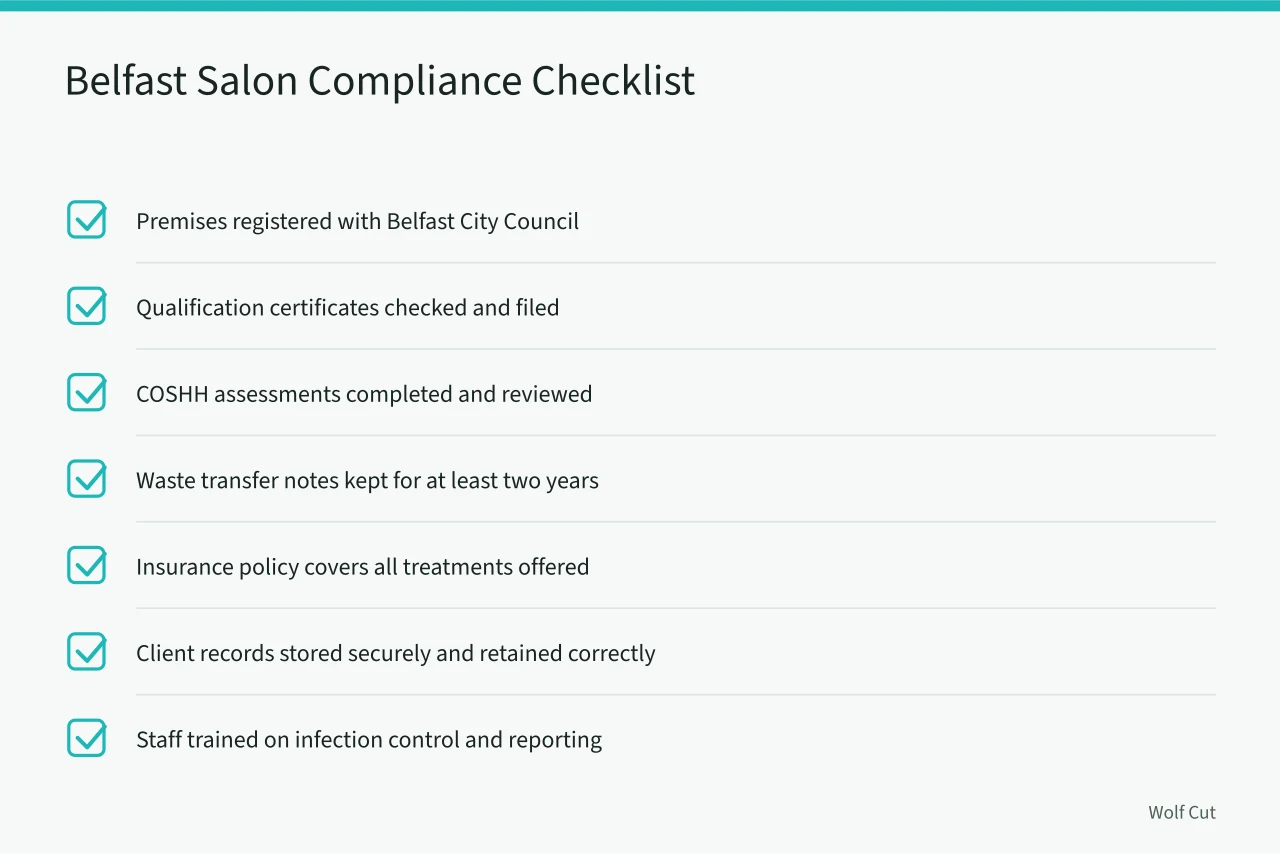
Use this checklist to keep on top of the main duties:
- Premises registered with Belfast City Council
- Qualification certificates checked and filed
- COSHH assessments completed and reviewed
- Waste transfer notes kept for at least two years
- Insurance policy covers all treatments offered
- Client records stored securely and retained correctly
- Staff trained on infection control and reporting
A worked example helps. Suppose you hire a stylist with an Irish Level 3 award and a UK Level 2 award. You map their units against your salon's services. You find they can do advanced colour but need a refresher on your patch test procedure.
You record the gap, provide training, and update their file. You also check your insurance covers their work. That is the blend in practice: recognise both systems, then fill the gaps.
For day-to-day operations, use our clipper cutting problems to manage blood exposure and cleanup between clients. Keep a folder with your registration, insurance, COSHH assessments and training records.
If an inspector or insurer asks, you can show your system quickly. That is what blending UK and Irish rules really means: knowing which rule applies and being able to prove you follow it.
Common questions
Do I need a licence to cut hair in Belfast? No, hairdressing itself is not licensed in Northern Ireland. However, your premises must be registered with Belfast City Council and meet environmental health and health and safety standards. Some additional services, such as piercing, do need a separate licence.
Are Irish hairdressing qualifications accepted in Belfast? Yes, Irish awards from QQI-recognised providers are generally accepted. Check the level and the units against the role. You can compare levels using the GOV.UK qualification levels guidance. Keep a copy of the certificate for your records.
Who inspects salons in Belfast? Belfast City Council environmental health officers inspect salons for hygiene, waste and public health. The Health and Safety Executive covers workplace safety and COSHH. Both can visit, so keep your records ready.
Can I use products bought in Ireland in my Belfast salon? Often yes, but check that the product is compliant for the Northern Ireland market. Ask your supplier for a safety data sheet and confirmation. If you buy from Great Britain, check for any Northern Ireland-specific labelling or notification requirements.
How long should I keep client records? A common period is six years for insurance purposes, but this is not a fixed legal rule. Check with your insurer and follow UK GDPR principles: keep data no longer than necessary and store it securely.
Do I need different insurance for cross-border work? Possibly. Tell your insurer if you or your staff work in Ireland. Your policy may not automatically cover work outside Northern Ireland, so you may need an extension.