Features
Part of Moisture control through home styling: the haircut finishing guide
Styling the same layered haircut three ways: a worked case, updated for 2027
Layered haircut case comparing natural air finish, diffuser finish, and polished blowout with the same cut, measured products, technique records, and results.
What to take away
- The fictional client received one haircut and three deliberately different finishes.
- Photos used the same parting, lighting, clothing, and camera position for fair comparison.
- Air finish showed natural fall; diffusing increased grouped movement; round brushing added polish.
- Product amount, drying time, heat approach, and client effort were recorded.
- The client chose a hybrid home plan after comparing results, not before.
This fictional case shows how finishing can change the appearance of one layered haircut without changing its structure. It does not prescribe a technique for every person or hair condition.
Client and cut brief
Mara had shoulder-length, medium-density hair with fine-to-medium strands, a loose mixed wave, a straighter crown, and lightened ends. She wanted movement near the cheek and less triangular weight, but she usually spent no more than twelve minutes on drying.
The cut used a stable perimeter, face framing below the cheekbone, and moderate long layers. The stylist checked the shape wet and again after a neutral low-tension dry. No cutting occurred between the three recorded finishing trials. The method under test is finishing a layered cut honestly.
Control the comparison
Each trial began after the same cleansing and conditioning routine on a different appointment day. The stylist used the same parting, cape color, chair height, background, camera distance, and four views. Weather and elapsed drying time were noted. The trials follow three of the four drying methods compared.
Product doses were weighed for the record. That was not necessary for ordinary home use, but it prevented an unmeasured extra handful from deciding the comparison.
Finish 1: guided air drying
The stylist blotted excess water, applied a small amount of lightweight leave-in product to the ends, established the parting, and arranged the face frame. Mara scrunched the wave areas once, then left the hair undisturbed.
The result showed the truest everyday root fall. The crown sat flatter, the lower wave appeared broad and irregular, and the face frame separated into two main groups. The perimeter remained full. Total active work was six minutes, while elapsed drying took much longer.
Strengths:
- easiest routine;
- lowest powered-heat exposure;
- honest view of natural grouping;
- full-looking perimeter.
Limits:
- slow elapsed drying;
- limited crown lift;
- inconsistent wave where hair rubbed against clothing;
- damp interior after the surface felt dry.
Finish 2: controlled diffusing
The stylist used the same leave-in amount plus a measured light gel. Sections were brought toward the diffuser with low disturbance. Roots and the dense back interior received deliberate attention. The hair was allowed to cool before the cast was softened with dry hands.
The result showed smaller, clearer wave groups and more side volume. The face frame curved away from the cheek without a round brush. The crown gained modest lift, though one straighter area remained flatter than the rest.
Strengths:
- stronger wave definition;
- manageable active time;
- little brush tension;
- movement remained consistent with the layered design.
Limits:
- required product distribution practice;
- high airflow separated the front during an early test;
- the mixed crown pattern did not become uniformly wavy.
Finish 3: polished round-brush blowout
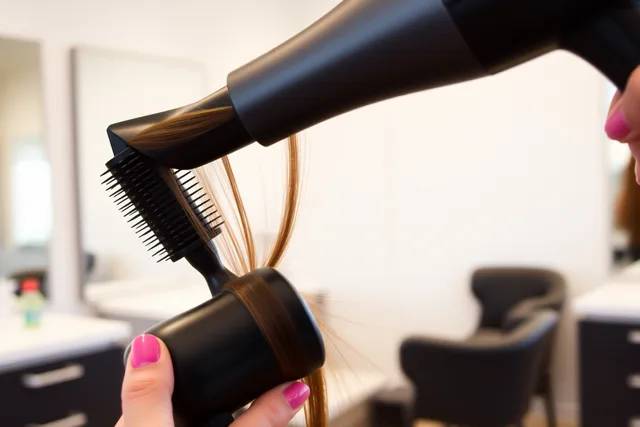
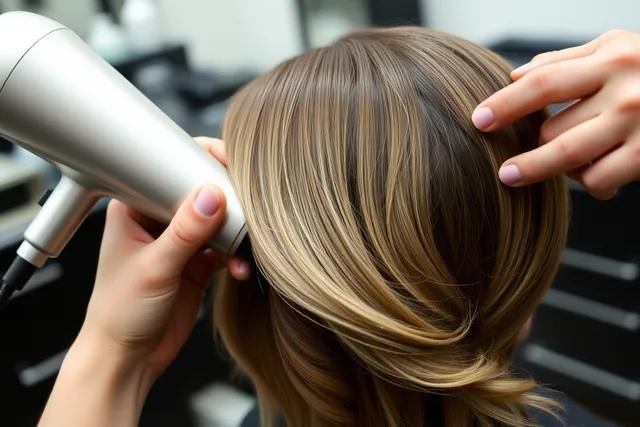
The stylist applied heat protection as directed and a small root-support product. Hair was divided into brush-sized sections. Roots were directed for balanced lift, the face frame moved away from the face, and the perimeter received one broad bend. Each section cooled before release. Cooling in position is one of the controls named in the haircut finishing guide.
The result looked smoother and longer. Crown volume was highest, and the layer edges reflected more light. Natural wave grouping was least visible. The method took twenty-eight active minutes, more than twice Mara's normal budget.
The current UK standard for assistants who dry and style hair with basic techniques calls for even moisture, suitable products and tools, methodical work, maintained tension, client comfort, and airflow and temperature that minimize damage risk. Those controls helped structure the trial even though a qualified stylist performed the fictional service.
Strengths:
- smooth surface and directed shape;
- strongest root lift;
- clear polished face framing;
- predictable photo result.
Limits:
- longest active time;
- more coordination, heat, and brush tension;
- natural wave was hidden;
- difficult for the client to repeat fully.
Results table
Air finish
- Active time
- 6 minutes
- Root lift
- Low
- Natural grouping
- High
- Brush tension
- None
- Home fit
- Strong
Diffuser finish
- Active time
- 12 minutes
- Root lift
- Moderate
- Natural grouping
- High and more defined
- Brush tension
- None
- Home fit
- Strong with practice
Blowout
- Active time
- 28 minutes
- Root lift
- High
- Natural grouping
- Low
- Brush tension
- Moderate
- Home fit
- Low as full routine
These values describe the fictional trial only. They are not performance promises for other hair, products, tools, or weather.
Choose the home plan
Mara preferred the diffuser result but wanted the polished front. Her home plan became partial air drying, eight minutes of diffusing at roots and wave sections, then one controlled brush pass through the fringe and face frame. Where such a routine goes wrong is covered in hair finishing problems.
The stylist reduced the plan to four sections and marked the approximate product dose on Mara's instruction card. A second card showed a heat-free day with clips for root placement.
For hair that is fragile or being managed during hair loss, the American Academy of Dermatology's hair-loss care tips recommend gentle handling, microfiber wrapping to reduce blow-dry time, and the lowest blow-dryer heat setting. Mara did not have diagnosed hair loss, so the source informed conservative technique rather than a medical conclusion.
What the stylist learned
The haircut supported all three finishes, but each revealed different evidence. Air drying showed the natural crown fall. Diffusing showed that the face frame could join the wave pattern. Round brushing showed polish but made the layered weight look lighter than it did without tension. The same illusion complicates repair work, as a graduated bob balance case shows.
The record retained all three photo sets, product amounts, tools, active times, heat approach, and client preference with consent. At the next cut, the diffuser result would be the main design reference because it matched normal life.
Common questions
Did the stylist recut the hair between finishes?
No. The controlled comparison kept the haircut unchanged.
Which finish was objectively best?
None. The diffuser-plus-front-brush hybrid best matched this fictional client's priorities and time.
Why record active and elapsed time separately?
Air drying can require little labor but a long wait. The distinction makes routine planning more honest.
Can three finishing photos prove a haircut will work at home?
No. They improve the discussion, but the client's tools, skill, environment, products, and daily routine still affect the result.