Guides
Part of Moisture control through home styling: the haircut finishing guide
Finishing a layered haircut without flattening its shape
Layered haircut finishing method using controlled moisture, root direction, airflow, moderate tension, restrained product, cooling, movement checks, and records.
What to take away
- Decide what the layered cut should do before selecting a brush or product.
- Dry roots for direction, mid-lengths for shape, and ends for the intended edge.
- Use tension to guide hair, not to stretch every section into temporary obedience.
- Stop before polishing to inspect weight, connection, and movement.
- Finish one side with a method the client can realistically repeat.
A layered haircut should show its movement when the client turns, lifts the hair, and lets it settle. The finishing process should make that structure legible. This method creates a controlled salon result while leaving enough honesty to evaluate the cut. The general principles sit in the haircut finishing guide.
1. State the intended result
Choose a primary result such as airy separation, rounded volume, smooth movement, or supported natural curl. Add no more than one secondary goal. Trying to maximize smoothness, root lift, curl definition, and gritty separation at once usually leads to conflicting technique and too much product. Which of the named layered shapes is on the head narrows the choice.
Choose the primary result
What is the intended result?
Airy separation -> light product, vent brush
Rounded volume -> round brush, root lift
Ask how the client will wear the cut most often. Confirm parting, fringe direction, preferred volume, time, heat tolerance, and home equipment.
2. Prepare even moisture
Blot excess water without rubbing. Detangle gently from ends upward. Apply a heat-protection or styling product only according to its directions and the service plan. Distribute it through the zones that need it instead of concentrating everything near the front.
Bring the hair to an even workable dampness. Rewet a section that dried while waiting rather than applying extra heat to force it back into shape.
3. Map the section order
Use sections that match the density and brush or diffuser size. Begin where drying time or growth pattern demands attention. A strong fringe split may need early root direction. A dense nape may need a head start so the surface and interior finish together.
Keep completed sections separate from wet hair. The UK National Occupational Standard for drying, styling, and finishing hair covers consultation, hair and scalp analysis, even moisture, product choice, sectioning, root-to-tip blow-drying, even tension, suitable temperature, client confirmation, records, and aftercare. It supplies a professional process framework, though the salon must still follow its governing law and each maker's instructions.
4. Establish root direction
Dry the roots in the direction needed for the design. For lift, move the root away from its resting position and allow it to cool with support. For a flatter crown, follow the head shape without pressing hot equipment against the scalp.
Do not overdirect every layer upward. That can create impressive temporary volume while hiding where the cut naturally collapses. Work with smaller directional changes and compare both sides.
5. Shape mid-lengths with moderate tension
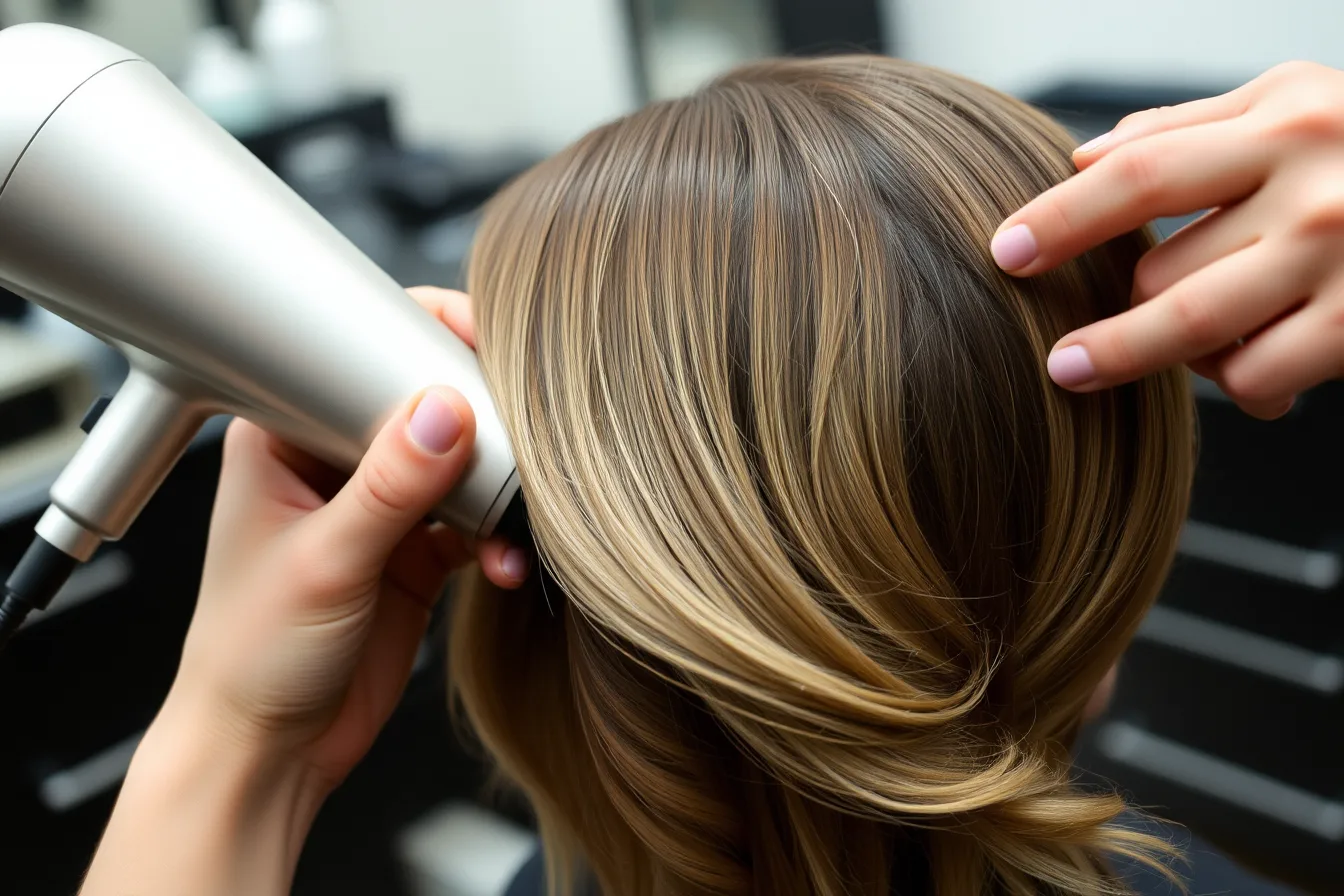
Choose a flat, vent, or round brush based on the planned finish. Keep the nozzle moving and align it with the section. Maintain enough tension for control without bending the client's head, stretching fragile hair, or trapping the brush.
On a rounded layer, follow the arc and let the ends travel through the brush. For looser separation, use fingers or a vent brush and allow small groups to remain distinct. For natural curl, avoid repeated brushing that breaks forming groups.
6. Decide what the ends should say
Layered ends can turn under, flick away, remain neutral, or separate. Use a brief, deliberate pass. Repeatedly rolling every end under can turn an open layered design into a uniform rounded set.
Cool the section in its intended position. Release it fully before deciding whether it needs another pass. Hair that looks uneven under brush tension may settle correctly once free.
7. Run the no-tension check
Switch off the dryer. Remove clips and brushes. Move the hair lightly at the roots and let it fall. Check:
No-tension check
- crown balance at rest;
- left and right layer movement;
- connection between front, side, and back;
- perimeter density;
- pieces that separate only because they are still damp;
- areas held in place only by brush bend.
Correct the cut only after deciding that the structure, not the drying method, caused the issue. The structural faults worth ruling out first are collected in wolf cut layer problems. Use conservative refinements on dry hair and cross-check in the client's normal posture. Which refinement to reach for is compared in blunt, point, slide, and channel work.
8. Add restrained finishing product
Choose the smallest amount needed for the final job. A light serum may reduce surface roughness, a paste may separate ends, and a spray may hold root direction. Do not stack products simply because they are available.
Apply by hand or at a controlled distance as directed. Keep aerosols away from eyes and ignition sources, and use suitable ventilation. Recheck movement after application.
The HSE's key messages on hairdressing products put ventilation first among its practical steps. Some hair sprays can make asthma worse. Frequent contact with water and shampoo can irritate skin toward dermatitis.
9. Build a client version
Demonstrate a shorter home sequence with fewer sections. Identify the one root area, one brush direction, and one product amount that make the biggest difference. Show a second result using air drying or a diffuser if that reflects ordinary life.
Record what was used and how the cut responded. At the next visit, ask what the client could reproduce before repeating the same salon finish.
Common questions
Should every layer be round-brushed?
No. Select the tool and movement by the intended shape. Uniform round brushing can erase deliberate separation.
When should the haircut be refined?
After the hair is dry, released from tension, and allowed to settle in the planned wear pattern.
Can product fix a weak layer connection?
It may hold or separate the area temporarily, but it does not change the underlying cut.
Why cool each shaped section?
Cooling helps the temporary shape settle before the section is released and evaluated.