Maintenance
Part of Moisture control through home styling: the haircut finishing guide
Blow-dry heat, airflow, tension, and product checklist, explained properly
Blow-dry checklist for consultation, dryer inspection, electrical safety, moisture, heat, airflow, sectioning, brush tension, product use, and records.
What to take away
- Inspect the dryer, cord, plug, filter, attachments, and station before use.
- Set heat and tension from hair condition, not from appointment speed.
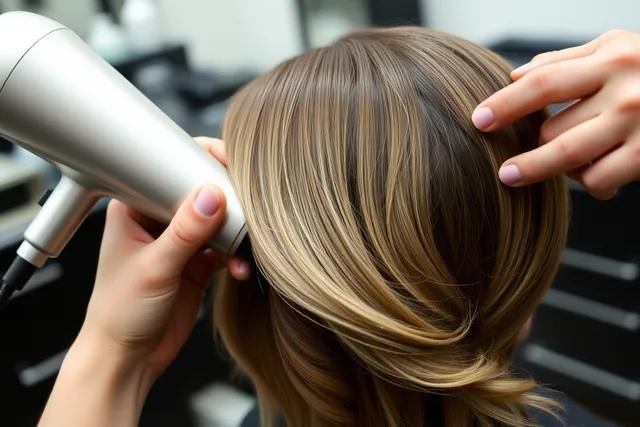
- Keep the dryer moving and direct airflow for the intended finish.
- Read cosmetic labels and control aerosols, product dose, and ventilation.
- Release the hair from brush tension before approving the haircut shape.
This checklist supports a salon blow-dry service after a haircut. It assumes the method itself has been chosen from the four drying methods compared. Adapt it to the equipment manual, product directions, salon procedure, client needs, electrical rules, and occupational-safety requirements that apply to the workplace.
Consultation and assessment
- Confirm the client's preferred result and usual drying routine.
- Ask about heat, noise, fragrance, touch, and neck-position tolerance.
- Check curl pattern, density, strand diameter, porosity, elasticity, and growth.
- Note lightened, chemically treated, fragile, tangled, or previously heat-stressed zones.
- Inspect the scalp and postpone or adapt when the service is unsuitable.
- Agree on product categories, tools, approximate time, and a home version.
Do not promise that a salon blowout shows how the haircut will air dry. The reasoning is set out in the haircut finishing guide. If the reference depends on extensive round brushing or hot-tool work, say so before starting. Keeping the structure visible is the subject of finishing a layered cut honestly.
Dryer and station inspection
- Housing, controls, nozzle, diffuser, filter, cord, and plug are undamaged.
- Air intake is clear of hair and dust.
- Required electrical protection is present and the device passes salon checks.
- Cord routing avoids water, hot tools, wheels, and client walkways.
- The dryer rests in a stable holder when not in hand.
- Wet hands and damp towels stay away from plugs, outlets, and switches.
The U.S. Consumer Product Safety Commission explains that hand-supported hair dryers need integral immersion protection to reduce electric-shock risk after water contact. This federal product-hazard information does not replace commercial equipment instructions, electrical codes, inspection duties, or workplace rules. Never test protection by placing a dryer near or in water.
Take a damaged or recalled device out of service. Label it clearly so another worker does not plug it in. How a station runs short of processed equipment is traced in a tool rotation failure.
Moisture and preparation
- Blot dripping hair without rough rubbing.
- Detangle gently from ends upward.
- Bring sections to an even workable moisture level.
- Apply each product according to its stated use and dose.
- Keep waiting sections controlled without pulling the scalp.
- Match section width to density, brush, attachment, and drying capacity.
Heat and airflow
- Begin conservatively and increase only when hair and scalp response support it.
- Reduce heat for fragile, fine, porous, lightened, or sensitized areas.
- Keep the nozzle or diffuser at a useful distance from hair and skin.
- Move airflow instead of concentrating it on one point.
- Direct air root to end when the goal is surface alignment.
- Check dense roots and interior hair rather than judging only the surface.
- Use cooling to set and assess a section before another hot pass.
Ask about comfort throughout. A client should not have to tolerate a burning scalp to obtain a smooth finish.
Brush and tension
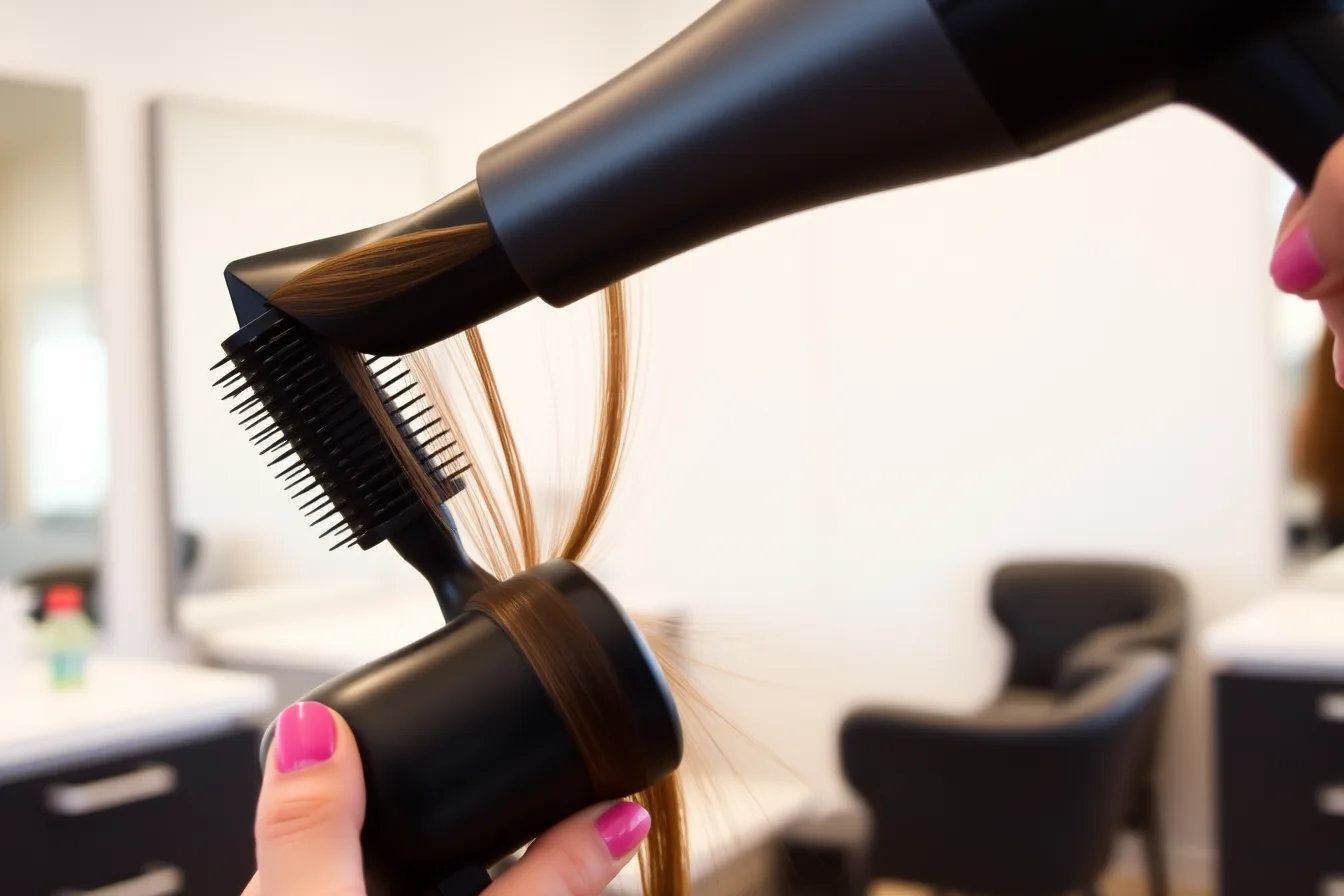
- Select fingers, flat brush, vent brush, round brush, or diffuser for a stated job.
- Use even, moderate tension and a comfortable client position.
- Avoid wrapping a section too thickly around a barrel.
- Keep hair from tangling around a brush or dryer intake.
- Support root direction without dragging fragile lengths repeatedly.
- Release each section and check its natural fall.
- Stop if hair stretches abnormally, breaks, snags, or smells scorched.
Product control
- Read the entire label, including warnings and application directions.
- Check that the product suits the intended area and finish.
- Measure a conservative amount before adding more.
- Keep spray away from eyes, face, flames, and hot ignition sources.
- Use aerosols and sprays with suitable ventilation.
- Close and store containers as directed.
- Stop after irritation, breathing trouble, or another adverse response and follow salon procedure.
FDA consumer guidance on using cosmetics safely advises reading labels, following warnings, keeping containers clean and closed, protecting products from temperature extremes, and using aerosols in well-ventilated areas away from smoking or open flame. Salon staff must also meet workplace, fire, and local requirements.
Shape and release check
- Hair is dry to the level required by the planned finish.
- Roots, interior, surface, and ends have been checked separately.
- The brush, clips, and strong hold are released before haircut assessment.
- Front, profile, back, parting, and movement have been viewed.
- Refinement addresses the cut rather than compensating for a styling choice.
- Final product does not erase the movement the client requested.
Client instruction and record
- Demonstrate a realistic section count and tool direction.
- State product name or category and approximate amount.
- Explain lower-heat and lower-effort options.
- Record attachment, brush, product, heat approach, and hair response.
- Note any discomfort, adjustment, adverse response, or declined technique.
- Confirm satisfaction after the hair settles.
Common questions
Can a stylist use a dryer with a damaged cord if it still runs?
No. Remove damaged electrical equipment from service and follow the inspection or replacement process.
Should the highest heat be used on dense hair?
Not automatically. Sectioning, water removal, airflow, distance, motion, hair condition, and equipment instructions all affect the choice.
Can hairspray be used next to a hot tool?
Read all labels and fire controls. Keep aerosols away from flames and ignition sources and use suitable ventilation.
When is the haircut ready to assess?
After the relevant areas are dry, released from tension, and allowed to settle in the intended wear pattern.