Maintenance
Part of Built around a one-way tool path: the salon sanitation guide
Blood exposure and cleanup anchor the station turnover checklist
Haircut station turnover checklist covering clean and dirty zones, tools, linens, touch surfaces, blood exposure response, documentation, and release.
What to take away
- Turnover starts by separating used items, not by sweeping around them.
- Every reusable tool must complete the process required for that item.
- A cut or blood contact switches the team from routine turnover to incident response.
- Staff should know who provides first aid, contains waste, reports, and releases the station.
- A signed checklist helps only when it reflects what workers can complete between clients.
Use this checklist as a salon operating template, then adapt it to the governing cosmetology rules, product labels, equipment manuals, and workplace safety plan. A generic list cannot establish the law in every state or city. The framework behind it is the salon haircut sanitation guide.
Opening check
- Handwashing sink is accessible and stocked.
- Clean tools are dry, protected, and clearly separated from used items.
- Disinfectant is within date and prepared as its label requires.
- Measuring device, timer, gloves, waste containers, and spill supplies are present.
- Clean capes, towels, and neck barriers are protected.
- Sharps container is upright, accessible, and below its fill limit.
- Clipper cords, plugs, blades, guards, shears, combs, and brushes pass inspection.
- Staff know who holds incident-response and opening responsibilities.
Do not open a station with a damaged tool, unidentified spray bottle, stale solution, overflowing laundry bin, or blocked sink. Correct the condition and record the action. The per-tool sequence behind it is in cleaning, disinfecting, and storing tools.
Before seating each client
- Chair, headrest, counter, trolley, and other required touch surfaces are ready.
- The tool set came from protected clean storage.
- A clean cape and required neck barrier are available.
- Existing scalp cuts, sores, irritation, or suspected infestation have been discussed privately.
- The service can proceed without contacting broken skin or exceeding staff scope.
State rules may name exact tools and steps. Wisconsin's cosmetology sanitation rule is one example.
It requires scissors, razors, clipper blades, tweezers and combs to have organic material removed with soap and water before disinfection. Brushes must undergo that step. It requires a separate container for soiled tools.
That example does not replace the rules where a particular salon operates.
Between-client turnover
Contain first
- Close, secure, or place sharp tools without reaching across an exposed edge.
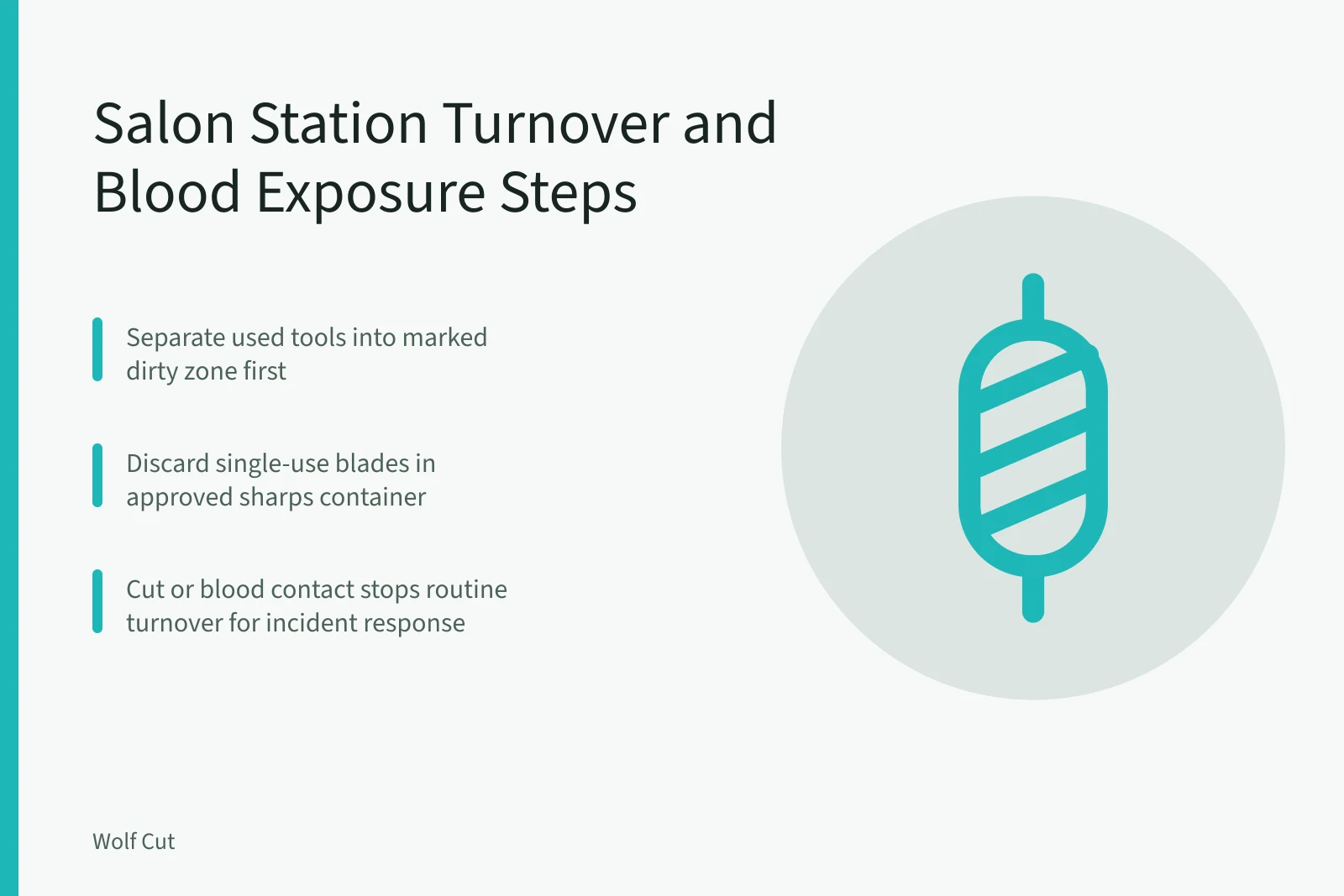
- Discard every single-use blade in the approved sharps container.
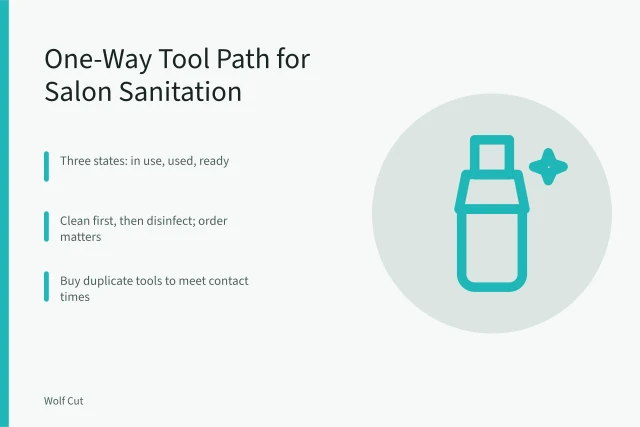
- Move all reusable used tools into the marked dirty zone.
- Put used linens in their container without shaking them.
- Remove loose hair without contaminating ready tools or supplies.
Process the tools
- Remove hair and visible residue from teeth, hinges, seams, and guards.
- Clean compatible items with the specified detergent and method.
- Apply the correct disinfectant at its labeled concentration.
- Start contact time only after coverage and label conditions are met.
- Keep the item wet for the full required period.
- Complete any required rinse, drying, lubrication, and inspection.
- Move only completed, dry items into protected clean storage.
Reset the station
- Process the chair, headrest, controls, counter, handles, tool mat, and sink points as required.
- Replace barriers and supplies without touching them with contaminated gloves.
- Perform hand hygiene at the required points.
- Confirm that no used tool remains on the clean side.
- Mark the station ready only after every step is complete.
If there is a cut, blood contact, or sharps injury
Routine turnover stops. Keep the response calm and protect privacy.
Blood or sharps exposure response
- Stop service, set tool down safely
- Attend to injured person within role
- Put on required protective equipment
- Contain disposables, isolate reusables
- Clean and decontaminate surfaces
- Remove PPE and perform hand hygiene
- Report immediately to designated person
- Follow exposure-control plan and release after check
- Stop the service and set down the tool safely.
- Attend to the injured person within training and role.
- Put on the protective equipment required by the plan.
- Contain contaminated disposable items and isolate reusable items.
- Clean and decontaminate affected surfaces using the specified procedure.
- Remove protective equipment safely and perform hand hygiene.
- Report the event immediately to the designated person.
- Follow the exposure-control plan for evaluation, documentation, and follow-up.
- Release the station only after an authorized check.
OSHA's bloodborne pathogens quick reference explains core employer duties when occupational exposure to blood or other potentially infectious materials is reasonably anticipated, including exposure controls and a sharps injury log for covered employers. Applicability depends on the work and circumstances. The salon should obtain qualified safety guidance instead of assuming every rare nick either triggers or escapes the standard.
Do not delay an exposure report while staff debate fault. Do not ask the client or worker to disclose private medical information in front of others. Do not return the involved tool to the routine tray.
Closing check
- Every used tool is accounted for and processed or quarantined.
- No single-use blade remains outside the sharps container.
- Clean storage is closed and uncontaminated.
- Laundry and waste are handled according to the written procedure.
- Floors, sinks, touch surfaces, and cleaning equipment are completed.
- Solutions are discarded, retained, or replaced exactly as directed.
- Incidents, tool damage, shortages, and corrective actions are logged.
- The next shift can distinguish every item's status without guessing.
Supervisor release questions
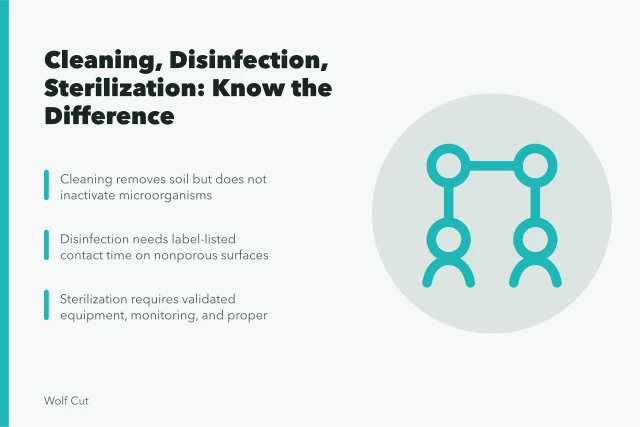
Ask three questions before sign-off: Did required contact times fit the appointment flow? Did any item cross from dirty to clean without a completed process? Did the team lack enough tools, supplies, time, or training? Answering the second question honestly requires the difference between the three words to be clear to everyone on shift.
A repeated missed box is evidence of a system problem. Change capacity, layout, scheduling, purchasing, or training and then confirm that the fix works in practice. The per-service version of the same discipline is the clipper service setup and finish checklist.
Common questions
Should staff sweep before moving used tools?
No. Contain used tools and protect the clean zone first so hair removal does not spread contamination onto ready items.
Can the next client sit while tools are still processing?
Only if a separate completed tool set and fully released station are ready. Never shorten a required step to recover time.
Is every small client nick an OSHA exposure incident?
Applicability depends on the exposure route, work duties, and governing standard. Follow the written plan and obtain qualified guidance.
Who should release a station after blood contamination?
The salon's written plan should name a trained, authorized person and objective release criteria.