Features
Leeds and Liverpool, how student demand shapes wolf cut salon pricing
Leeds Liverpool wolf cut pricing in the UK: how student demand, independent salons and term-time booking cycles shape what northern stylists charge.
What to take away
- Leeds Liverpool wolf cut pricing sits in a broad student band, roughly £28 to £55 depending on city, salon type and stylist seniority.
- Leeds has the larger and steadier student base, so independent salons there compete harder on price and hold fewer peak slots open.
- Liverpool's student demand is more concentrated around the start of term and around city-centre independents with strong social media followings.
- Chains discount predictably and train juniors to cut to a house spec; independents charge more but adapt the cut to crown shape and side weight.
- Term times drive bookings: freshers' weeks and January returns fill diaries, while late summer and Christmas holidays go quiet in both cities.
- Set student rates against your own wage, product and rent costs rather than copying a competitor's window card.
Student populations in Leeds and Liverpool and salon demand
Leeds and Liverpool both run on students, but not in the same way. Leeds carries a large, spread-out student population across several campuses and districts, which keeps demand for trend-led cuts ticking over all year. Liverpool's student base is smaller and more clustered around the city centre and the two main universities, so demand spikes harder and falls further.
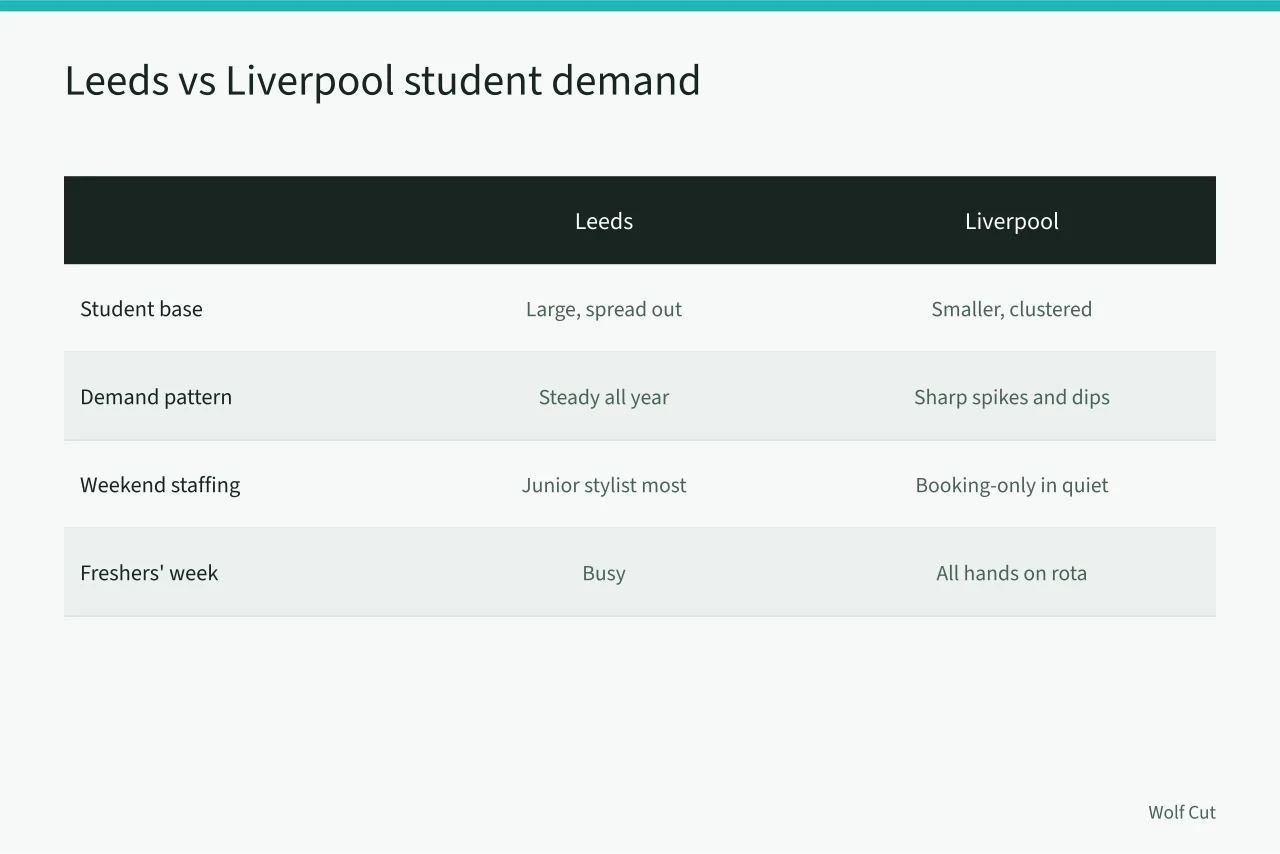
For a UK salon, that difference decides how you staff a Saturday. In Leeds you can justify a junior stylist on the floor most weekends because someone will always want a walk-in trim. In Liverpool you may need a booking-only model in the quiet weeks and all hands on the rota in freshers' week.
The wolf cut suits this market. It is visible, it photographs well, and it grows out without needing a fortnightly visit. Students ask for it by name after seeing it on social feeds, so the consultation is often shorter than for a precision bob. Our wolf cut guide covers the crown and side-weight decisions that come up most.
ONS education and childcare data tracks the participation and enrolment picture that underpins this demand, and it is the sensible starting point when you are forecasting a UK term ahead rather than a week ahead.
How student spend shapes wolf cut pricing in each city
Student spend is not the same as low spend. It is spend with a hard ceiling and a strong pull towards value. A student will pay more for a cut that lasts and styles easily, and less for anything that needs daily heat work to look right.
In Leeds, the sheer number of salons within a short bus ride of the universities keeps a lid on headline prices. Independents know a student can walk ten minutes and find another quote. That competition pushes salons to bundle: cut plus a rough-dry finish, or a student rate on Tuesday to Thursday.
In Liverpool, price competition is less about volume and more about identity. Salons with a clear look and a strong feed can charge above the Leeds average because students are buying the stylist's eye, not just the cut. The wolf cut is a style-led purchase, so this effect is stronger here than it would be for a basic trim.
Both cities feel the same pressure on costs. Rent, energy and product have all moved, and ONS inflation and price indices are the reference point most UK owners use when they decide whether to hold a rate or raise it. Holding a student price through a cost rise is a choice, not a neutral act.
Independent salons versus chains in both markets
Independent salons and chains treat the wolf cut very differently, and that shows in the price and the result.
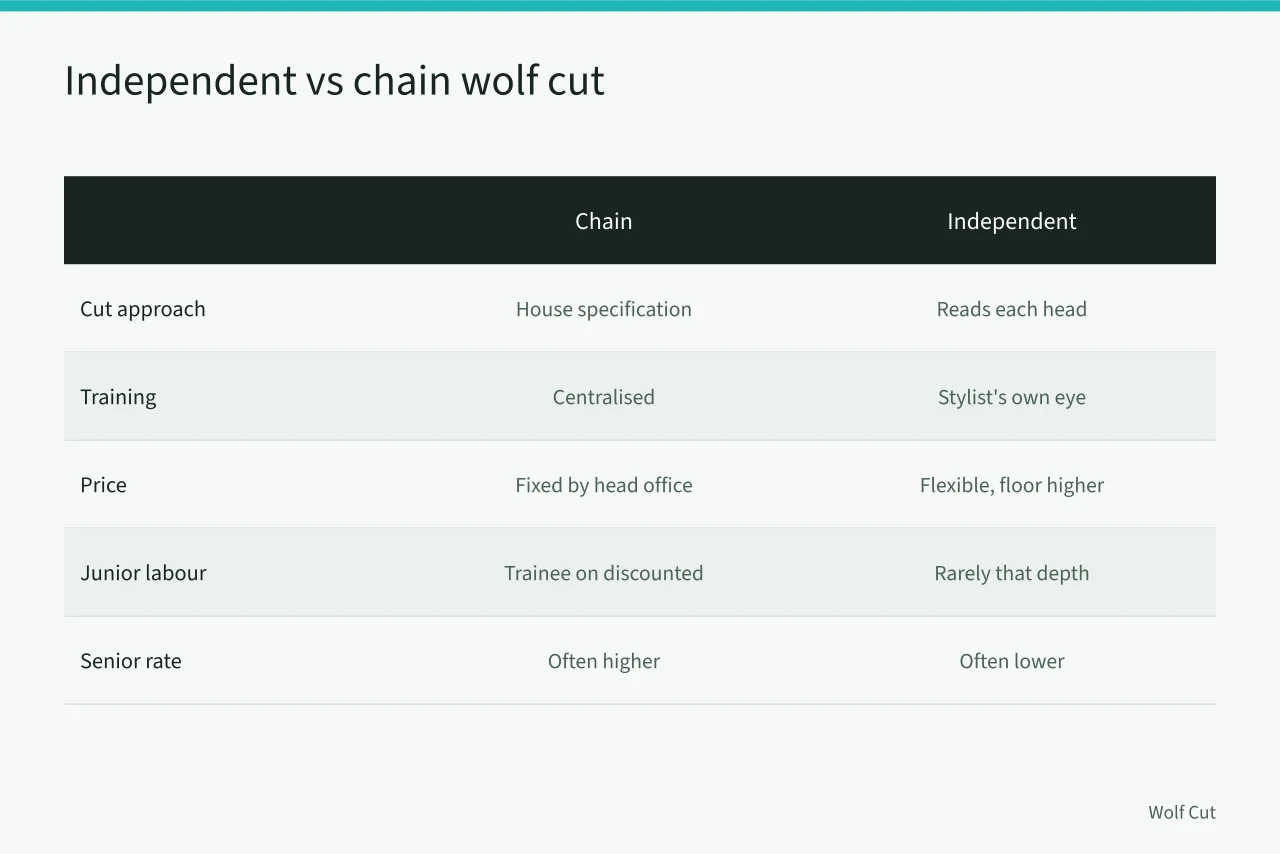
A chain typically works to a house specification. The cut is standardised, the training is centralised, and the price is fixed by head office with a student discount built in. That is efficient and predictable.
It is also less flexible: if your hair has a strong cowlick at the crown or heavy weight through the sides, the house spec may not adapt.
An independent stylist can read the head in front of them. They can decide how much to thin the sides, how short to take the fringe, and whether the back should be left fuller. This is where the wolf cut checklist earns its keep, because the consultation is doing the work that a chain does with a rulebook.
Chains also absorb junior labour differently. They can put a trainee on a discounted wolf cut under supervision, which keeps the entry price low. Independents rarely have that depth of staff, so their floor price is higher but their senior price is often lower than a chain's senior rate.
Workforce context matters here too. ONS employment and labour market data shows how tight the wider UK labour picture is, and salon owners recruiting stylists in either city will recognise the pattern: fewer experienced hands, longer gaps between hires.
If you are mapping the cut itself before you price it, the customized wolf cut planning method is a useful way to time each section.
Typical price ranges and discount structures compared
The table below reflects the shape of the market in both cities rather than any single salon's card. Treat the bands as a starting frame and adjust for your own costs.
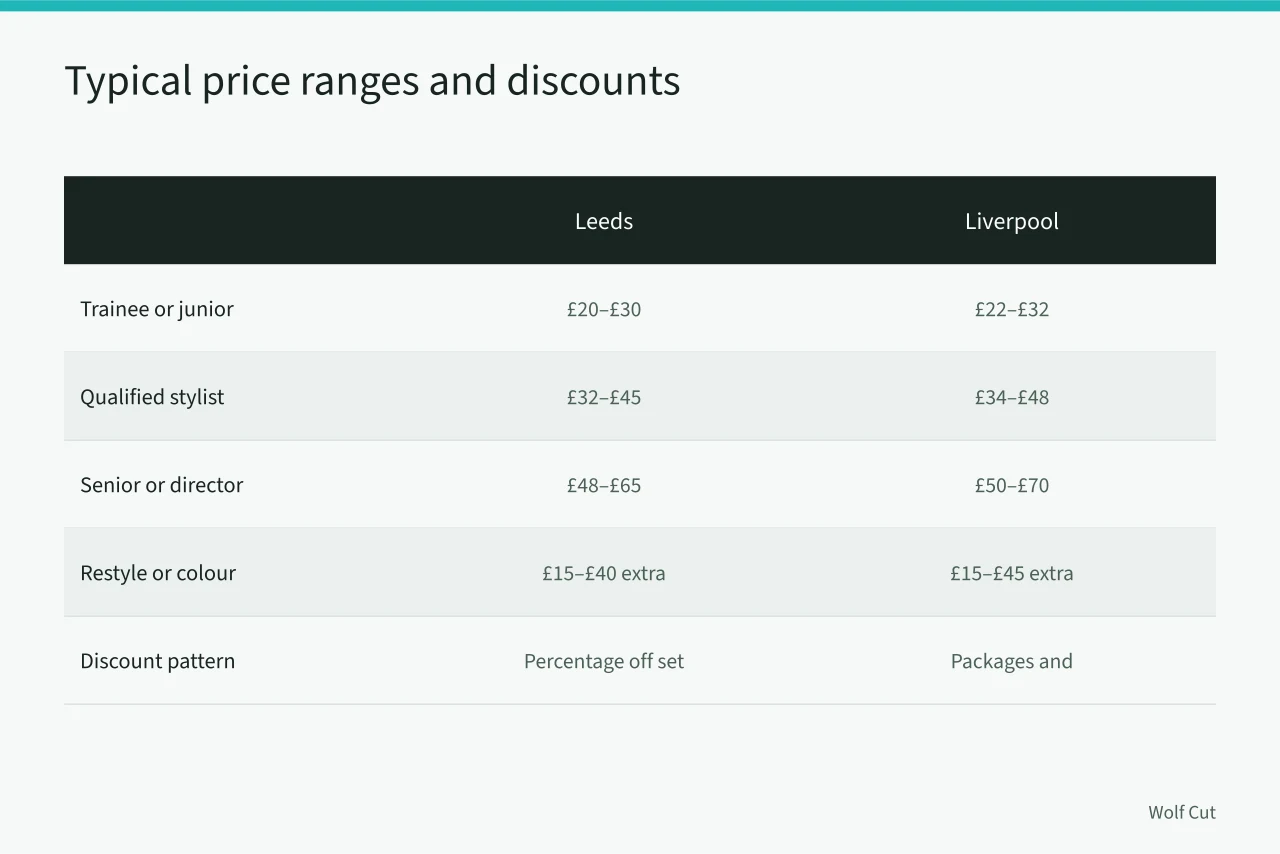
| Service level | Leeds typical range | Liverpool typical range | Student discount pattern |
|---|---|---|---|
| Trainee or junior stylist | £20 to £30 | £22 to £32 | 20 to 30 per cent, midweek only |
| Qualified stylist | £32 to £45 | £34 to £48 | 10 to 20 per cent with valid ID |
| Senior or director | £48 to £65 | £50 to £70 | Rarely discounted, off-peak slots only |
| Restyle or colour add-on | £15 to £40 extra | £15 to £45 extra | Bundled rather than discounted |
Discount structures differ in shape as well as size. Leeds salons lean towards percentage off on set days, because that fills a predictable midweek dip. Liverpool salons lean towards packages, such as a cut with a treatment or a first-visit rate, because that builds a returning client rather than a one-off booking.
Both cities use student ID checks, and both see the same abuse: a card borrowed from a flatmate. Most owners accept the small leakage rather than police it hard at the chair.
A worked example. A Leeds independent charges £40 for a qualified stylist and offers 20 per cent off Tuesday to Thursday, so a student pays £32. The same cut in a Liverpool independent at £46 with a first-visit package at £34 brings in a similar figure but ties the client to a second booking.
Over a twelve-week term, the Liverpool model usually wins on retention, the Leeds model on volume.
Booking patterns around term times
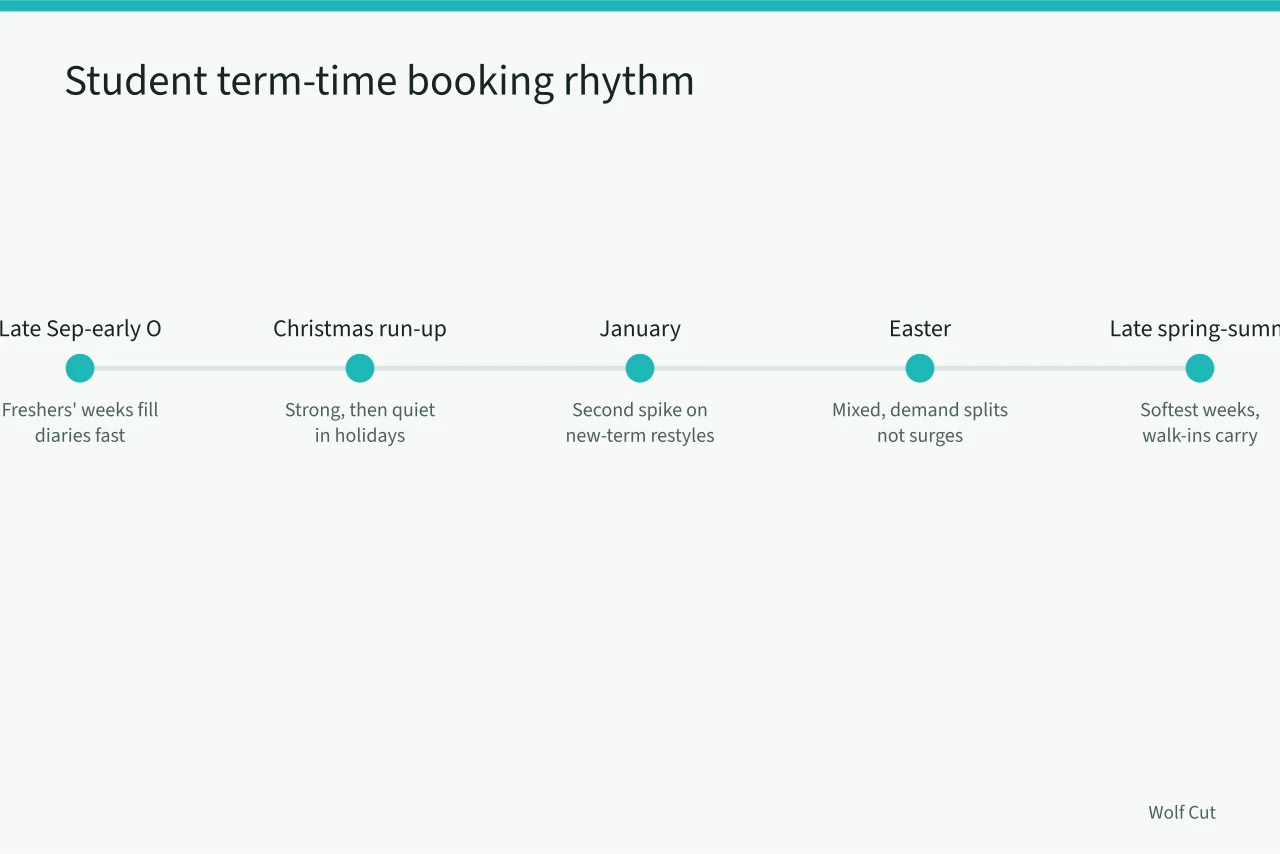
Term times set the rhythm in both cities, and the two cities do not share the same calendar shape.
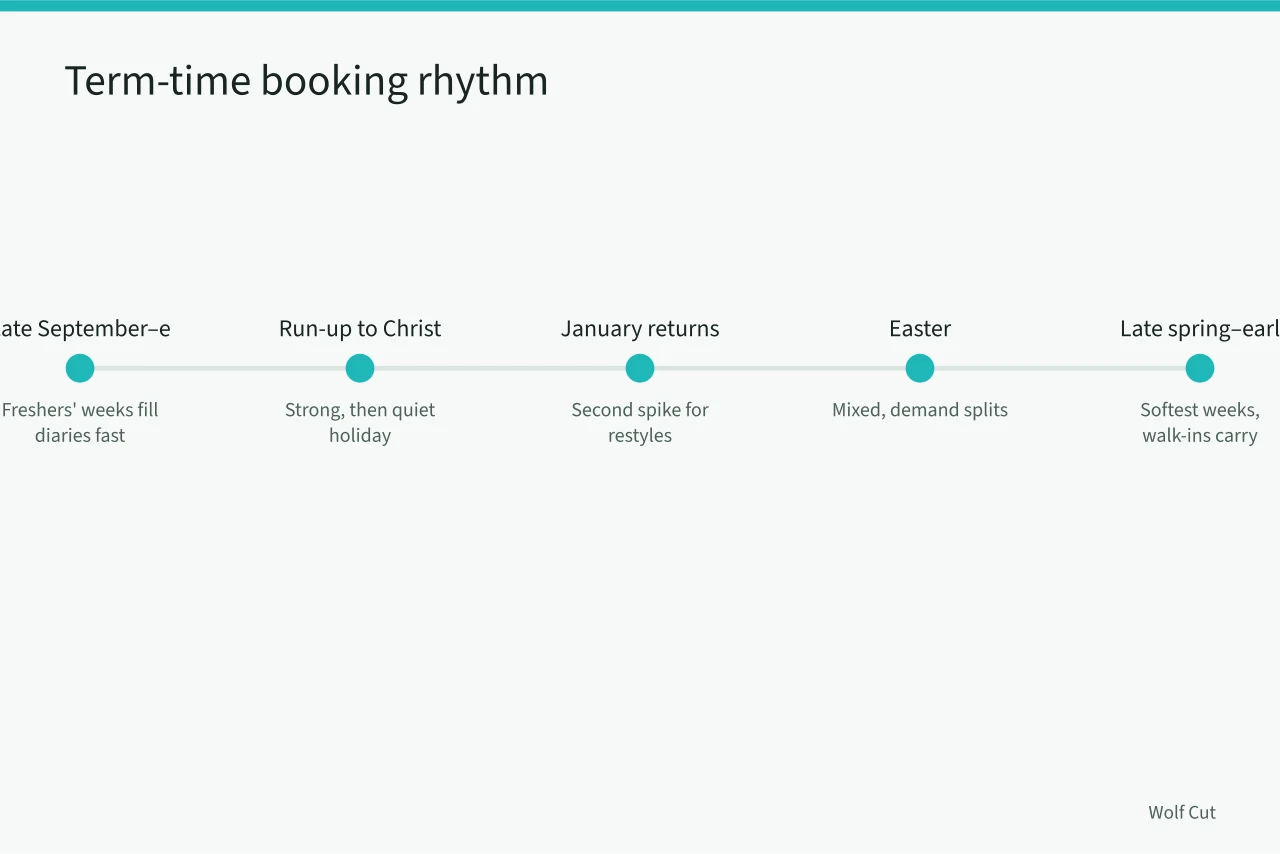
- Freshers' weeks in late September and early October fill diaries fast, often within days of listings going live.
- The run-up to Christmas is strong, then the holiday itself is quiet as students travel home.
- January returns bring a second spike, driven by new-term restyles and post-holiday corrections.
- Easter is mixed: some students go home, some stay, so demand splits rather than surges.
- Late spring and early summer are the softest weeks, when walk-ins carry the day.
Liverpool's spikes are sharper than Leeds's because its student base is more concentrated. A Liverpool salon can lose half its weekday student trade in a single quiet fortnight. Leeds salons feel the dip too, but a wider spread of campuses and a larger non-student population soften it.
The practical response in both cities is the same: protect the peak weeks with a booking window, and use quiet weeks for training, content shoots and discounted off-peak slots.
What stylists should weigh when setting student rates
Set the rate from your numbers, not from the salon down the road.
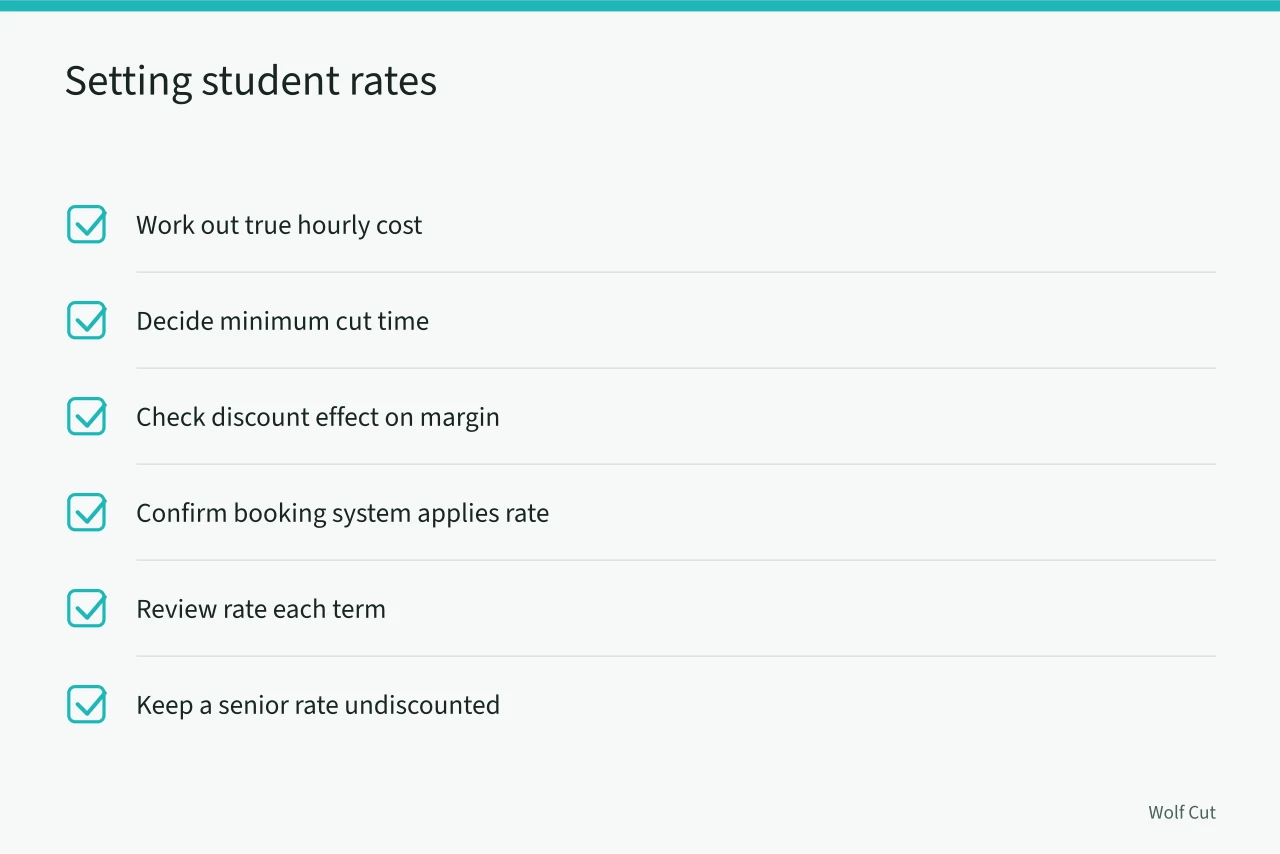
- Work out your true hourly cost: rent or chair rent, product, insurance, card fees and your own wage.
- Decide the minimum cut time you can deliver a wolf cut in without rushing the crown and sides.
- Check what a student discount does to your margin at your busiest and quietest times.
- Confirm your booking system can apply a student rate only on the days you intend.
- Review the rate each term, not each year, because student budgets move with maintenance loans.
- Keep a senior rate that is not discounted, so the student tier does not drag your whole card down.
A few craft points sit behind the price. The wolf cut shares territory with other layered shapes, and clients often arrive asking for the wrong one, so the wolf cut vs shag vs mullet comparison is worth keeping to hand at the consultation chair.
It also has predictable failure points, and knowing the wolf cut problems that recur will save you a rework.
Finally, remember that a student today is a full-price client in three years. A rate that keeps them in your chair through a degree is often worth more than a higher rate that sends them to the salon next door.
Common questions
Why is a wolf cut cheaper in Leeds than in Liverpool? Leeds has more salons competing for a larger student base, which holds headline prices down. Liverpool's market is smaller and more style-led, so salons with a strong identity can charge more.
Do chains or independents offer better student value? Chains are cheaper at the entry level because they use supervised juniors. Independents cost more at the floor but adapt the cut to your crown and side weight, which often means it lasts longer between visits.
When should I book a wolf cut as a student? Book before freshers' weeks and before the January return. Those are the two spikes in both cities, and peak slots go within days of being released.
Should student discounts apply to senior stylists? Usually not. Keep the discount on junior and qualified tiers, and offer off-peak slots instead if a student wants a senior stylist.
How often should a salon review its student rate? Each term is sensible. Costs and maintenance loan payments both move during the UK academic year, and a rate set in September may be wrong by January.