Guides
Crown shape, side weight and daily styling: the wolf cut guide
Wolf cut guide covering crown shape, side weight, fringe, perimeter density, layer placement, texture, daily styling, maintenance, and clear salon planning.
What to take away
- A wolf cut is a family of layered shapes, not one fixed cutting diagram.
- Crown height, side width, nape length, fringe, and perimeter density must be agreed separately.
- Density, curl, growth patterns, condition, and normal styling affect what the cut can do.
- A strong consultation identifies which parts of a reference image the client wants to keep.
- The final review should include the hair's ordinary finish, not only a polished salon blowout.
A wolf cut usually combines short or mobile upper layers with longer hair through the lower shape. The contrast may be quiet or dramatic. Some versions read as a soft shag, while others show a narrow side profile and a long back associated with a mullet. A fringe is common, but it is not compulsory.
That range makes the name useful for inspiration and weak as a technical instruction. A stylist still needs a map.
Start with five visible decisions
Ask the client to describe each part of the shape:
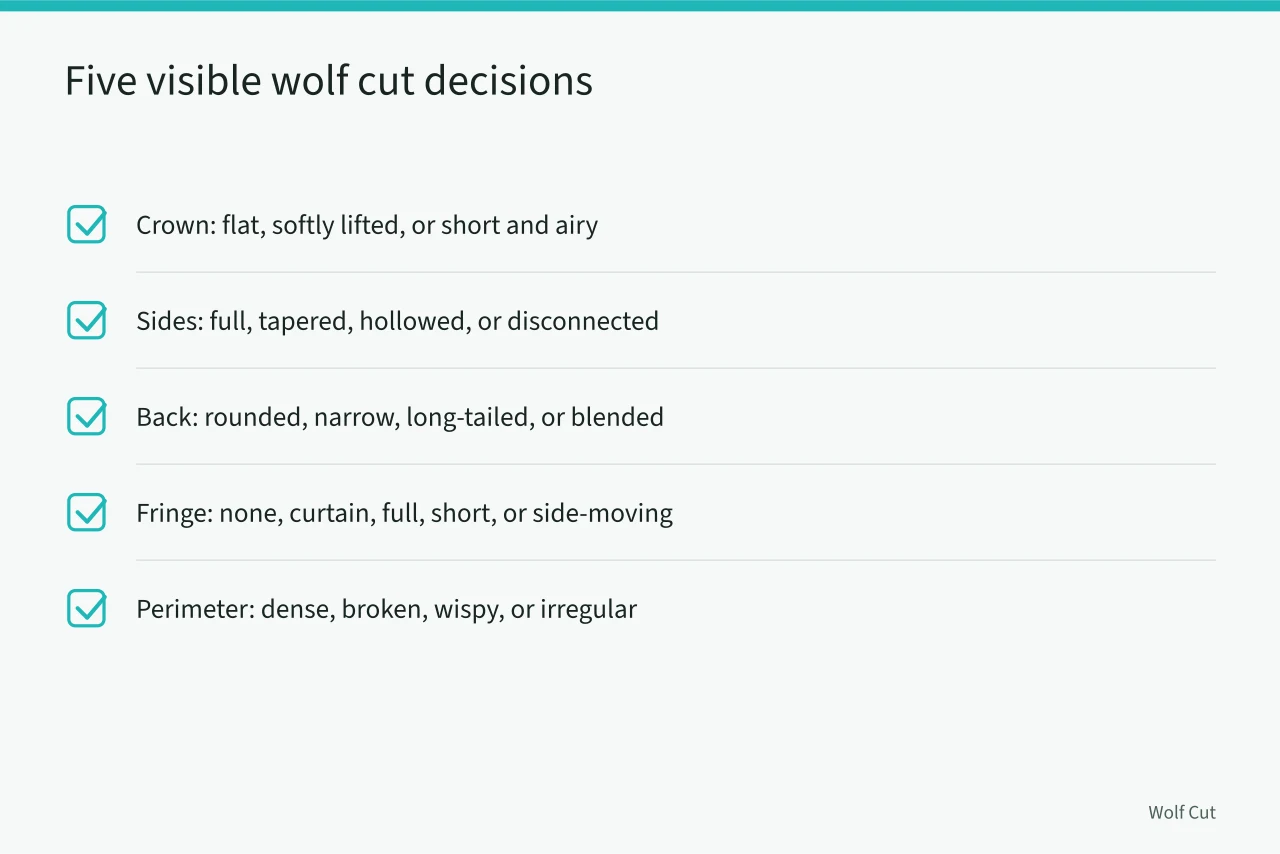
| Area | Decision to make |
|---|---|
| Crown | Flat, softly lifted, or distinctly short and airy |
| Sides | Full, tapered, hollowed, or disconnected |
| Back | Rounded, narrow, long-tailed, or blended into the sides |
| Fringe | None, curtain, full, short, or side-moving |
| Perimeter | Dense, broken, wispy, or intentionally irregular |
Use reference images to point at these areas. Do not ask only whether the client likes the whole photograph. They may want the crown from one image, the fringe from another, and none of the exposed side profile shown in either. A wolf cut consultation checklist keeps those five areas as separate questions.
Translate the label into structure
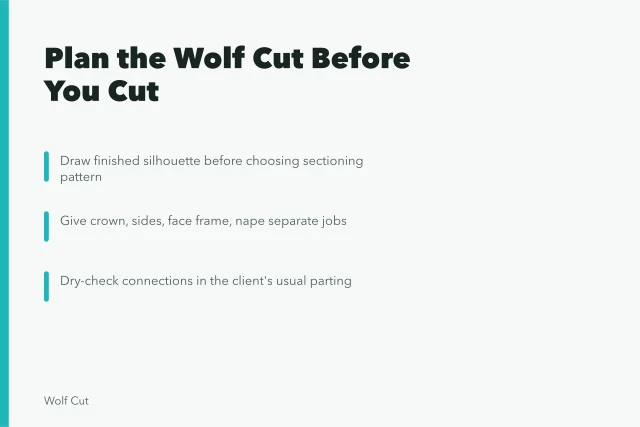
A sound plan marks the exterior line, top guide, crown length, face frame, and side connection. It marks nape and deliberately disconnected area.
Australian National Training Register's unit on designing and performing creative haircuts treats a creative cut as a researched, recorded design. It combines structures, lines, shapes, textured areas, and selected techniques after analyzing the client's hair. This fits a wolf cut better than copying a viral sectioning shortcut.
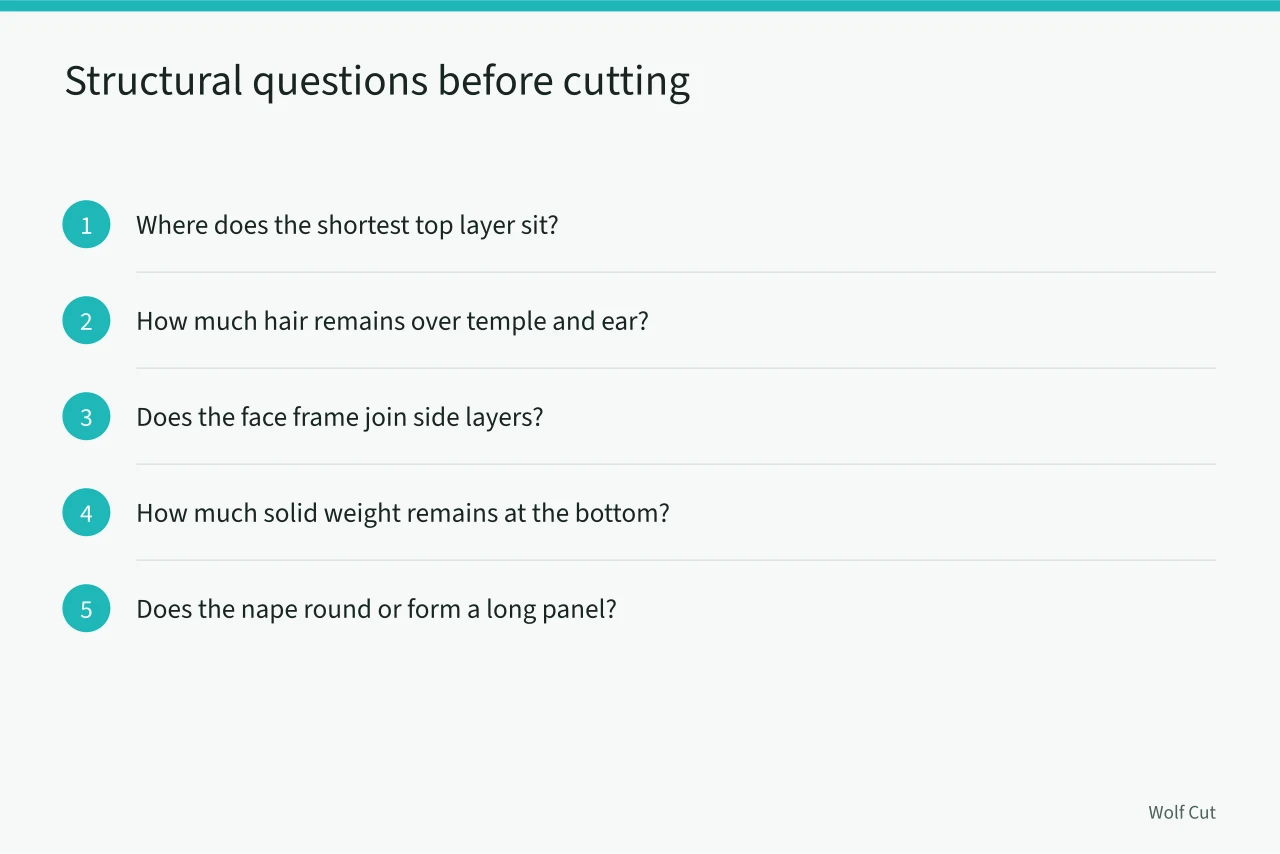
The structural questions are practical:
- Where does the shortest top layer sit when the hair falls naturally?
- How much hair remains over the temple and above the ear?
- Does the face frame join the side layers or sit apart from them?
- How much solid weight must remain at the bottom?
- Does the nape form part of a rounded outline or a separate long panel?
A dramatic shape may use clear disconnection. A quieter version can keep longer crown layers, fuller sides, and a stronger perimeter while retaining movement. Setting those relationships on one head is the work of a customized wolf cut plan.
Read the hair before choosing layer length
Count visual density by zone, rather than one label for the whole head. A review of computerized scalp hair growth measurement reports regional variations in hair growth dynamics exist across the human scalp.
Density and growth on top of the head can differ significantly from the occipital site. Note fine areas, strong hairlines, crown splits, whorls, and previous thinning. Also note breakage, chemical history, and how hair expands when dry.
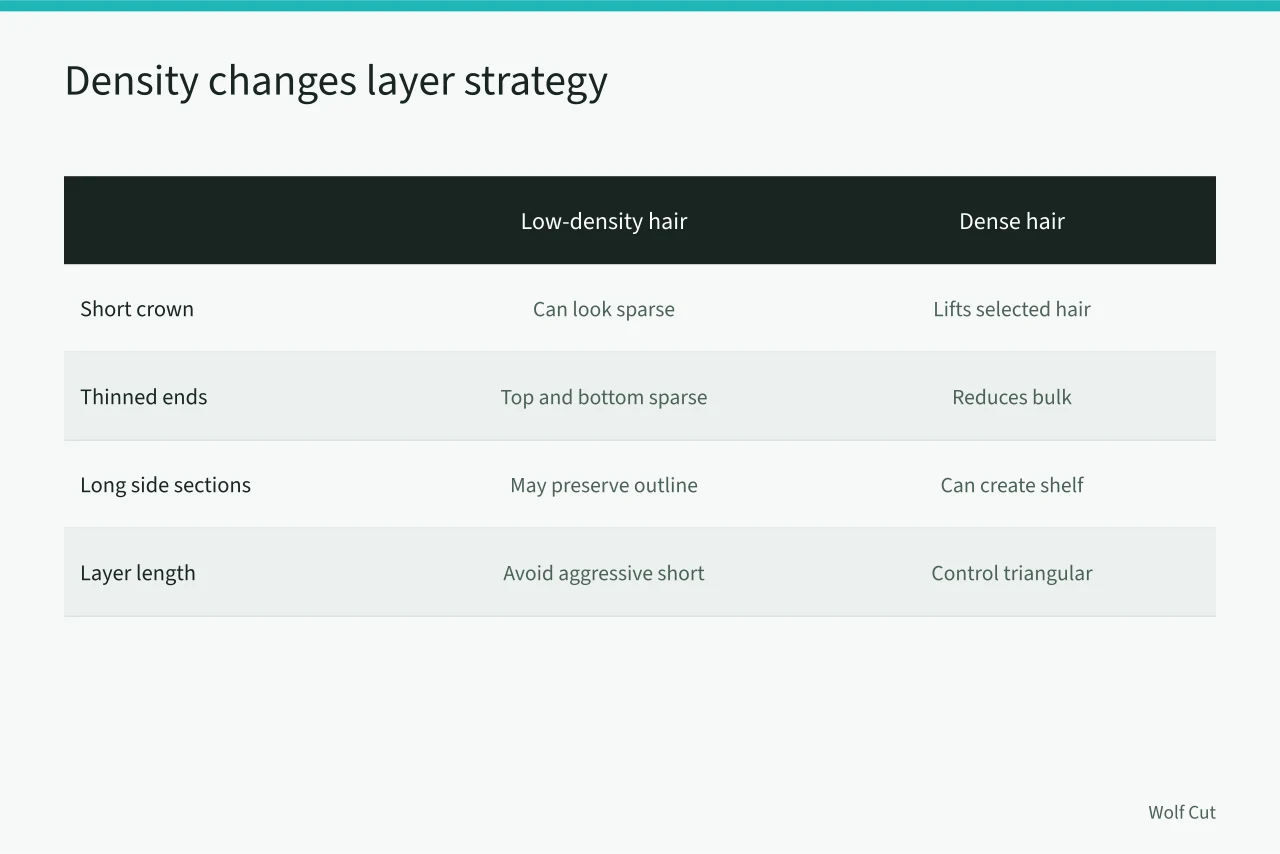
Short layers do not manufacture density. They can make selected hair lift, but they also remove strands from the lower outline. On low-density hair, a very short crown and aggressively thinned ends can leave both the top and bottom looking sparse. On dense hair, leaving every side section long can create a shelf or triangular bulk.
Curl and wave change the apparent spacing between layers. Check shrinkage in several zones. A straightened reference image does not predict where a curly fringe will sit after washing.
Separate cutting from texturizing
First create the length relationships. Then decide whether any zone needs point cutting, slicing, notching, or another texture technique. Random removal is not movement. It can blur the guide, weaken the perimeter, and make future correction harder.
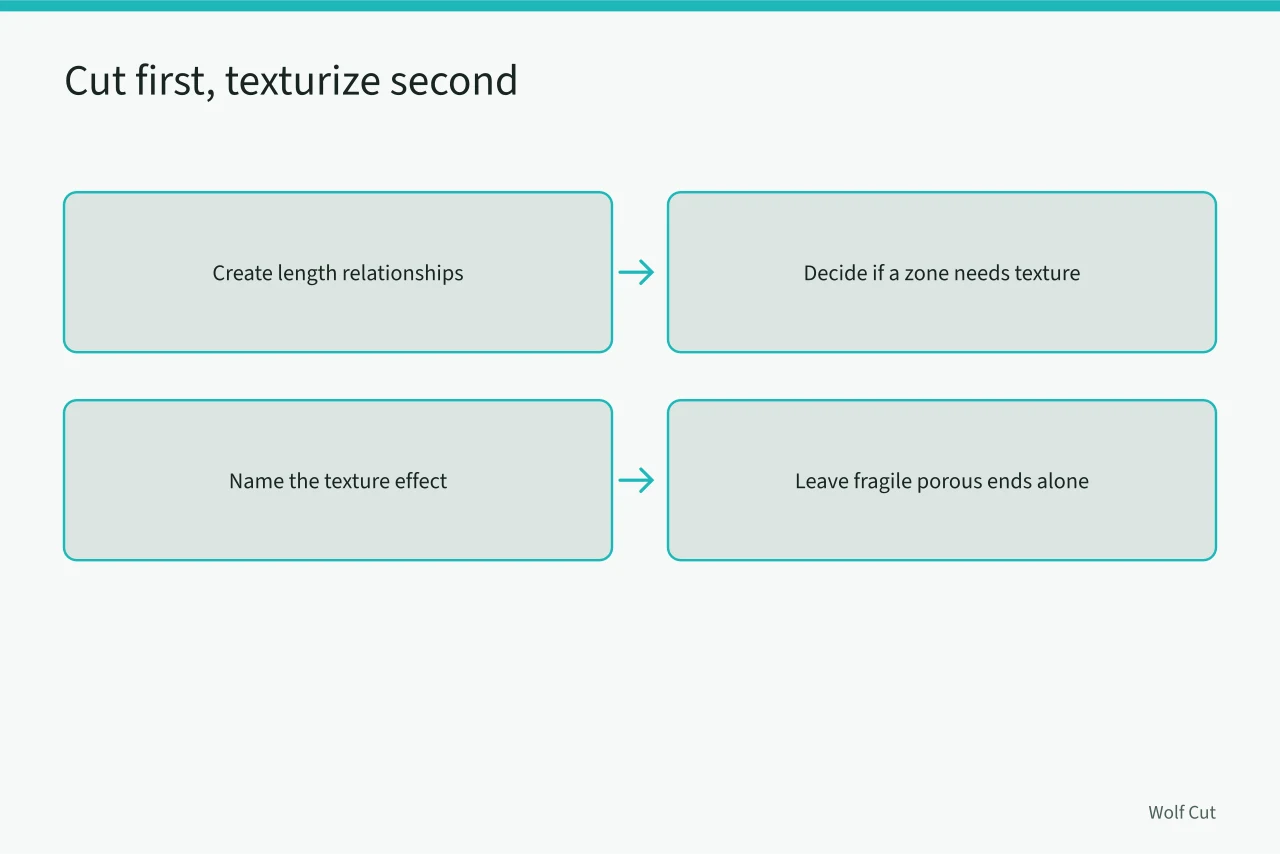
Use texture only where its effect can be named. For example, the goal may be to soften a heavy corner behind the ear, break a rigid fringe edge, or help a dense crown separate. Leave fragile or already porous ends alone when further removal would expose damage.
Plan for the client's real finish
Ask how much time, heat, product, and brush work the client normally uses. A cut that looks airy only after a round-brush set may fall close to the head when air-dried. A heavily diffused finish may conceal uneven layer placement. Styling can reveal a shape, but it should not be required to disguise it.
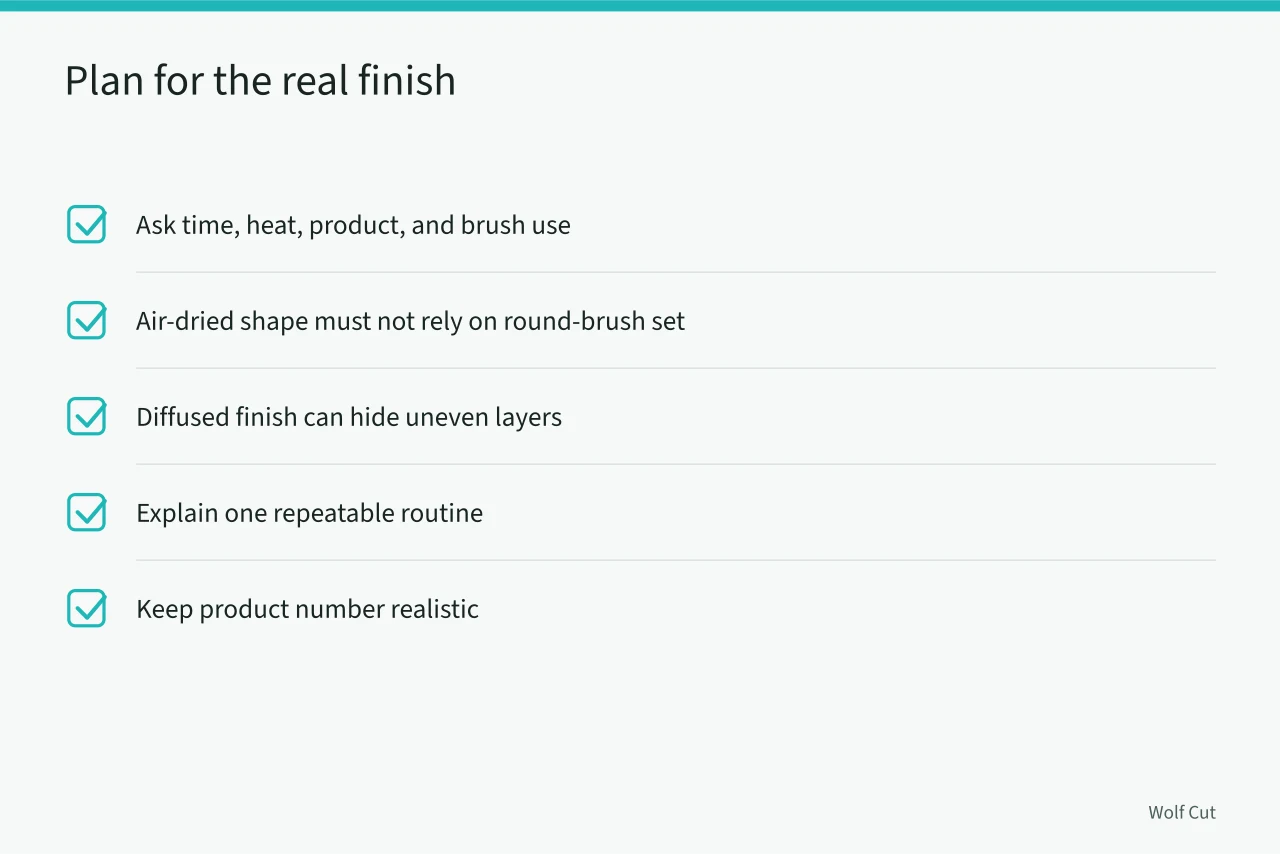
During the finish, explain one repeatable routine. Keep the number of products realistic. Show where to direct airflow or how to encourage wave at the crown without promising identical results in every climate.
Review the cut in more than one state
Check the exterior line and internal balance before adding texture. Dry the hair in the agreed manner, release it from repeated combing, and let it settle. View the front, profiles, back, and crown. Move the fringe across its likely partings.
Where practical, show a minimally styled version before the final polish. Record the crown guide, face-frame landmarks, side connection, nape length, perimeter decision, texture work, and finish used. Those notes give the next appointment a useful starting point.
Maintenance is part of the design
Short top layers may change character quickly as they grow. A short fringe may need attention before the back does. Discuss which zones can grow quietly and which will lose their intended relationship first.
Do not give a universal rebooking interval. Base it on contrast, fringe length, growth, finish expectations, and the client's tolerance for a softer shape. A grow-out plan may include fringe-only work, a perimeter tidy, or a later layer rebalance.
Common questions
Does a wolf cut require a fringe?
No. A fringe is common, but the crown, sides, back, and face frame can create the overall character without one.
Will short crown layers make fine hair look thicker?
They may create lift in some finishes, but they also remove length from the lower shape. Density and perimeter strength must be assessed first.
Is a wolf cut the same as a shag?
The categories overlap. A wolf cut often has stronger front-to-back contrast, but names vary. Agree on visible structure rather than relying on the label.
Can the cut work without daily heat styling?
Yes, if it is planned for the client's natural movement and ordinary routine. Review an air-dried or low-styled result whenever possible.
In this guide
- Planning a customized wolf cut from zone map to final finishCustomized wolf cut planning from consultation and zone mapping through crown guides, face framing, side connection, perimeter protection, dry checks, and records.
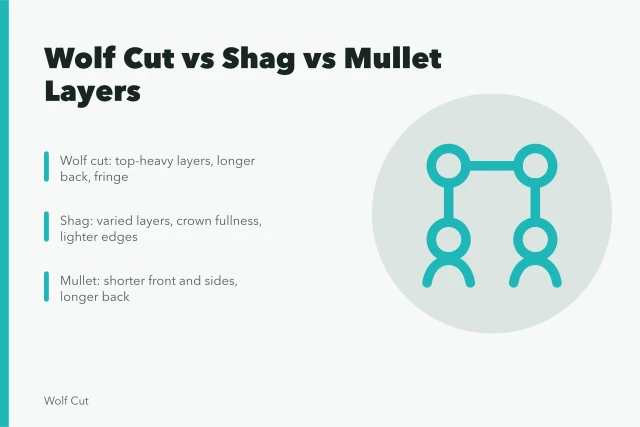
- Wolf cut versus shag versus mullet: comparing crown, sides and backWolf cut, shag, mullet, and butterfly layers compared by silhouette, crown, sides, back, perimeter, fringe, styling needs, upkeep, and consultation language.
- 8 things to weigh up on wolf cut consultationWolf cut checklist for reference images, density, shrinkage, crown and fringe decisions, cutting controls, dry checks, realistic styling, aftercare, and records.
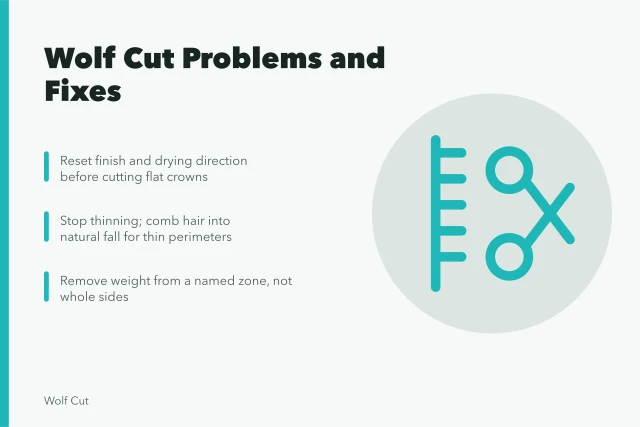
- Wolf cut problems as practitioners see itWolf cut problems explained: flat crowns, thin ends, heavy sides, visible gaps, shrinkage surprises, frizz, styling mismatch, and conservative correction choices.
- Adapting a dramatic wolf cut for low-density hair case in 2027Low-density wolf cut case showing how a stylist protected the perimeter, moderated crown layers, controlled disconnection, tested styling, and planned maintenance.