Features
London vs Manchester vs Glasgow, how wolf cut demand and pricing differ
Wolf cut demand UK cities compared: London, Manchester and Glasgow pricing, trend speed, consultations and repeat booking patterns for stylists.
What to take away
- Wolf cut demand UK cities data shows London leading on trend speed and price, Manchester strongest in the mid-market, and Glasgow the most value-led of the three.
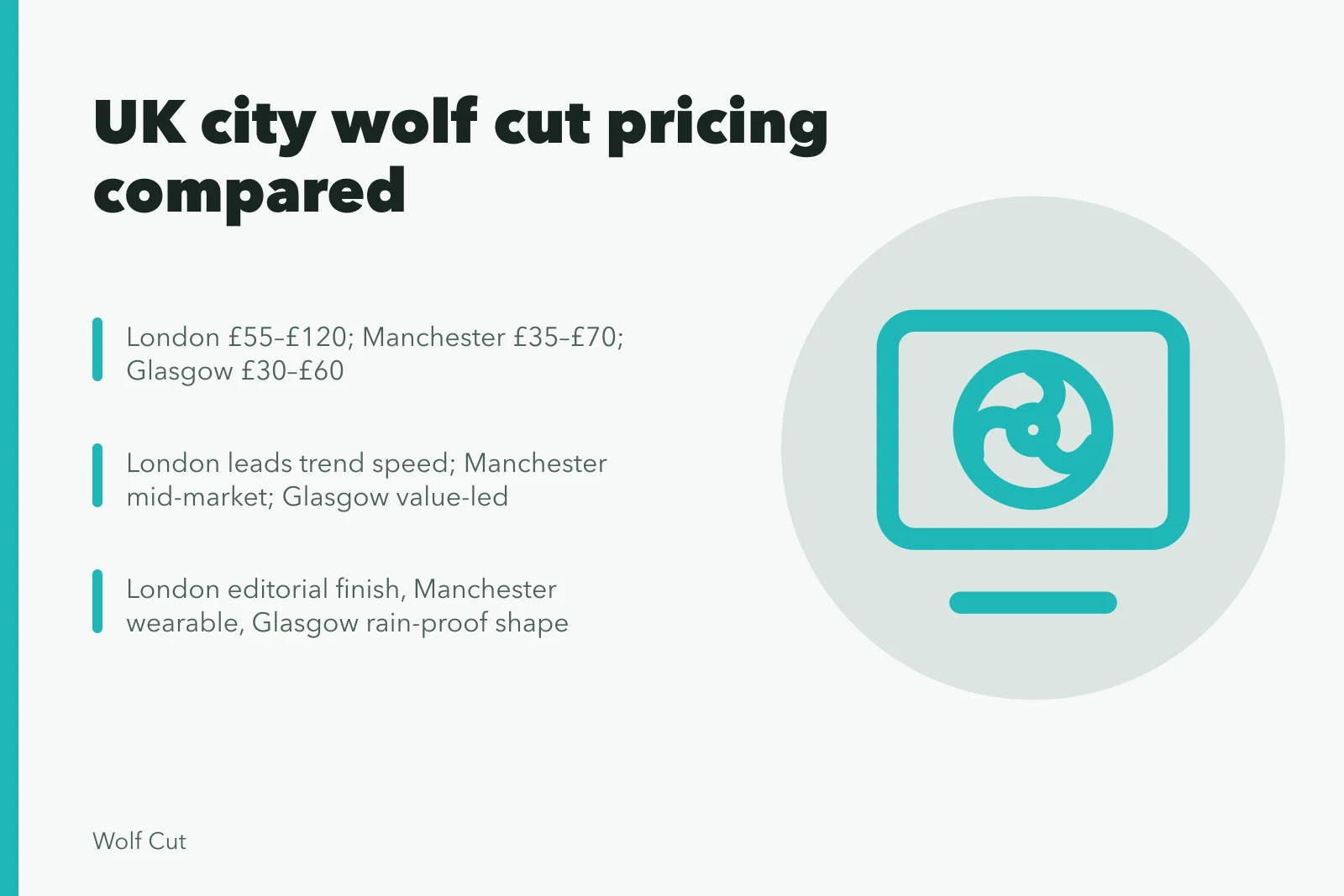
- Typical ranges run from roughly £55 to £120 in London, £35 to £70 in Manchester and £30 to £60 in Glasgow for a cut and finish.
- Client expectations diverge sharply: London buyers arrive with reference photos and want editorial finishes, Manchester clients want wearability, Glasgow clients want shape that survives rain and wind.
- Repeat intervals are shorter in London, where clients rebook at six to eight weeks, and longer in Glasgow, where eight to twelve weeks is common.
- Consultation time is the biggest practical difference between the three markets, not scissor work.
- Stylists benchmarking prices should compare local rent, VAT status and travel time before copying a London rate card.
How the wolf cut trend reached London, Manchester and Glasgow
The wolf cut arrived in the UK through social video rather than through salon chains. Shoreditch and Dalston stylists picked it up first, then passed the technique north through education events and Instagram.
London acted as the filter. Cuts that survived a London Saturday night, photographed well and held their shape for six weeks became teachable. Manchester adopted those versions within a season, often softened.
Glasgow came later and differently. Scottish stylists adapted the shape for a wet, windy climate, keeping more weight through the mid-lengths so the cut does not collapse in damp air.
The trend spread along existing salon networks. The National Hair & Beauty Federation and the Freelance Hairdressers Association both run regional training and networking, which is how a technique moves from one city to another without a brand behind it.
Demand also tracks population and footfall. ONS population and community data shows how differently the three cities are sized, and that shapes how many clients a single salon can reach. You can read the wider cutting logic in our wolf cut guide.
Client age matters more than city. Under-30s drive the trend in all three markets. What changes is how much they will pay and how often they return.
London: client expectations, trend speed and premium pricing
London is the UK's largest salon market and the fastest to absorb a new shape. A cut that trends on a Monday can be requested in Soho by the weekend.
Clients here often arrive with three or four reference photos and a clear idea of the finish. They compare salons on Instagram, not on price alone, and they will travel across zones for a stylist whose work matches the brief.
That travel tolerance supports premium pricing. A senior stylist in Shoreditch or Soho can charge well above the national average without losing bookings, because the client is buying a specific result and a specific person.
Costs justify part of the gap. Rent, business rates and staffing in central London push a cut price up before any skill premium is added. ONS regional accounts give the economic backdrop for how far London output and incomes sit above the other two cities.
Expectations are also stricter. London clients notice uneven side weight and a crown that drops after two washes. That is where wolf cut problems tend to surface first.
Freelance and chair-renting stylists are common here, which keeps the top of the market fluid. Rates move quickly when a stylist builds a visible portfolio.
Manchester: independent salons, student spend and mid-market rates
Manchester runs on independents. The Northern Quarter and Ancoats have a dense cluster of small salons and barbershops, many with two to four chairs and a strong personal brand.
The city's fashion and music scene drives textured, lived-in cuts. Clients want a wolf cut that looks intentional but not over-styled, and they often ask for something they can wear to work on Monday.
Student spend sets the floor. A large student population supports cheaper appointments, trainee rates and off-peak slots, which keeps entry-level pricing low across the city.
The mid-market is where most Manchester salons sit. A stylist with a solid portfolio can charge comfortably above student rates without approaching London pricing, and demand stays steady through the week.
Manchester clients are loyal once converted. They tend to follow a stylist between salons, which makes repeat booking the main commercial asset for an independent owner.
Competition is close, so consultation quality is often the deciding factor. Our wolf cut checklist covers the questions that separate a good Manchester consultation from a rushed one.
Glasgow: climate, local style and value-led pricing
Glasgow has Scotland's densest independent salon scene, spread across the West End, Southside and city centre. Most salons are small, owner-operated and priced for local incomes.
The climate shapes the cut. Wet, windy weather and high humidity mean a wolf cut with too much removed weight turns flat or frizzy within a day. Glasgow stylists keep more internal weight and cut for movement that survives rain.
Styling advice is part of the service here. Clients expect a short explanation of how to dry the shape at home, because a cut that only works after a salon blow-dry will not be rebooked.
Local style leans practical. Glasgow clients often ask for a softer, less extreme version of the trend, with a shorter back and less dramatic disconnect than London versions.
Pricing is value-led. Rates sit below Manchester on average, and clients are sensitive to increases, so stylists tend to raise prices slowly and add value through aftercare advice instead.
Demand is still real. The trend reached Glasgow later but has held, and repeat clients now form the bulk of wolf cut bookings in the city.
Typical price ranges compared across the three cities
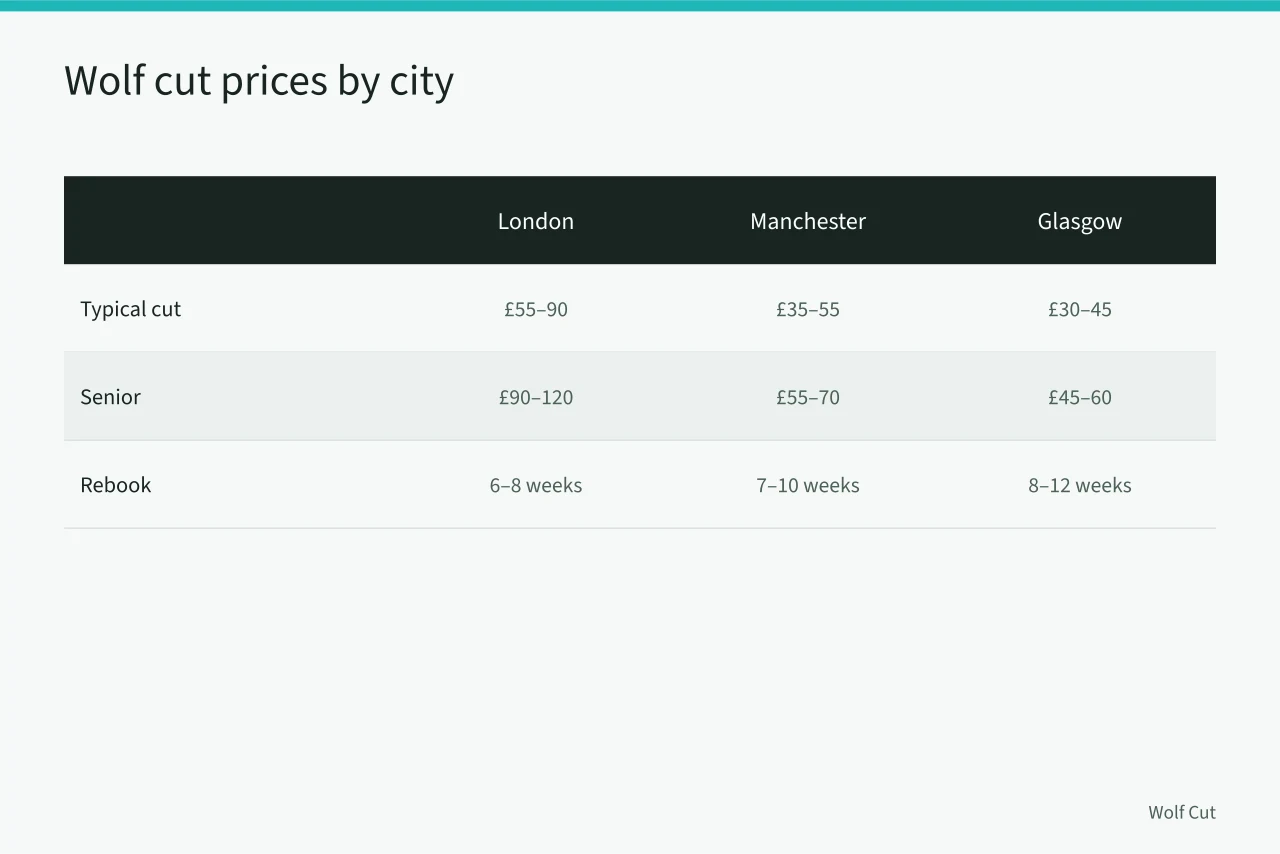
The table below shows typical ranges for a cut and finish, not a colour service. Prices vary by seniority, salon location and whether the stylist is employed or self-employed.
| City | Typical cut and finish | Senior or specialist | Typical rebook interval |
|---|---|---|---|
| London | £55 to £90 | £90 to £120 | 6 to 8 weeks |
| Manchester | £35 to £55 | £55 to £70 | 7 to 10 weeks |
| Glasgow | £30 to £45 | £45 to £60 | 8 to 12 weeks |
These are working ranges, not fixed tariffs. A Shoreditch specialist with a waiting list can sit above the London band, and a suburban Glasgow salon can sit below the Glasgow band.
VAT changes the picture. A salon turning over more than the registration threshold must add VAT to its prices, which widens the gap between a small Glasgow chair and a London chair more than the headline numbers suggest.
ONS inflation and price indices are the reference point for annual reviews. When input costs rise, salon prices in all three cities tend to follow within two review cycles rather than immediately.
Running a worked example helps. Take a Manchester stylist charging £45 for a wolf cut, seeing eight clients a day, four days a week. That is £1,440 a week before rent, product and tax.
The same stylist moving to a central London chair at £80, with six clients a day over four days, grosses £1,920 a week, but rent and rates can absorb most of the difference. The comparison is only meaningful after fixed costs.
Consultation differences and how each market reads a reference photo
Consultation is where the three markets diverge most. London clients arrive prepared and expect the stylist to challenge the photo. Manchester clients expect a conversation about wearability. Glasgow clients expect a conversation about weather.
In London, a reference photo is a starting point for negotiation. The stylist is expected to explain what will and will not work on that hair type, then propose a version that photographs well.
In Manchester, the same photo usually gets softened. Clients ask how the cut will look after a week, and they want the answer in practical terms rather than technical language.
In Glasgow, the photo often needs reworking for density and climate. Stylists there spend more time on drying technique and product choice, because the client will not get a salon finish every morning.
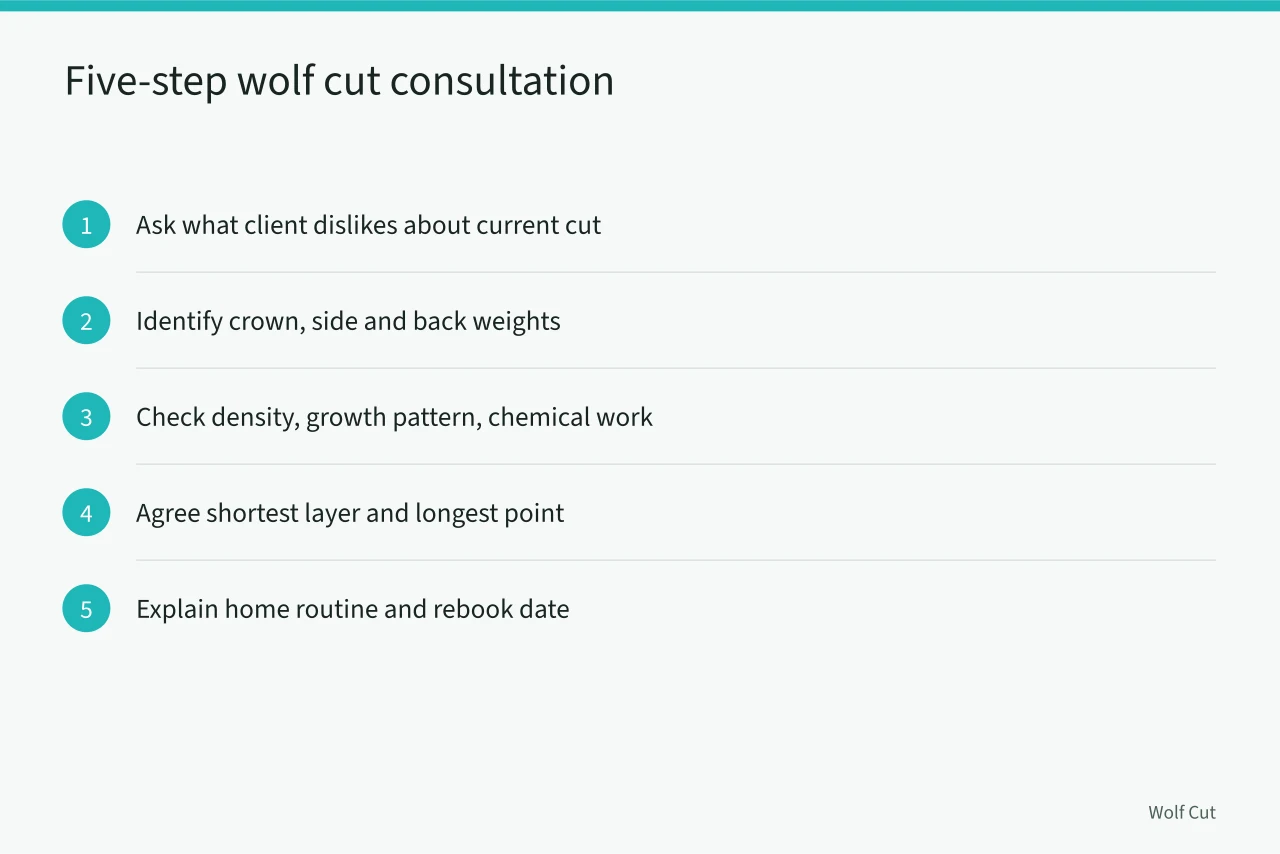
A structured approach travels well between cities. Numbered steps keep the consultation consistent:
- Ask what the client dislikes about their current cut.
- Identify the reference photo's crown, side and back weights separately.
- Check hair density, growth pattern and any previous chemical work.
- Agree the shortest layer and the longest point before cutting.
- Explain the home routine and the realistic rebook date.
Planning the zones before the first cut saves correction work later, and our piece on customized wolf cut planning sets out a zone map you can reuse in any of the three cities. The differences between this shape and its neighbours are set out in our comparison of wolf cut vs shag vs mullet.
Booking patterns, waiting times and repeat intervals
Booking behaviour differs as much as pricing. London books further ahead and cancels more often. Manchester books mid-week and keeps appointments. Glasgow books around pay cycles and rebooks in the chair.
Waiting times follow demand density. A well-known London stylist can be booked two to three weeks out. Manchester waiting times are typically shorter, and Glasgow shorter still outside peak periods.
Repeat intervals are the clearest commercial signal. London clients return at six to eight weeks because the cut grows out visibly and the city rewards a sharp finish.
Manchester clients return at seven to ten weeks. Glasgow clients stretch to eight to twelve, often because the softer shape holds longer and because the price point makes them plan around it.
City footfall also moves with visitors. ONS tourism industry data shows how visitor numbers affect urban demand, and in London that shows up as weekday gaps and weekend pressure.
For a stylist, the practical rule is simple. Price for the repeat interval, not the single appointment. A £40 cut every eight weeks is worth more than a £60 cut every six months.
What the comparison means for stylists setting prices
Do not copy a London rate card into a Manchester or Glasgow chair. Rent, local incomes and client expectations set the ceiling in each city, and a price that ignores them empties the diary.
Benchmark against your own costs first. Add rent, product, insurance, tax and unpaid admin time, then divide by the number of clients you can realistically see in a week.
Use the city band as a sanity check, not a target. If your price sits above the local senior band, you need a visible portfolio and a waiting list to justify it.
Build the consultation into the price. Longer consultations in Glasgow and Manchester protect the repeat booking, which is where the profit sits.
Review annually against published inflation data rather than competitor screenshots. A small, regular increase is easier for clients to accept than a large correction.
Finally, decide what you are selling. In London it is finish and speed. In Manchester it is wearability and consistency. In Glasgow it is durability and value. The wolf cut is the same shape in all three, but the client is buying something different.
Common questions
Why is a wolf cut cheaper in Glasgow than in London?
Lower commercial rent, lower average local incomes and a smaller premium market all pull prices down. Value-led pricing is a market norm in Glasgow rather than a sign of lower skill.
How much should I charge for a wolf cut in Manchester?
Most Manchester salons sit between £35 and £70 depending on seniority. Start inside the local band, then move up once your rebooking rate is steady.
Do Glasgow clients need a different cut because of the weather?
Yes. Damp, windy conditions flatten a shape with too much weight removed, so Glasgow stylists typically keep more internal weight and give explicit home drying advice.
How often do clients rebook a wolf cut in each city?
London clients return at six to eight weeks, Manchester at seven to ten and Glasgow at eight to twelve. The softer the shape, the longer the interval tends to run.
Does VAT affect the price gap between the three cities?
It can widen it. Salons above the VAT registration threshold must add VAT to their prices, which hits higher-priced London chairs harder in cash terms.
Is the wolf cut still growing in the UK?
It has moved from novelty to standard request in all three cities. Growth is now concentrated in softer, more wearable versions rather than the most extreme shape.