Guides
Sectioning through dry refinement: a scissor haircutting guide
Scissor haircutting guide to sectioning, guidelines, elevation, distribution, tension, cutting lines, body position, cross-checking, and dry refinement.
What to take away
- A sectioning pattern must serve the planned shape and be easy to reproduce.
- Elevation, distribution, and finger angle are separate controls.
- Tension and moisture must stay consistent unless the plan calls for change.
- Body position affects the line, so move around the client instead of twisting the section.
- Cross-check the design without erasing planned weight or disconnection.
Scissor control is more than steady hands. The result comes from a chain of repeatable decisions: how hair is divided, where it is moved, how far it is lifted, where it is held, and what line the blades cut. If one variable drifts, the next section can copy the error.
Start with the structural plan
Define outer line, interior lengths, weight area, and graduation. Then set layers, connection, and intended movement. Choose start point and partings.
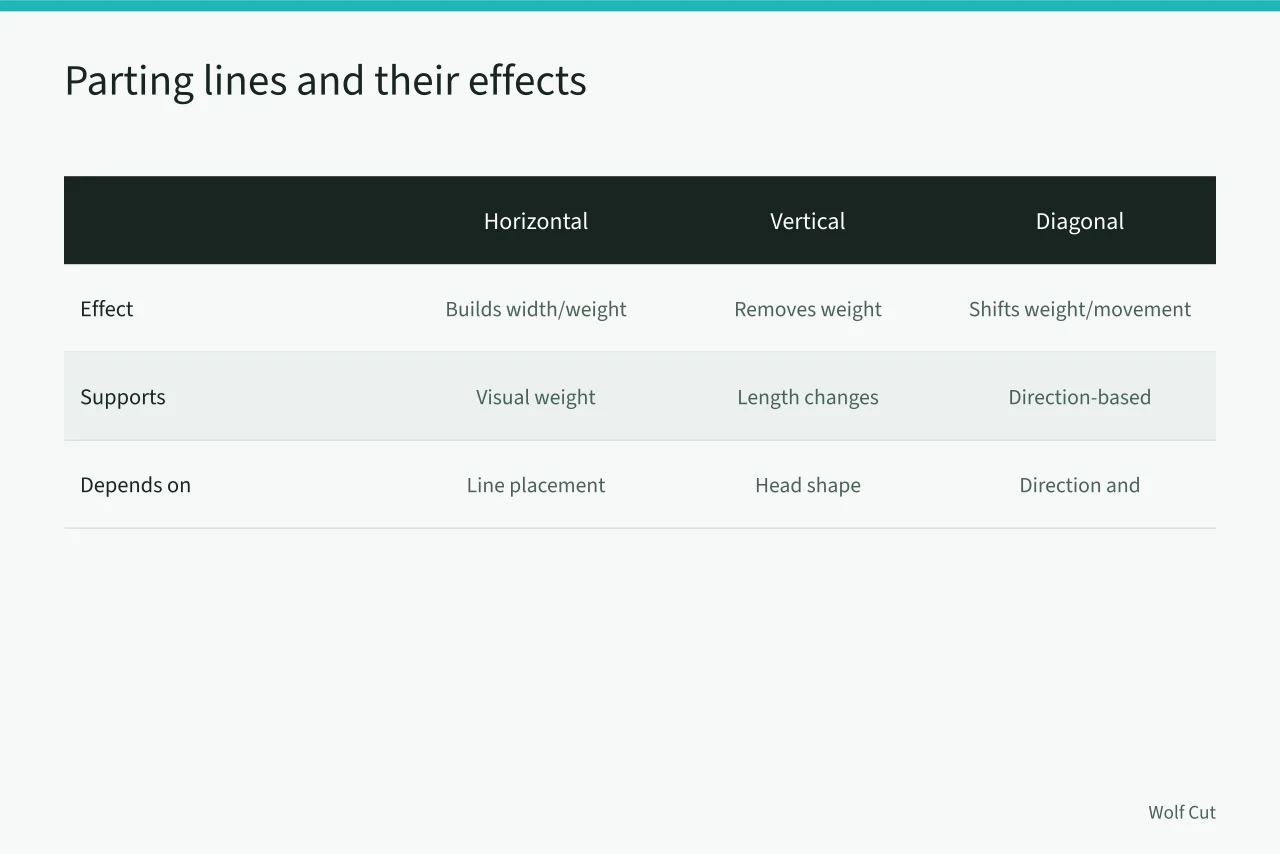
A horizontal line builds visual width or weight. A vertical line removes weight and supports length changes around the head. A diagonal shifts weight or movement based on its direction and hair distribution.
That decision belongs to the design stage in haircut design fundamentals.
England's current Hairdressing Professional occupational standard lists sectioning patterns, guidelines, graduation, layering, thinning, club cutting, freehand work, texturizing, and weight distribution among the methods used to create personalized shape. It also calls for attention to cutting angles, balance, natural growth, and degree of graduation. Those are interacting controls, not interchangeable technique names.
Section for control
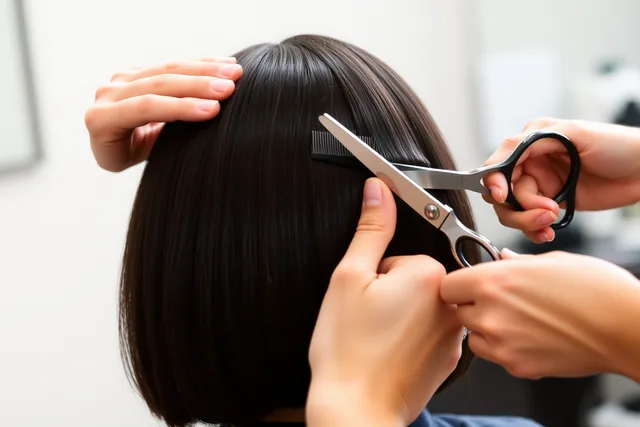
A section is a working area; a parting is the line that separates it. Use clips that hold the hair without tangling or distorting the root. Each subsection should be thin enough to see or feel the guide and wide enough to manage without bending the intended line.
Keep partings clean, but do not confuse visual neatness with accuracy. If a curved head surface makes a subsection too wide at one end, divide it. If hair dries during a wet cut, restore a consistent moisture level without soaking only one spot.
Establish the guideline
A stationary guide stays in one place while other sections travel to it. A traveling guide moves with the work. A combination uses both. Mark whether the guide is exterior or interior, straight or curved, hard or soft.
Cut the first guide conservatively. Release it, observe natural fall, and confirm the client-facing length before using it as the reference for the whole structure. The sequence for that reference is set out in build and follow a haircut guideline.
Separate elevation from distribution
Elevation is the angle at which hair is lifted away from its natural fall or the head surface. Distribution is the direction the section travels relative to its base. Overdirection is distribution away from natural fall to preserve length or create movement in another area.
A section can be lifted high but kept over its own base, or lifted modestly and shifted strongly to a stationary guide. Those choices produce different length relationships. State both in the plan.
Control finger and cutting angle
Finger angle positions the held section. Cutting angle describes the line made by the blades. In many hand positions they appear related, but they should still be checked separately. Keep the comb, fingers, and blades aligned with the design rather than with the mirror frame.
Use the tip, mid-blade, or full blade according to control and technique. Close the blades without pushing hair ahead of a dull edge. Maintain and sharpen shears under manufacturer guidance. Which action to use where is compared in blunt, point, slide, and channel cutting.
Keep tension honest
Tension stretches fibers and shifts the section. High tension can make elastic, wavy, curly, fragile, or hairline sections finish shorter or unevenly.
Use a planned level and repeat it. Around ears, at the nape, and at strong growth patterns, release tension and check natural fall before finalizing the line. On curl, the working state matters as much as tension, so wet, dry, and stretched methods are worth separating.
Position the client and the stylist
Set chair height so the cutting line can be reached with neutral shoulders and wrists. Keep the client's head position explicit: level, slightly forward, turned, or tilted for a specific reason. A dropped chin can lengthen or shorten a nape line when the head returns upright.
Move your feet. Do not pull a side section across the face because it is easier to reach. Recenter the client after every necessary head movement and before judging balance.
The HSE built its assessment tool for repetitive tasks around these variables. It scores the frequency and repetition of movements, the force applied, awkward postures, and additional factors that contribute to upper limb disorders. A working position that only the mirror likes is a risk to the person holding the shears.
Cross-check with purpose
Cross-check in a direction different from the original partings. Compare equivalent zones with the client upright. A scissor setup and cross-check list sets out what to verify at each stage. A cross-check can reveal drifting elevation, lost corners, or a missed section, but intentional overdirection, asymmetry, and disconnection will not always look equal.
Dry the hair in the agreed finish, release it, and refine only what the dry evidence supports. Avoid repeated polishing that changes the perimeter or removes the designed weight.
Common questions
Is elevation the same as overdirection?
No. Elevation is lift away from fall or the head; overdirection moves hair away from its base.
How thin should a subsection be?
Thin enough to control and see the guideline without transparent over-combing or lost tension.
Does cross-checking make both sides identical?
Only when symmetry is part of the plan. It should preserve intentional asymmetry and disconnection.
Why check the perimeter with no tension?
It reveals natural movement around ears, hairlines, curls, and growth changes.
In this guide
- How to build a haircut guideline you can actually follow and cross-checkBuild and follow a haircut guideline with a clear starting point, controlled sections, repeatable elevation, distribution, tension, checkpoints, and cross-checks.
- Blunt, point, slide and channel cutting compared by control and riskBlunt, point, slide, and channel cutting compared by edge, separation, control, suitable hair conditions, tool movement, failure risks, and design purpose.
- Setup, sectioning and cross-checks: the scissor haircut checklistScissor haircut checklist for sharp tools, neutral posture, client protection, controlled partings, guidelines, tension, head position, cross-checks, and cleanup.
- 8 things about scissor haircut problems worth your timeScissor haircut problems guide for lost guidelines, holes, shelves, drift, uneven perimeters, wet-to-dry change, pushed hair, and controlled correction steps.
- A graduated bob correction case: mapping drift, then rebuilding balanceGraduated bob correction case showing how posture, partings, guide drift, elevation, distribution, corners, and dry behavior were mapped and repaired in stages.