Guides
Haircut design fundamentals: shape, weight, texture, and movement in 2027
Haircut design fundamentals covering silhouette, length, weight, layers, texture, natural movement, consultation, checkpoints, and a reproducible plan.
What to take away
- Design the finished silhouette before selecting a cutting technique.
- Treat density, strand diameter, curl, growth direction, and condition as separate observations.
- Decide where length, weight, movement, and exposure belong.
- Build checkpoints that can be seen on wet, dry, and naturally falling hair.
- Agree on upkeep and styling work before the first cut.
A haircut is a three-dimensional arrangement of length. Technique is how the stylist gets there. Starting with a fashionable move, a sectioning diagram, or a pair of shears before defining the result can produce clean work with the wrong shape.
The design plan should answer five questions: What is the outer silhouette? Where is the shortest visible area? Where is weight kept or removed? How should the hair move when it is not posed? What can the client reproduce at home?
Read the material without stereotyping it
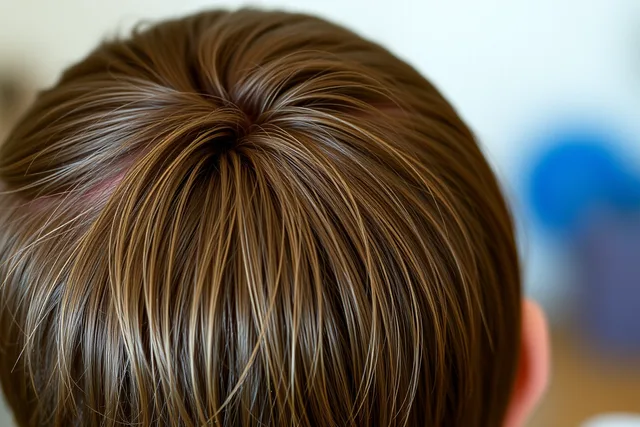
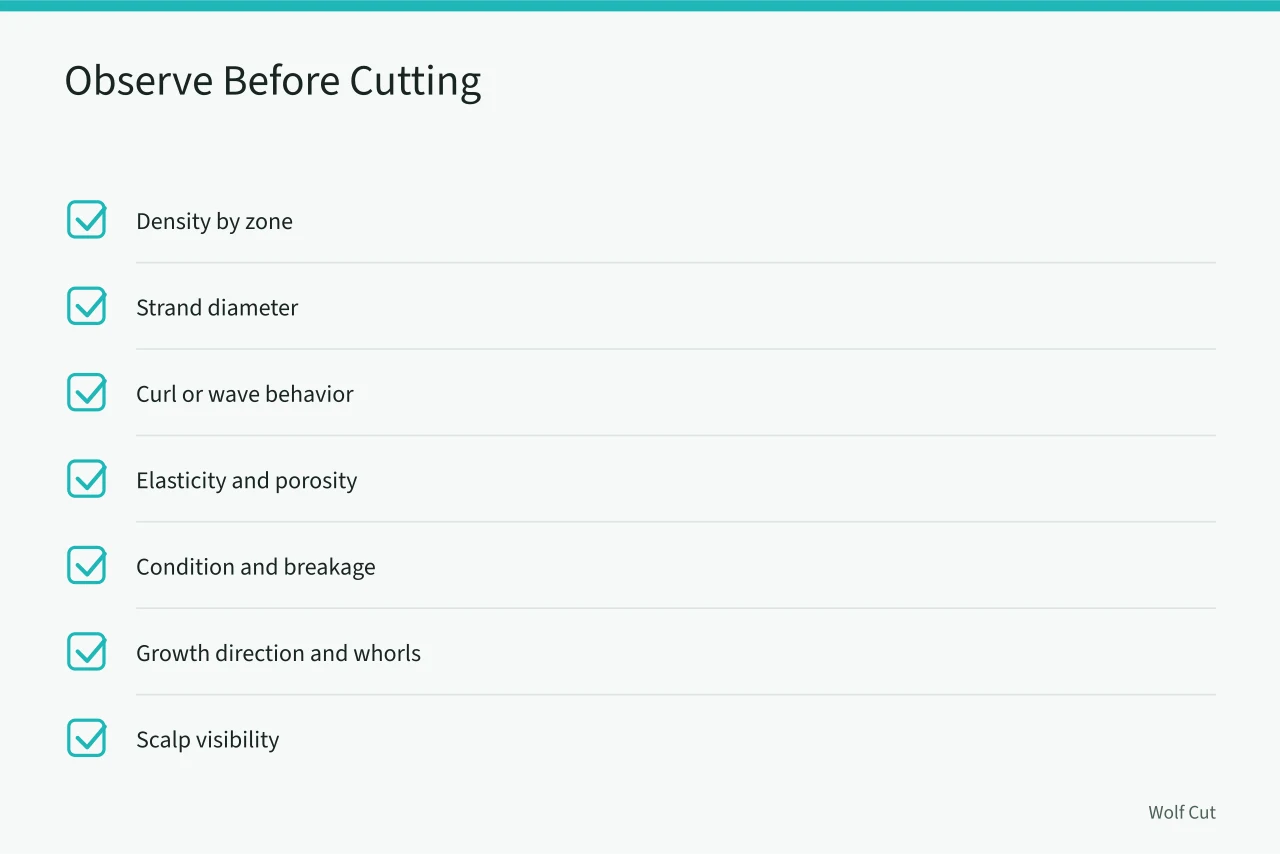
Observe what is present on this head today. Record density by zone, strand diameter, curl or wave behavior, elasticity, porosity, condition, previous chemical work, extensions, breakage, recession, growth direction, and scalp visibility. Do not infer those properties from ethnicity, gender, age, or a broad curl label.
Visible hair fiber is not living tissue. The NCBI overview of hair anatomy describes the shaft's cuticle, cortex, and medulla and separates it from the active follicle below the skin. Follicles pass through growth, transition, and resting phases.
For haircut design, cutting changes exposed fiber and silhouette; it does not speed a follicle up or change its biological cycle.
Define the silhouette first
Look from the front, profile, back, and above. Mark the widest point, narrowest point, perimeter, crown height, side volume, nape exposure, and front opening. A shape may read as compact, round, square, triangular, elongated, or deliberately irregular, but these are design descriptions, not rules tied to a face category.
Ask the client to move normally. Hair that looks balanced with the chin level may split or collapse when the head turns. Photograph the agreed starting state only with consent and under the salon's privacy policy.
Place length and weight
Length is not one number. Set a front reference, crown reference, side reference, nape reference, and perimeter. Write each in a way the client can understand, such as "collarbone when dry" or "ear remains covered."
Weight is the visual concentration of hair. A strong perimeter keeps weight low. Graduation builds a stacked transition. Layers shorten interior or upper hair so lengths travel and separate. Disconnection leaves two areas intentionally unblended. These choices can coexist, but each needs a reason. Comparing named layered shapes helps show which combination a client is actually asking for.
Use a simple zone table:
| Zone | Keep | Remove | Intended effect |
|---|---|---|---|
| Fringe and front | Opening and expression | ||
| Crown | Height, flatness, or separation | ||
| Sides | Width and ear exposure | ||
| Back | Profile and movement | ||
| Perimeter | Strength, softness, or taper |
Plan movement, not just still shape
Natural fall, curl return, whorls, parting, humidity, drying method, and daily handling all change where cut lengths sit. A wet section pulled straight can conceal how far it will rise. High tension can make an elastic or curly section spring shorter. Overdirection can preserve length in one direction and create movement in another.
Before cutting, decide whether the design depends on a fixed part, flexible part, air-dried curl, diffuser, round brush, flat wrap, iron, or product. If the style requires a daily process the client will not perform, redesign it.
Translate design into a cutting plan
Write the order before starting:
- preparation state, such as dry, damp, or wet;
- primary partings and sections;
- first guideline and its length;
- elevation and distribution for each zone;
- body and finger position;
- cutting line or angle;
- tension level;
- connection or disconnection points;
- cross-check direction;
- drying method and dry refinement limits.
The Australian competency unit on designing haircut structures asks for the same list on paper. It wants a finished plan in structural graphic form showing soft and hard interior and exterior lines, the starting point, sectioning and parting patterns, angles of lift, and distribution of hair.
The plan can change when real behavior appears, but the change should be deliberate and explained. The first reference on the head still has to be right, so build and follow a guideline before the rest of the structure leans on it.
Build visible checkpoints
Pause after the first perimeter, first side, first crown section, and first dry pass. Check balance with the client upright and shoulders level. Release clips, comb in natural fall, and look before chasing a millimeter difference caused by posture or curl.
Cross-check in a direction different from the cutting sections. A cross-check tests consistency; it does not replace the original design. Intentional asymmetry and disconnection should be marked so they are not "corrected" away. A sectioning and cross-check checklist keeps that mark visible through the service.
Finish honestly
The finish should reveal the cut. Use enough product to control the agreed texture, but do not inflate, curl, or pin hair solely to hide a shelf, hole, or weak perimeter. Show the client the shape from all sides, demonstrate the routine, and record the products, tools, and timing used.
Common questions
Is a haircut determined by face shape?
No. Facial features can inform proportion, but preference, hair behavior, identity, styling, and maintenance matter too.
Are layers the same as thinning?
No. Layers organize length; thinning or texturizing changes density and separation within the chosen shape.
Should every haircut be cross-checked?
Yes, but the direction and purpose should match the design and preserve intentional asymmetry.
Can cutting change the hair growth cycle?
No. Cutting changes exposed fiber length, not follicle biology beneath the skin.
In this guide
- Mapping head shape and natural hair movement before you cutMap head shape and natural hair movement with repeatable landmarks, dry observation, growth-direction notes, zone tests, photographs, and design checkpoints.
- Density, diameter, texture and growth pattern compared, not confusedHair density, strand diameter, texture, and growth pattern compared so haircut plans use distinct observations instead of vague type labels or stereotypes.
- Pre-cut consultation and design-plan checklist for 2027Pre-cut consultation checklist for goals, hair and scalp observations, service limits, length, shape, maintenance, consent, design notes, and final agreement.
- Nine planning problems that surface before the scissors even openHaircut planning problems guide for vague goals, conflicting photos, shrinkage, scalp warning signs, suspected lice, fragile hair, time limits, and safe responses.
- Separating shape from styling: a reference-photo haircut caseReference-photo haircut case showing how a stylist separated shape from styling, tested limits, agreed adaptations, cut with checkpoints, and documented care.