Guides
Adapting wolf cuts for Birmingham's curly and coily hair textures
A Birmingham curly wolf cut starts with shrinkage mapping, density checks and a wet to dry cutting plan built around each coily texture's natural spring.
What to take away
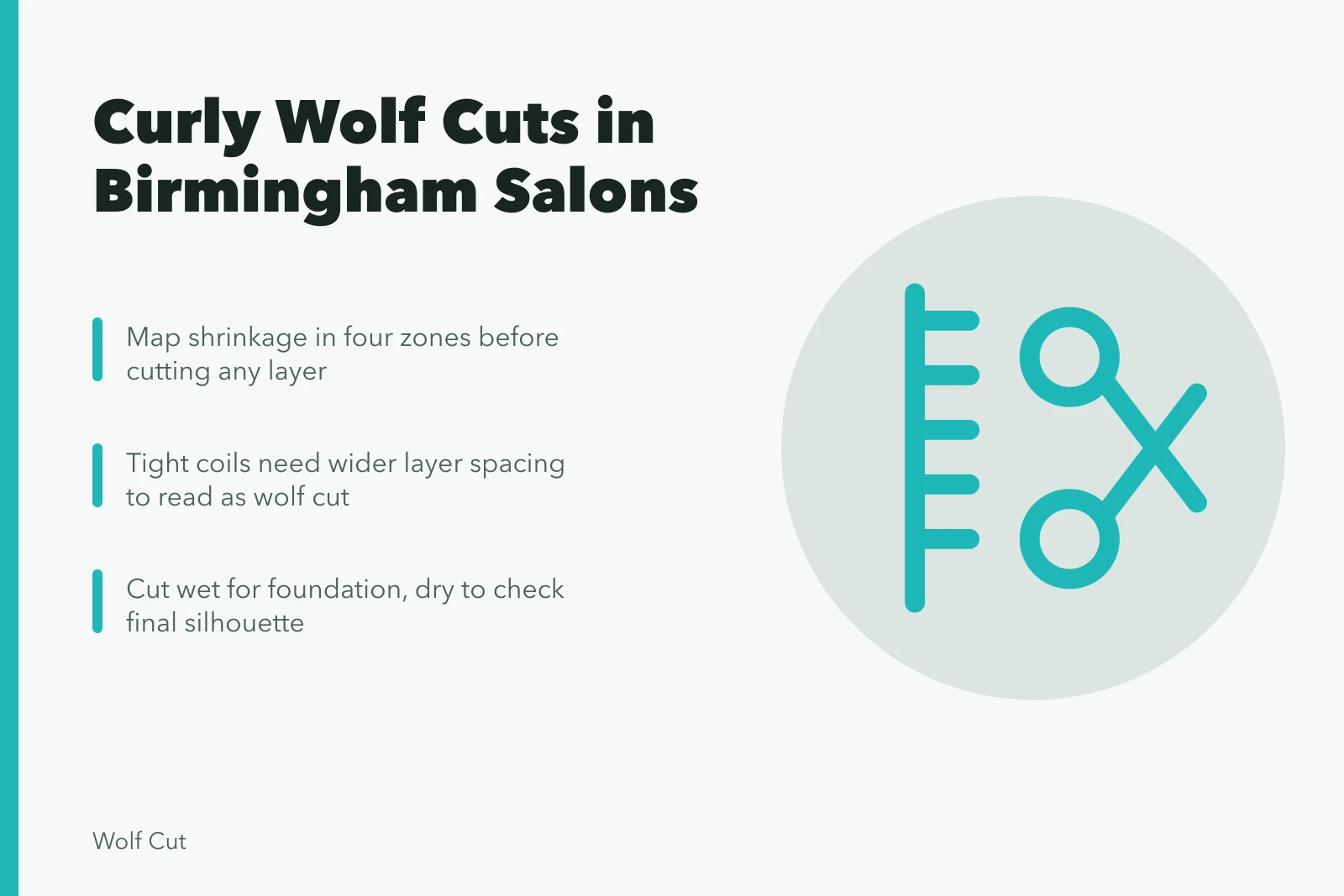
- Map shrinkage per zone before you plan a single layer. Crown, sides, nape and hairline all shrink at different rates.
- Density decides how much internal weight comes out. Tight coils at high density take far more removal than the same coils at low density.
- Cut the foundation wet for clean sections, then refine dry so the silhouette you leave is the one the client sees.
- Remove weight through the mid-lengths before you touch the perimeter, or the shape widens into a triangle as it dries.
- Book the two-week refinement before the client leaves. Coily hair settles, and small corrections keep the shape sharp.
What Birmingham's chair actually holds
Birmingham runs one of the most mixed client books in the UK. Loose 2C waves and tight 4C coils turn up in the same week, sometimes on the same head.
The ONS cultural identity figures show how varied the city's communities are, and that variety walks straight into the salon. No single curl chart covers the chair.
Population churn matters for booking. Students, new arrivals and long-established families share the same appointment book, and the ONS population statistics give the backdrop to that movement.
Short appointment slots are the real constraint. A properly mapped wolf cut on coily hair does not fit a standard slot, so either build in the extra time or book a longer consultation.
Shrinkage mapping, zone by zone
Shrinkage is the gap between the length you see wet and the length the client sees dry. On 4C hair that gap is large enough to change the whole plan.
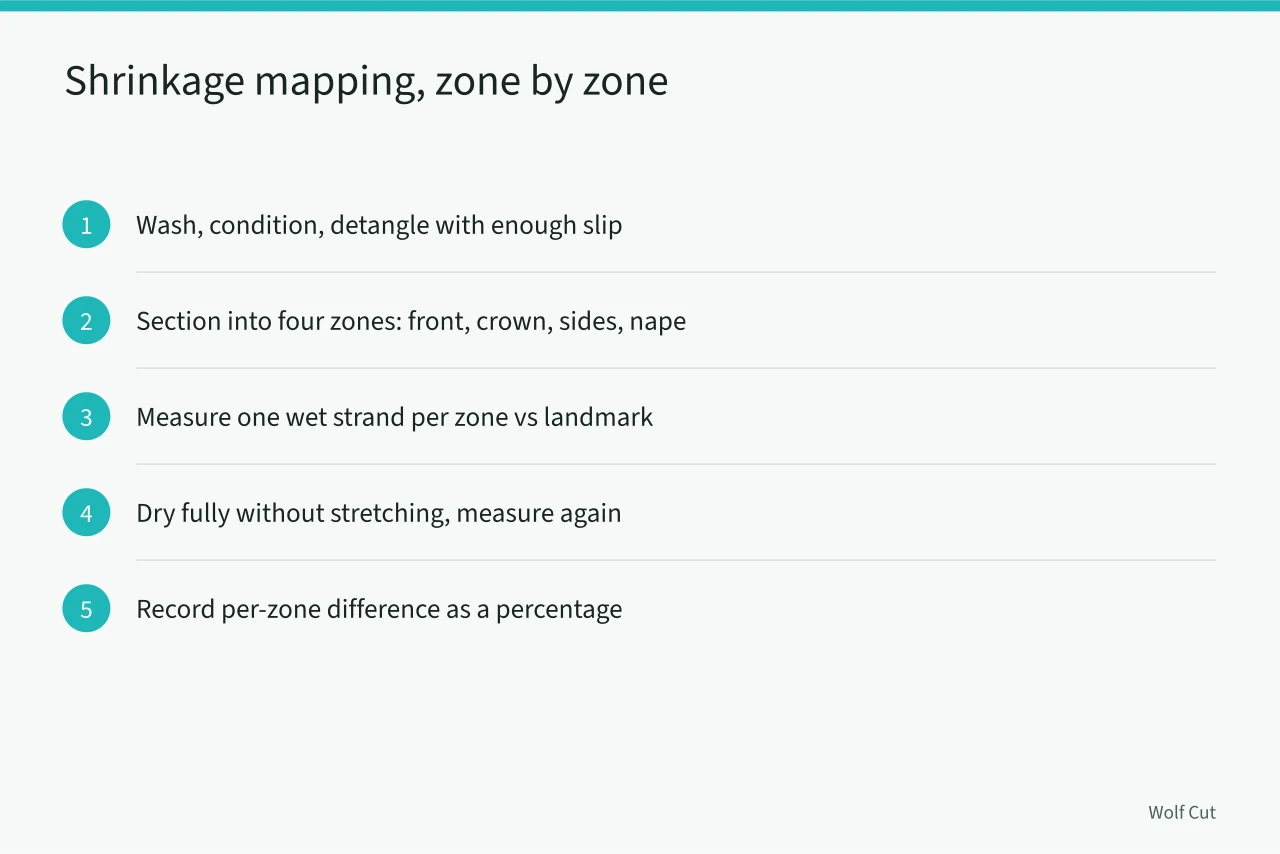
Work the head in zones, not as one mass. Crown, sides, nape and front hairline shrink at different rates, and a zone map turns a vague shape into something you can cut to.
- Wash, condition and detangle with enough slip that the comb passes without tugging.
- Section into four zones: front hairline, crown, sides, nape.
- Measure one wet strand per zone against a fixed landmark, such as the jaw or shoulder.
- Dry fully without stretching, then measure the same strands again.
- Record the difference per zone as a percentage you can plan layers around.
The curly and coily haircutting guide sets out the same shrinkage and density logic in more depth. Read it before you build a zone map for a new client.
With the percentages in hand, you can predict where each layer lands dry. A client asking for shoulder length may need the wet cut to fall well past the shoulder.
Density and curl pattern decide the layering
Density is how many strands sit on the scalp. Curl pattern is how those strands bend. Both move your layer placement.
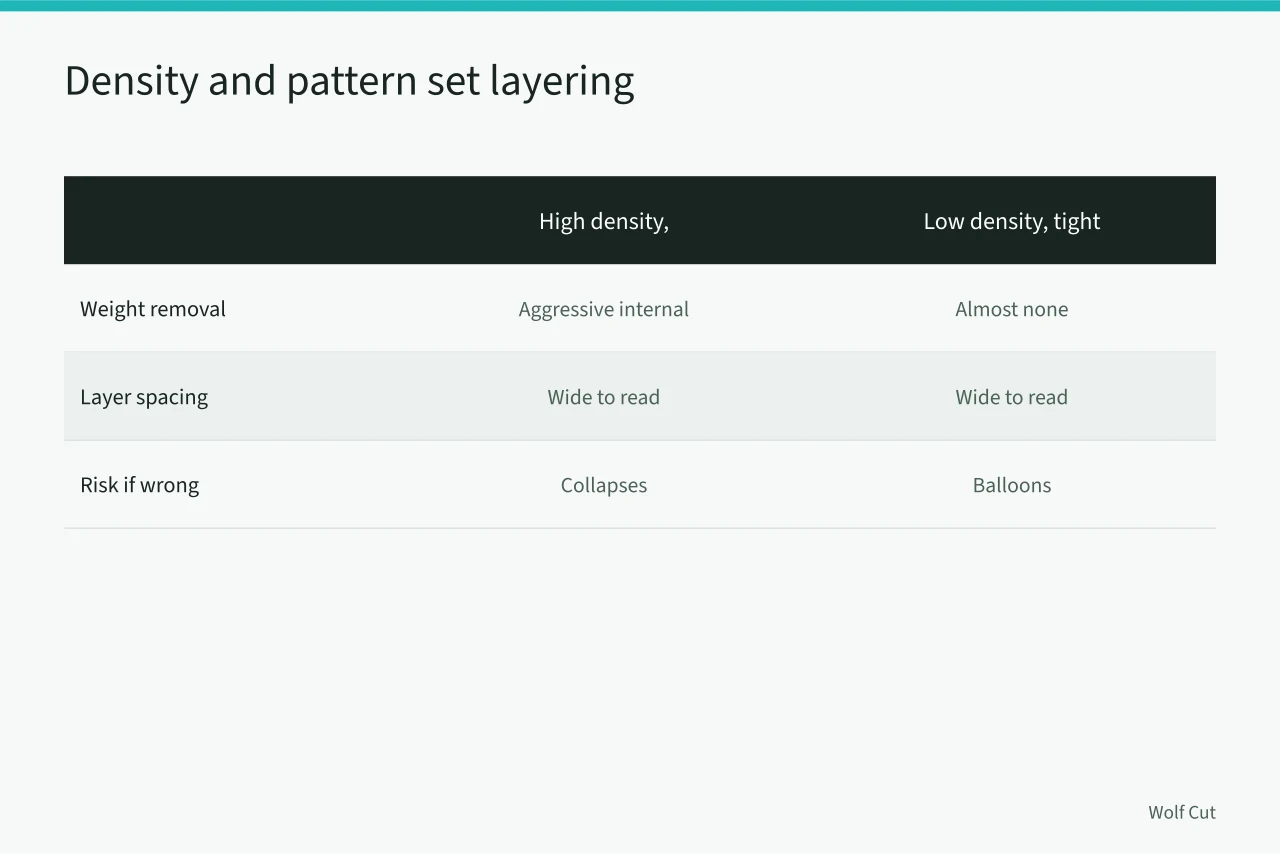
High density with tight coils needs aggressive internal weight removal. Low density with the same coil size needs almost none. Get it wrong and the cut either collapses or balloons.
Pattern sets layer spacing. Tight coils hide graduation, so layers need more distance to read as a wolf cut at all. Loose waves show every line, so spacing can close up.
Take a client with 4B coils, high density and a strong front hairline. Tight, standard layers will sit like a helmet. Widen the spacing, take weight through the mid-lengths, keep the fringe soft.
Where the crown is tighter than the sides, treat each zone on its own terms. The mixed-pattern curly haircut case shows how a zone-by-zone map changes the finished shape.
Wet cutting for the foundation, dry for the truth
Wet cutting gives clean sections, tension and control. Dry cutting shows the shape the client will actually wear. Most coily wolf cuts need both.
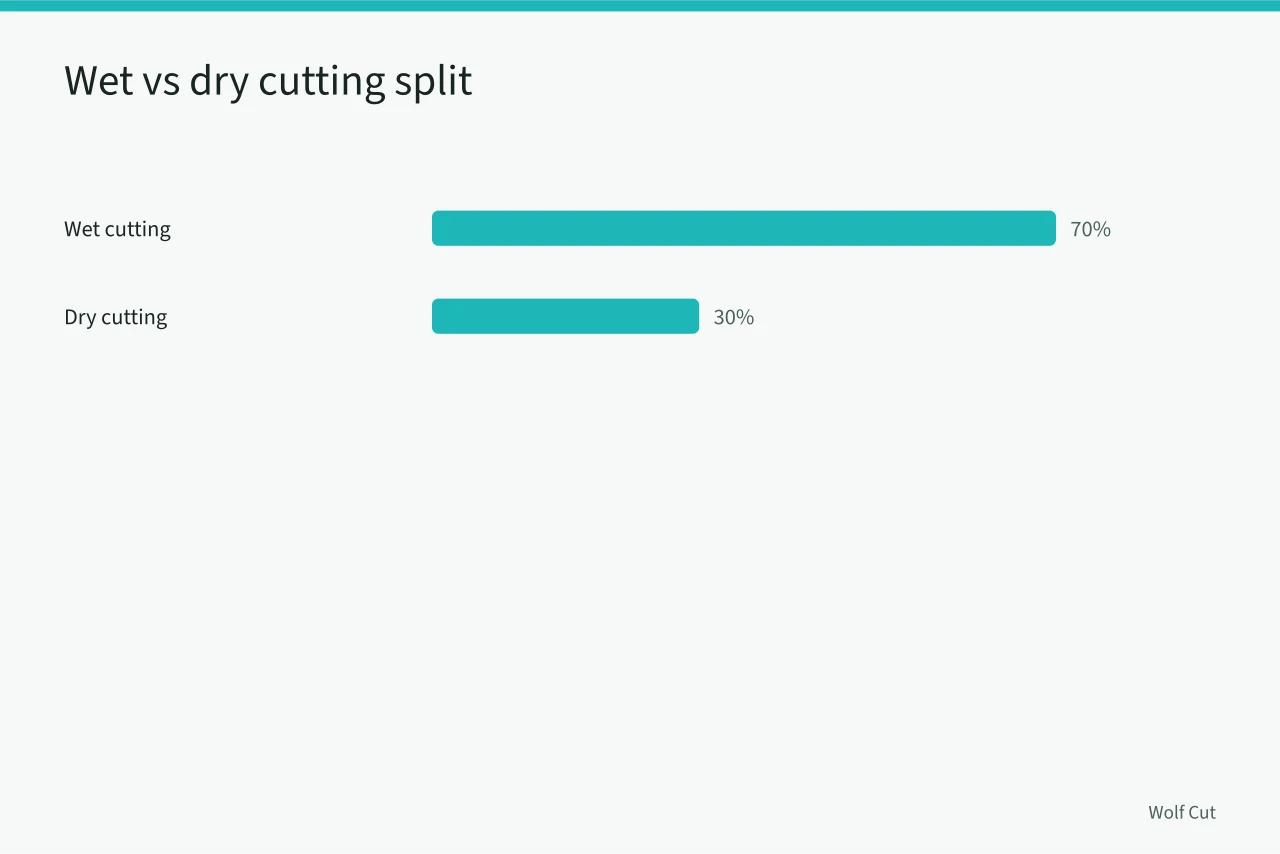
Cut the foundation wet: perimeter, rough layering, and any weight removal that needs precision. Water and conditioner let you slide through dense coils without snagging.
Switch to dry for detail. Check the silhouette, refine the face framing, and confirm the layers sit where the shrinkage map predicted. Dry work on coily hair is slower and far more predictable.
A workable split is roughly 70 per cent wet, 30 per cent dry, adjusted for how the client wears their hair. Anyone who diffuses daily needs more dry work.
The wet vs dry curly haircut comparison covers how each method controls shrinkage. Use it to set your split per client rather than applying one rule.
Never finish a coily wolf cut wet and send the client home. What they see dry will not match what you left the chair.
Weight removal and a perimeter that stays soft
The triangle is the classic wolf cut failure on thick, coily hair. Leave weight at the perimeter and the shape widens as it falls.
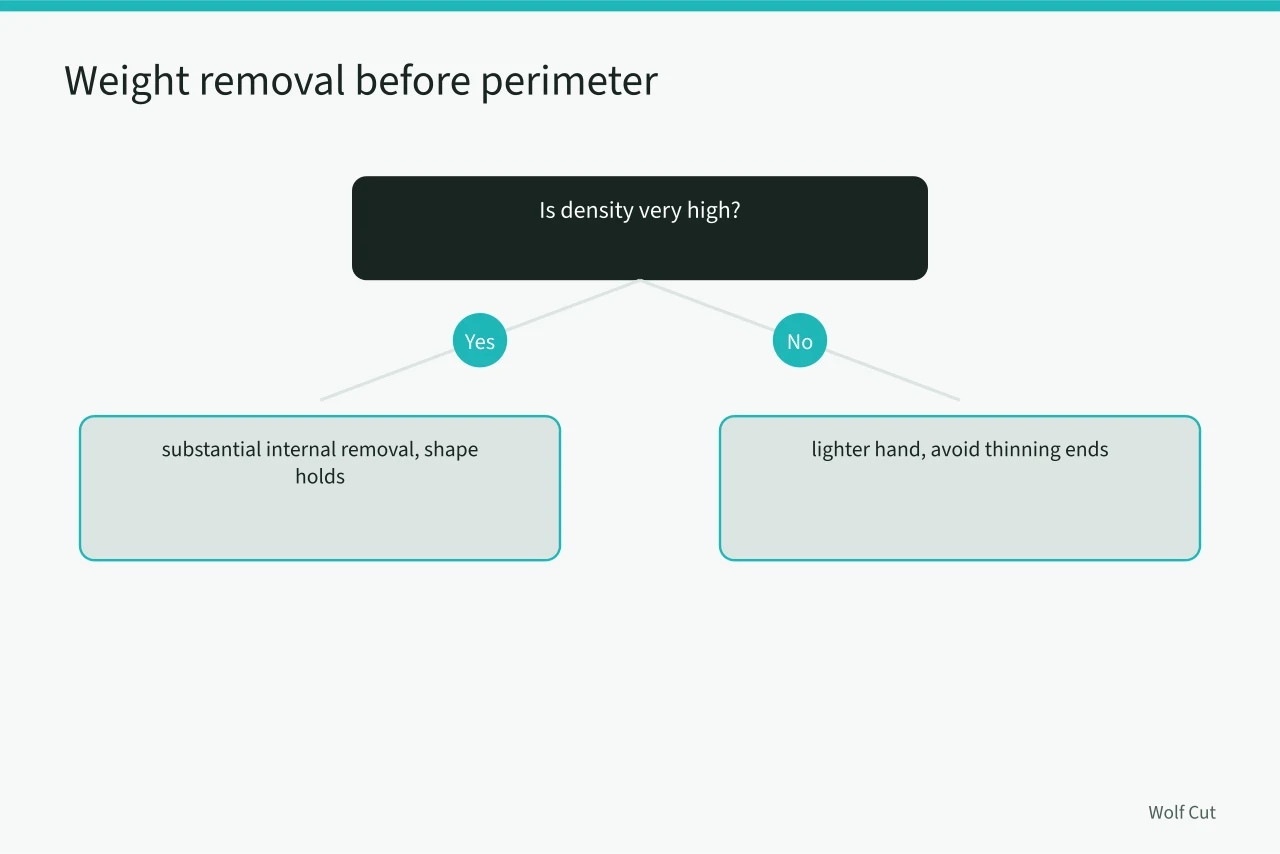
Remove weight internally first. Slide cutting, point cutting and carving through the mid-lengths all reduce bulk without touching the outline. Do this before you refine the perimeter.
Keep the perimeter soft, not blunt. A heavy blunt line on coily hair reads as a shelf once it dries. Break the outline and keep it light.
Density sets how far you go. Very high density takes substantial internal removal and still holds shape. Medium density needs a lighter hand, or the ends thin and the weight line disappears.
Check the shape from front, side and back as you work. Coily hair changes silhouette with position, and what looks balanced head-on can look wide in profile.
Plan the whole cut before you pick up the scissors. The customized wolf cut planning approach carries a zone map through to the finish, which suits coily textures better than cutting by eye.
Consultation, aftercare and the two-week check
Consultation does most of the work on coily hair. Clients arrive with a photo of a looser texture and expect that result. Show them what their own shrinkage does to that shape.
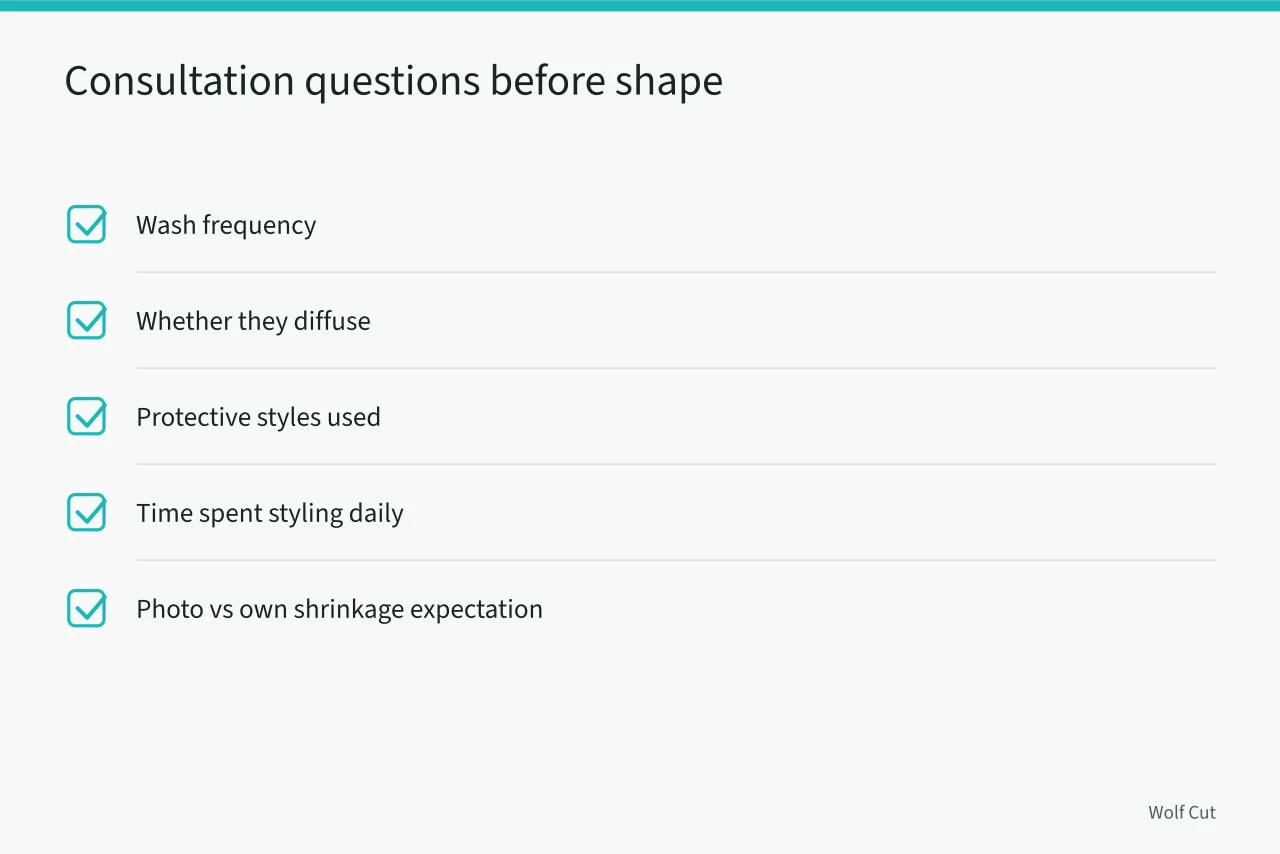
Ask about routine before you talk shape: wash frequency, whether they diffuse, protective styles, and how much time they will spend styling. The answers decide what is realistic.
Use a written list so nothing is missed. The curly haircut checklist covers the consultation and shrinkage questions worth working through with the client.
Birmingham's water runs hard and can leave coily hair feeling drier. A chelating wash every few weeks, plus a leave-in with real slip, is a reasonable starting point.
Match styling advice to the cut. A coily wolf cut needs a gel or cream that holds the coil without crunch, applied to soaking wet hair and diffused or left to air dry.
Book the follow-up before they leave. Coily hair settles over the first two weeks, and a small refinement at that point keeps the shape sharp.
Referrals, records and the rules that vary
Birmingham has a deep bench of stylists who cut coily hair well. Referring out is a professional move, not a failure.
Look for stylists with curl-specific cutting training rather than general hairdressing alone. Curl education usually sits alongside standard qualifications, so ask what a stylist has actually completed.
Licensing, insurance and hygiene requirements vary by council and by premises. Your local authority environmental health team inspects salons, and the Health and Safety Executive sets the workplace rules, including COSHH for the products on your trolley. Confirm current requirements with the relevant body rather than relying on what another salon does.
Business obligations vary too. HMRC handles VAT registration and self-assessment, Companies House handles company registration, and the Information Commissioner's Office covers client records under data protection law. The National Hair & Beauty Federation and the Freelance Hairdressers Association both advise stylists on these points.
Awarding bodies such as City & Guilds and VTCT give a baseline qualification, but curl-specific skill is usually learned separately. Ask directly.
Keep a short referral list for textures you do not cut often. It protects the client's hair and your reputation at the same time.
Common questions
How much shrinkage should I expect on coily hair?
It varies by pattern and by zone, which is why you measure rather than guess. Tight 4C coils lose a large share of their wet length; looser patterns lose less. Map each zone before you cut.
Should a coily wolf cut be cut wet or dry?
Most stylists use both. Cut the foundation wet for control, then refine the silhouette dry so you can see the finished shape. The split depends on how the client wears their hair.
Why does a coily wolf cut turn into a triangle?
Too much weight stays at the perimeter. Remove weight internally through the mid-lengths first, then keep the outline soft and broken rather than blunt.
When should I refer a client to another stylist?
When the texture sits outside your regular work, send them to a curl-trained stylist. A short referral list protects the client's hair and your reputation.