Guides
How to ask for a wolf cut without a photo and still get the shape
Ask for wolf cut without photo by naming four shape zones, length, and weight, then confirm bangs. Scripts, checks, and the exact words you hand a stylist.
What to take away
- A photo is a starting point, not a specification. Stylists read images by silhouette, not by your words.
- You can replace the photo with four spoken zones: fringe, face frame, crown layer, and perimeter.
- Name a length in inches and a weight in words (light, medium, heavy). Those two numbers do most of the work.
- Ask the stylist to repeat the plan back before the first cut. That single check catches most misreads.
- If two stylists give you different plans, ask each to point at the zone they disagree about.
Why the photo often fails
A reference photo carries information you cannot see: the model's density, growth pattern, and how much product sits in the hair. Stylists trained in cosmetology programs learn to read those variables, so they translate the image into their own cutting plan rather than copying it.
The wolf cut itself is a layered shape with a soft, tapered outline and a shorter crown. The wolf cut definition covers its origins and general form, which is useful background before you sit down.
When you hand over an image, the stylist may copy the picture's proportions onto a head with different proportions. The result looks wrong to you and correct to them. Words force both of you onto the same map.
The four zones you name out loud
Every verbal consultation should cover the same four zones. Name them in this order.
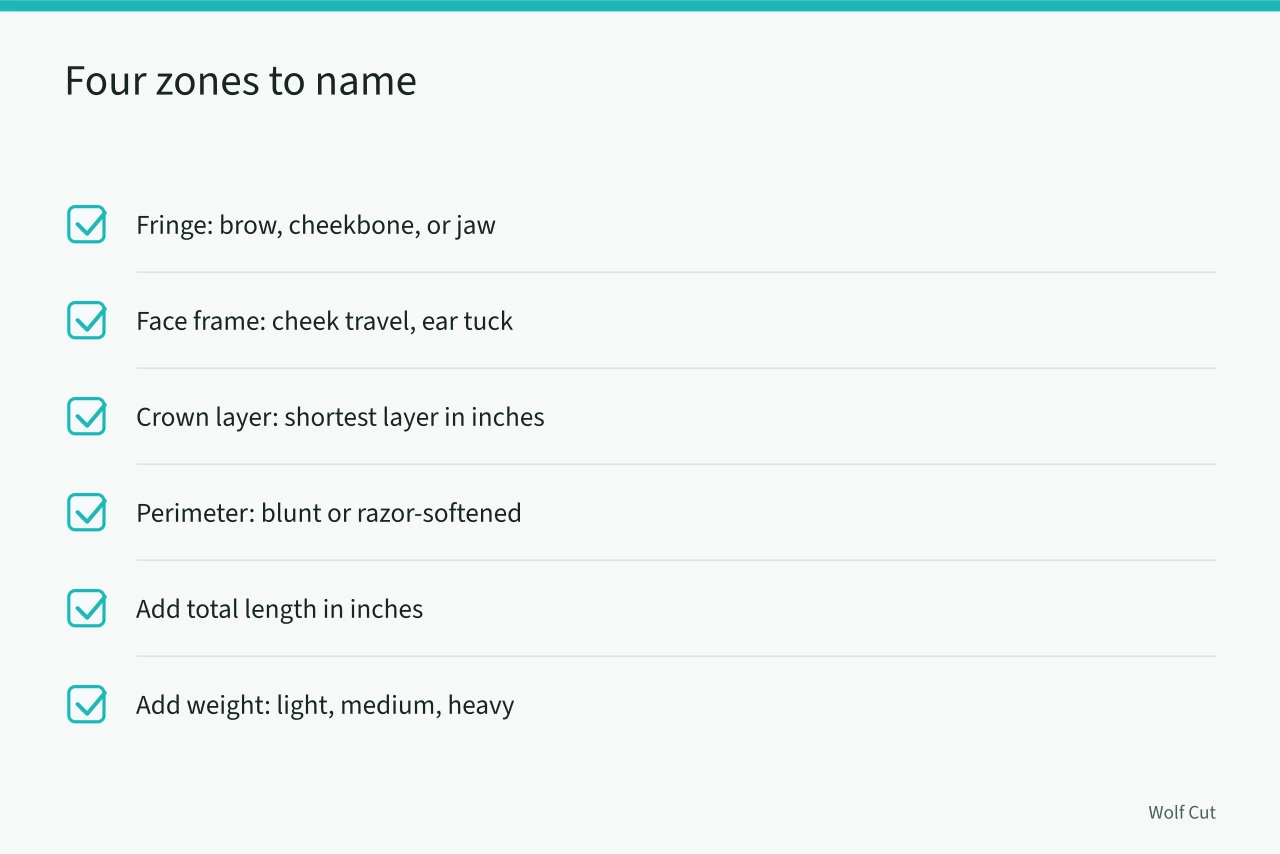
- Fringe. Say where it lands: brow, cheekbone, or jaw.
- Face frame. Say how far it travels down the cheek and whether it tucks behind the ear.
- Crown layer. Say how short the shortest layer is, in inches, measured from the scalp.
- Perimeter. Say whether the ends stay blunt or get softened with a razor.
Then add two numbers: total length in inches, and weight as light, medium, or heavy. A stylist who hears "jaw-length fringe, frame to the cheekbone, three-inch crown layer, soft perimeter, twelve inches of length, medium weight" has a plan.
Scripts that survive a busy Saturday
"I want a wolf cut. Fringe at the brow, face frame to the cheekbone, crown layer about three inches, perimeter softened but not thinned, twelve inches total, medium weight. Can you say that back to me?"
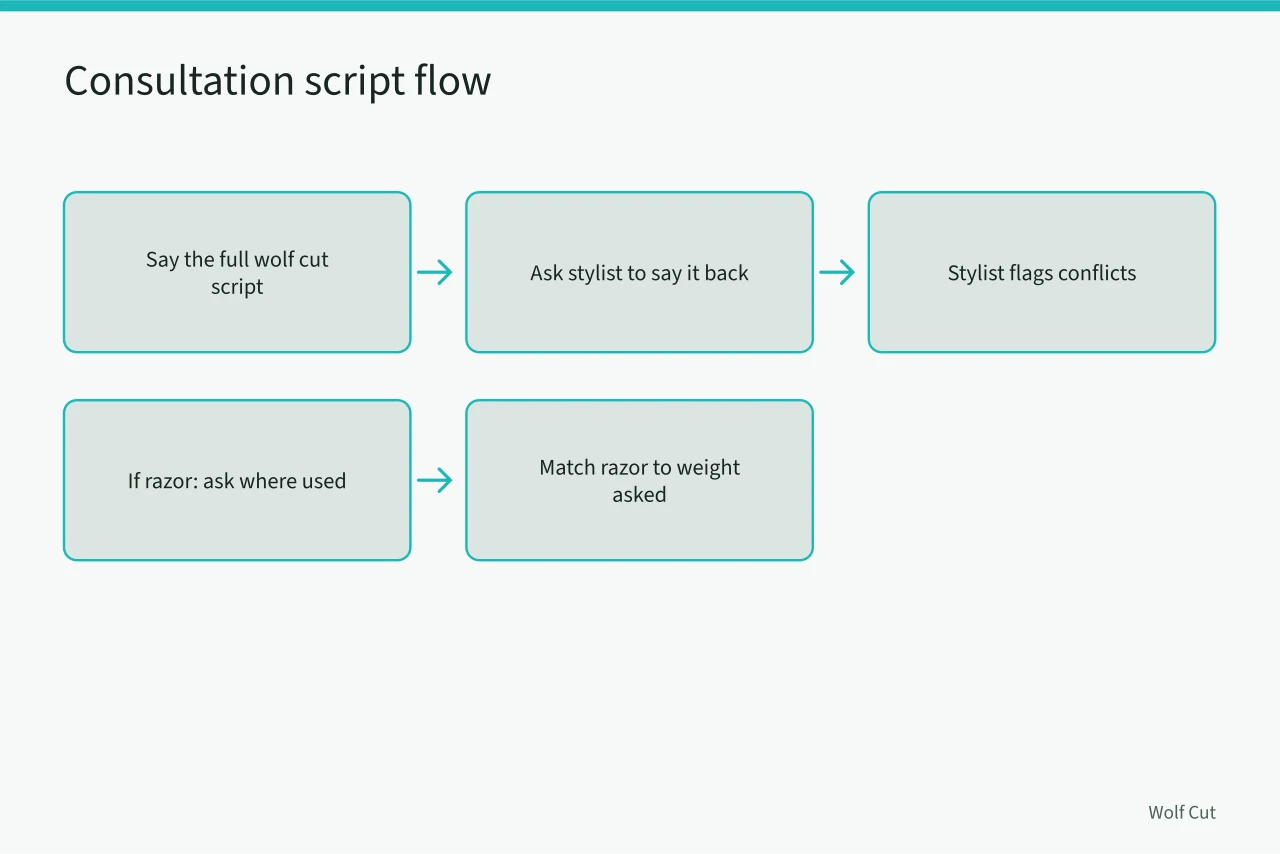
That last sentence is the whole method. It is a request for confirmation, not a test. It also gives the stylist a chance to flag a conflict, such as a crown layer that is too short for the density in front of them.
If the stylist reaches for a razor, ask where it will be used. Razor work gives softness and movement, but it removes bulk. The razor cutting technique is a tool choice, not a style choice, and it should match the weight you asked for.
How to check each step came out right
Checks happen during the cut, not only at the end.
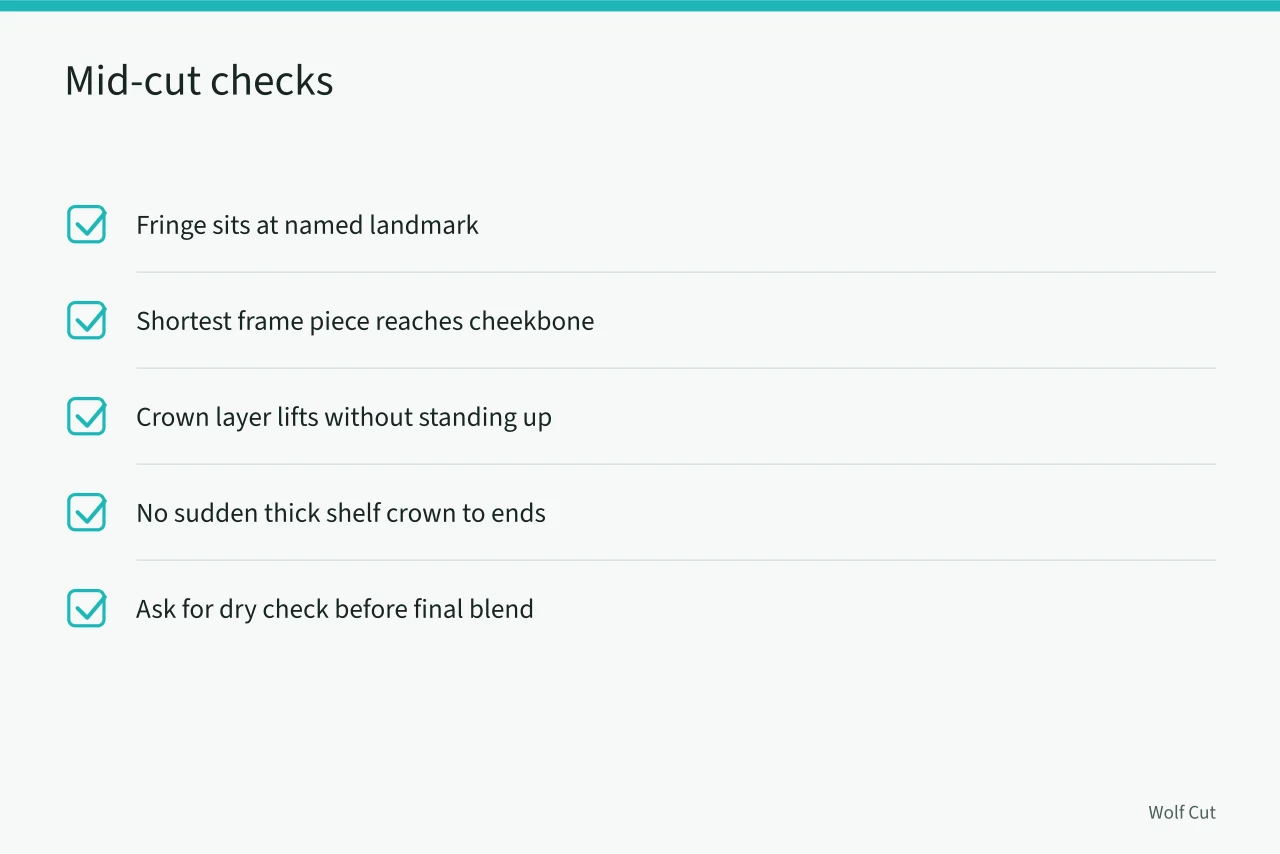
- Fringe check: with your head upright, the fringe sits at the landmark you named.
- Frame check: the shortest face-framing piece reaches the cheekbone when pulled forward.
- Crown check: the shortest layer lifts off the scalp without standing straight up.
- Weight check: a hand run from crown to ends meets no sudden thick shelf.
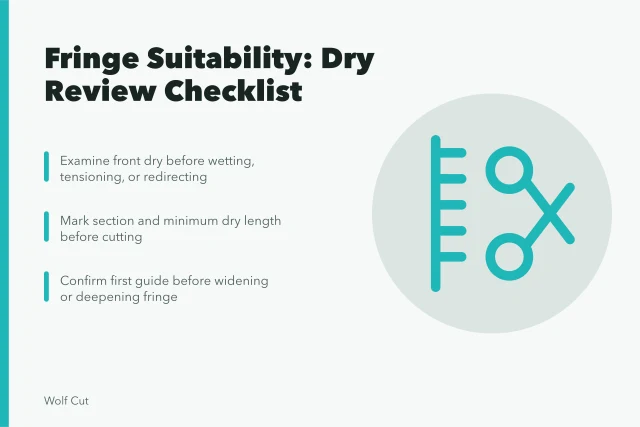
Ask to see the shape dry before the final blend. Wet hair lies flat and hides how much the layers will spring up. A dry check is the only honest one.
Example of a misread and its fix
A client asks for "short layers and long ends." The stylist hears a shag and cuts a four-inch crown layer. The client wanted two inches of lift and a fuller perimeter.
The recovery is a weight-line adjustment, not a recut. The stylist takes horizontal sections through the crown and removes a small amount from the interior, leaving the surface layer alone. This softens the shelf without shortening the outline.
Name that recovery before the cut starts: "If the crown reads too heavy, blend the interior, do not shorten the perimeter." Stylists recognize the instruction and will follow it.
When to stop and hand it to a professional
Stop cutting yourself, or stop pushing a stylist, when the shape needs a structural change rather than a blend. That condition is simple: if fixing the result requires removing length from the perimeter or rebuilding the crown, the job belongs to a trained cutter.
A second condition applies at home. If you cannot see the back of your own head in two mirrors at once, you cannot check the crown layer, so you cannot verify the step.
Common questions
Can I describe a wolf cut without a photo at all?
Yes, if you name the four zones, a length in inches, and a weight. Stylists are trained to build a shape from measurements, and many prefer it to a picture.
What if the stylist insists on a photo?
Offer a celebrity name or a described silhouette instead, then repeat the four zones. A stylist who still cannot proceed is telling you they work visually, which is useful information.
How do I know the crown layer is right before it is finished?
Ask to see the shape dry, with the head upright. Wet checks hide how much the layers will lift.
Should I bring a photo anyway?
Bring one as a reference for mood, not as a blueprint. Say plainly which parts you want and which parts you do not.