Rules
Wolf cut salons in New York City, Chicago and Los Angeles compared by price and wait
A US metro comparison of wolf cut salon prices and waits in New York City, Chicago and Los Angeles, plus tipping, maintenance and booking advice.
Wolf cut salons in New York City, Chicago and Los Angeles compared by price and wait
What to take away
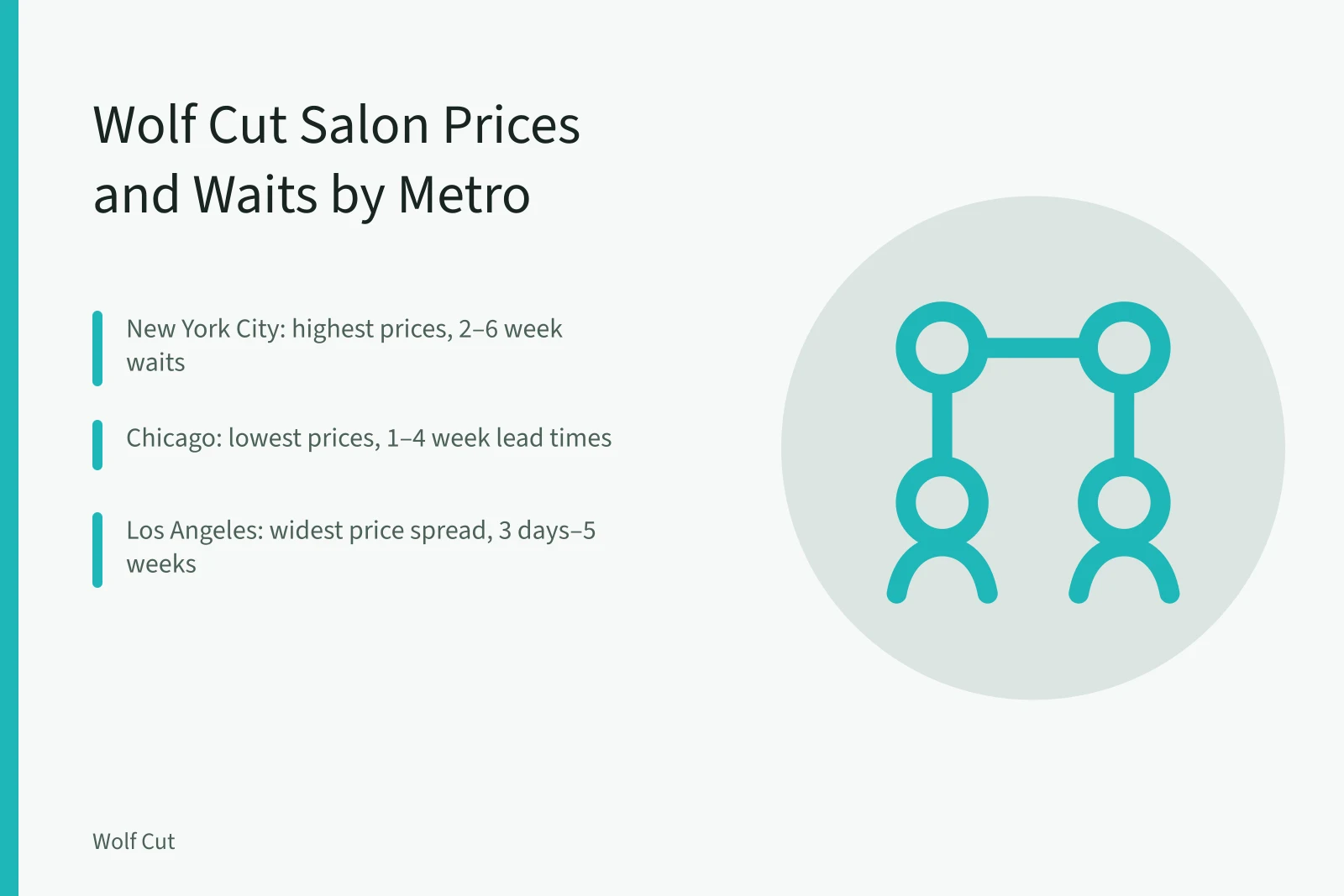
- New York City has the highest price posture and longest typical waits among the three metros.
- Chicago usually offers the lowest prices and shorter lead times, though senior stylists still book out.
- Los Angeles has the widest range, with Westside and beach salons higher than inland shops.
- A wolf cut needs trims every 8 to 12 weeks to keep layers and shape.
- Tip 15 to 20 percent on the pre-tax service total, not on retail products.
US metro comparison at a glance
US metro comparison
Price posture
- New York City
- Highest
- Chicago
- Lowest
- Los Angeles
- Widest spread
Booking lead time
- New York City
- 2 to 6 weeks
- Chicago
- 1 to 4 weeks
- Los Angeles
- 3 days to 5 weeks
Main demand driver
- New York City
- Rent, media, finance
- Chicago
- Neighborhood loyalty, lower rent
- Los Angeles
- Entertainment, beach vs inland
Named salons to call for a direct price and wait check include the following. Typical ranges are for senior stylists, not quotes. Confirm current price and next opening with each salon.
| Named salon | Metro | Typical senior cut price | Typical booking lead time |
|---|---|---|---|
| Bumble and bumble | New York City | $200 to $400 | 3 to 6 weeks |
| Sassoon Salon | New York City | $150 to $350 | 2 to 5 weeks |
| Maxine Salon | Chicago | $80 to $180 | 1 to 4 weeks |
| Art + Science Salon | Chicago | $70 to $160 | 1 to 3 weeks |
| Nine Zero One Salon | Los Angeles | $200 to $450 | 2 to 5 weeks |
| Meche Salon | Los Angeles | $150 to $350 | 3 days to 4 weeks |
How the wolf cut changes US salon demand
The wolf cut mixes shag layers, soft volume, and a heavy top. It is not a single scissor pass. A stylist must read growth patterns, density, and face shape before cutting. That work takes time, and time sets the floor for salon pricing.
The wolf cut definition explains its layered structure, which helps explain why appointments run longer. In US metros, demand clusters around neighborhoods with high foot traffic and media work. New York and Los Angeles have dense fashion and entertainment clients. Chicago spreads demand across established neighborhood salons rather than one downtown core. Wait times follow that demand.
New York City price tiers and booking lead times
New York has high rent, high labor costs, and a deep pool of clients who book ahead. Manhattan and parts of Brooklyn sit at the top of the US price range for a specialty cut. A junior stylist may have shorter waits; a senior stylist can run weeks out.
NYC Salon Call Script
- Call three salons in your budget
- Ask starting price and stylist level
- Ask next available slot
- Ask if price changes for long or thick hair
The Bureau of Labor Statistics tracks wages for barbers, hairstylists, and cosmetologists, and those wages feed into menu prices. To compare tiers, call three salons in your budget. Ask for the starting price, the stylist level, and the next available slot. Ask if the price changes for long or thick hair. That script saves a wasted trip.
Chicago salon pricing and wait patterns
Chicago often lands below New York and coastal Los Angeles on salon pricing. The city has a lower cost of living, which can soften rent and service menu prices. A Chicago overview notes the city's broad economic profile.
Chicago Booking Windows
- Weekend slotsbook out early
- Weekday morningseasier
- Tue-Thu afternoonseasier
- Senior stylistbook 2-4 weeks ahead
- Junior stylistcan fit sooner
Popular Chicago stylists still book out for weekend slots. Weekday mornings and Tuesday to Thursday afternoons are easier. If you want a specific senior stylist, book two to four weeks ahead. If you are flexible, a junior stylist can fit you sooner.
Los Angeles neighborhood pricing and demand
Los Angeles is not one market. West Hollywood, Santa Monica, and Beverly Hills tend toward premium pricing. Inland and Valley salons may charge less for the same technical cut. Traffic also affects wait time because a late client can push the whole day.
For a wolf cut, ask whether the salon cuts dry or wet. Dry cutting shows the final shape sooner. Wet cutting can hide shrinkage until the hair dries. Both methods work, but the timing and price can differ.
Example booking plan for a wolf cut
Example booking plan
- Pick three salons within a 30 minute travel radius. Check their social feeds for recent wolf cuts, not just long layers.
- Call and ask for a consultation plus cut price, stylist level, and next opening. Note the deposit rule.
- Book the earliest slot that matches your budget and hair density. If the quote is vague, keep looking.
US tipping and the final bill
US salon tipping is customary. Most clients tip 15 to 20 percent on the pre-tax service total. Cash is welcome, but card tips are common. Ask if the salon adds a service charge or splits tips with assistants.
A tip applies to the service, not the retail product.
For a cross-border comparison, the Toronto page explains what a wolf cut costs in Toronto CAD and how Ontario tipping works.
Maintenance cost after the first cut
A wolf cut grows out at the layers. To keep the shape, plan a trim every 8 to 12 weeks. A trim usually costs less than the first cut, but not always. Some salons charge the same because the stylist still reshapes the perimeter.
At home, you need a texturizing spray or sea salt mist, a round brush, and a diffuser if you have waves. Those products add to the total cost of ownership. Budget for them when you compare salons.
- Book the first cut with a consultation.
- Ask for a dry cut if you wear your hair wavy.
- Set a trim reminder for 8 to 12 weeks.
- Confirm the tip policy before you pay.
Demand lessons from other markets
Trend speed changes how salons price and schedule. If you want to see how city demand shifts lead times, the UK city demand comparison tracks London vs Manchester vs Glasgow.
Those markets show that a viral cut can raise prices in one city while another stays flat. US metros follow the same pattern. New York reacts fast, Chicago absorbs demand more slowly, and Los Angeles splits by neighborhood.