Rules
Cardiff salon rules, a checklist for licensing and environmental health
Cardiff salon licensing: register with Cardiff Council, pass environmental health checks, and keep hygiene, COSHH and waste records for your salon.
What to take away
- Cardiff salon licensing starts with the right council registration and a premises that meets environmental health standards.
- Environmental health officers check hygiene, chemical storage, waste records and staff training, not just the salon's appearance.
- COSHH duties apply to every chemical you use, from colour to cleaning products, and require assessments and safe storage.
- Waste duty of care means you must store, transfer and document salon waste correctly, with transfer notes kept for two years.
- A simple records system and a pre-inspection walkthrough keep you ready for reinspection at any time.
Which Cardiff salon activities need council licensing
A salon on Queen Street, Wellfield Road or inside the Castle Arcade registers its premises with Cardiff Council before opening. Cardiff's environmental health, trading standards and licensing work is delivered through Shared Regulatory Services, a partnership with Bridgend and the Vale of Glamorgan.
Hairdressing, barbering, beauty treatments, and activities such as skin piercing, tattooing, or electrolysis all fall under that registration or licensing duty. If you are unsure which licences apply, start with the UK government's licence finder to see what a Cardiff salon needs.
Use the Find a licence - GOV.UK tool to check by activity and location. It covers special treatments, skin piercing, and other regulated services. Cardiff Council also requires food business registration if you serve food or drink beyond simple refreshments.
Alcohol sales need a premises licence. For a standard hair salon, the main requirements are premises registration and compliance with health and safety law.
Mobile and freelance stylists working across Cardiff, from Llandaff to Penylan, must still meet hygiene and COSHH duties, even without a fixed premises. They register with the council where their business is based.
If you rent a chair, the salon owner usually holds the premises registration, but you share responsibility for hygiene and safe chemical use. The clipper service checklist explains how to build a one-way tool path that satisfies inspectors and protects clients.
Salons that offer treatments such as microblading, piercings, or laser treatments need additional licences and often specialised training. Cardiff Council's licensing pages list these separately. Check the Wales legislation site for the specific regulations that apply in Wales, as some rules differ from England.
The Wales legislation collection is the starting point for Welsh salon rules.
Step-by-step: registering with Cardiff Council
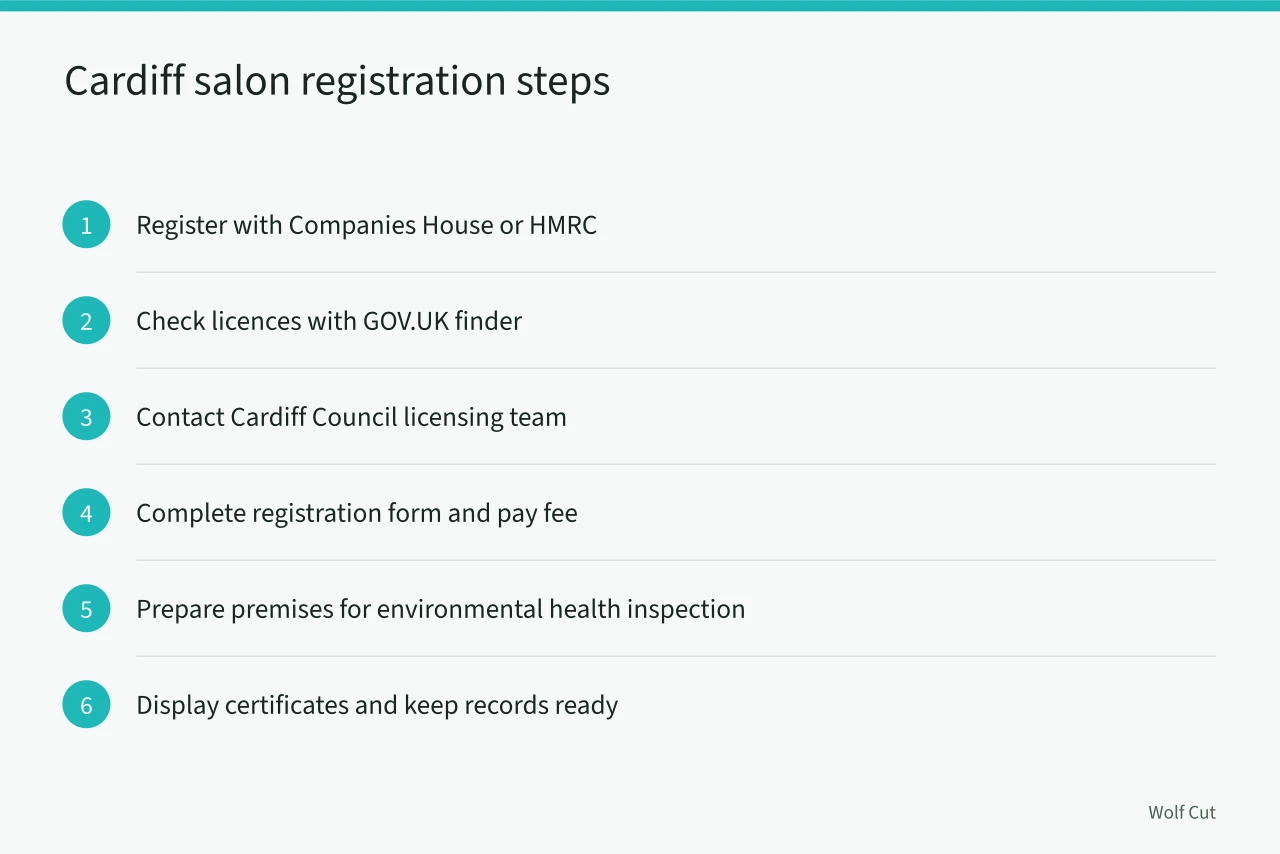
- Identify your business structure and register with Companies House if you are a limited company. Sole traders register with HMRC for self-assessment.
- Check which licences or registrations your activities need using the GOV.UK licence finder. For a standard hair salon, premises registration with Cardiff Council is usually required.
- Contact Cardiff Council's licensing team at City Hall in Cathays Park. Address and phone details are listed through the Find your local council - GOV.UK service, and Cardiff licensing enquiries route through Shared Regulatory Services.
- Complete the registration form and pay any fee. Fees vary by activity and are set by the council.
- Prepare your premises for an environmental health inspection. This includes hygiene, ventilation, waste storage, and chemical safety.
- Display any required certificates and keep records ready for inspection.
Registration is not a one-off task. You must notify the council of changes to your business, such as a new address or additional treatments. If you take on employees, you need employer's liability insurance and a health and safety policy. For more detail on tool hygiene, see the curly haircut checklist.
Cardiff Council may inspect your salon after registration or at any time. The frequency depends on the risk rating of your business. High-risk activities, such as skin piercing, attract more frequent inspections. Keep your contact details up to date so you receive any correspondence.
What environmental health officers check on inspection
Environmental health officers from Shared Regulatory Services inspect salons across Cardiff, from Roath and Cathays to Pontcanna and Grangetown, to check hygiene and safety standards. They look at the premises, procedures, and records.
An inspection covers how you prevent infection, handle chemicals, and manage waste, not just surface cleanliness. Officers can issue improvement notices or close a salon if conditions are unsafe.
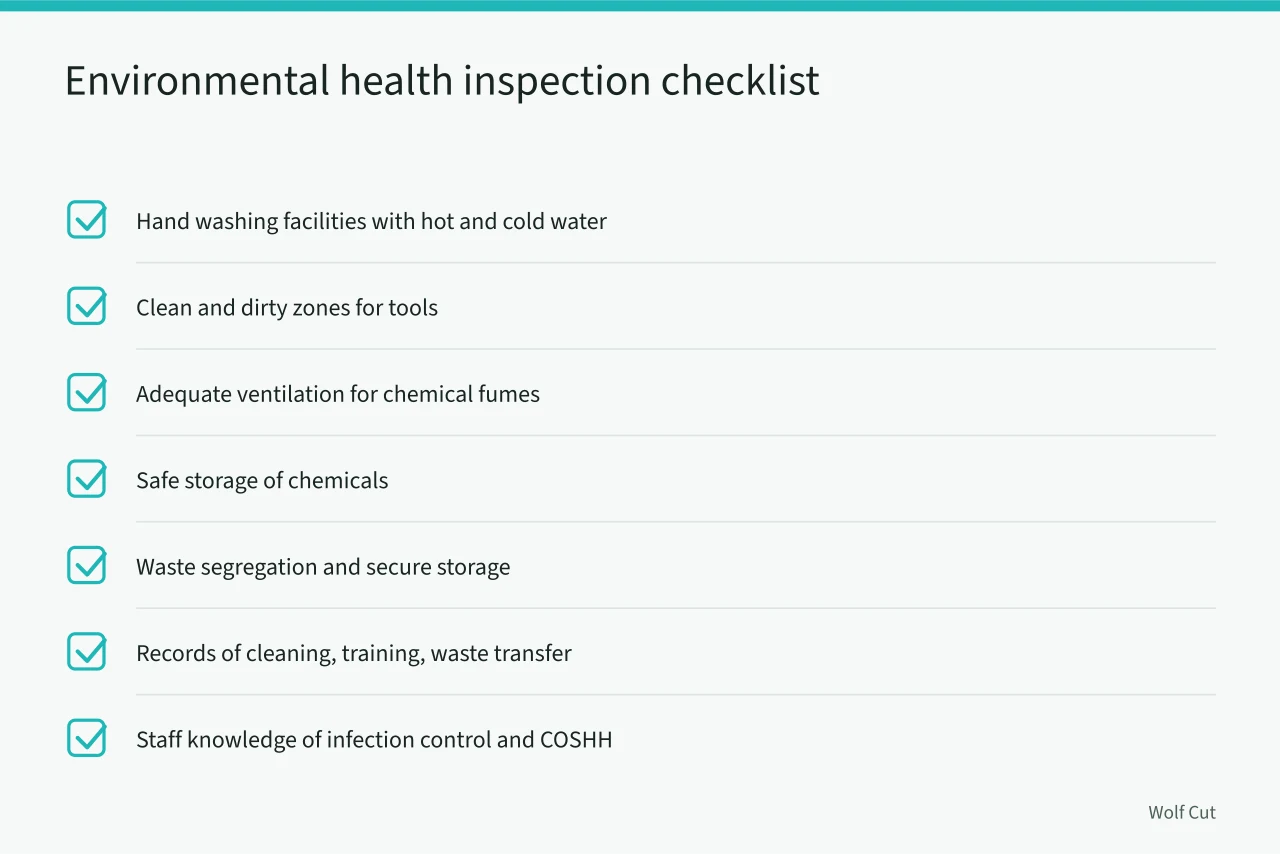
Key inspection points include:
- Hand washing facilities with hot and cold water, soap, and disposable towels.
- Clean and dirty zones for tools, with separate storage.
- Adequate ventilation for chemical fumes.
- Safe storage of chemicals, away from food and client areas.
- Waste segregation and secure storage.
- Records of cleaning, training, and waste transfer.
- Staff knowledge of infection control and COSHH.
EHOs will ask to see your COSHH assessments, waste transfer notes, and training records. They may also check client records for treatments that require consent or patch testing. If you fail an inspection, you will receive a report detailing what needs to change and a deadline. Reinspection follows.
For a deeper look at the difference between cleaning, disinfection, and sterilization, see the haircut consultation checklist. Understanding these distinctions helps you meet the expected standard.
Hygiene requirements for tools, stations and waste
Hygiene in a Cardiff salon must be systematic. Every tool that touches a client needs cleaning and disinfection between uses. Stations must be cleaned after each client, with fresh towels and capes. Waste must be segregated and stored safely. These requirements apply to all salons, whether on a busy high street or run from a spare room at home.
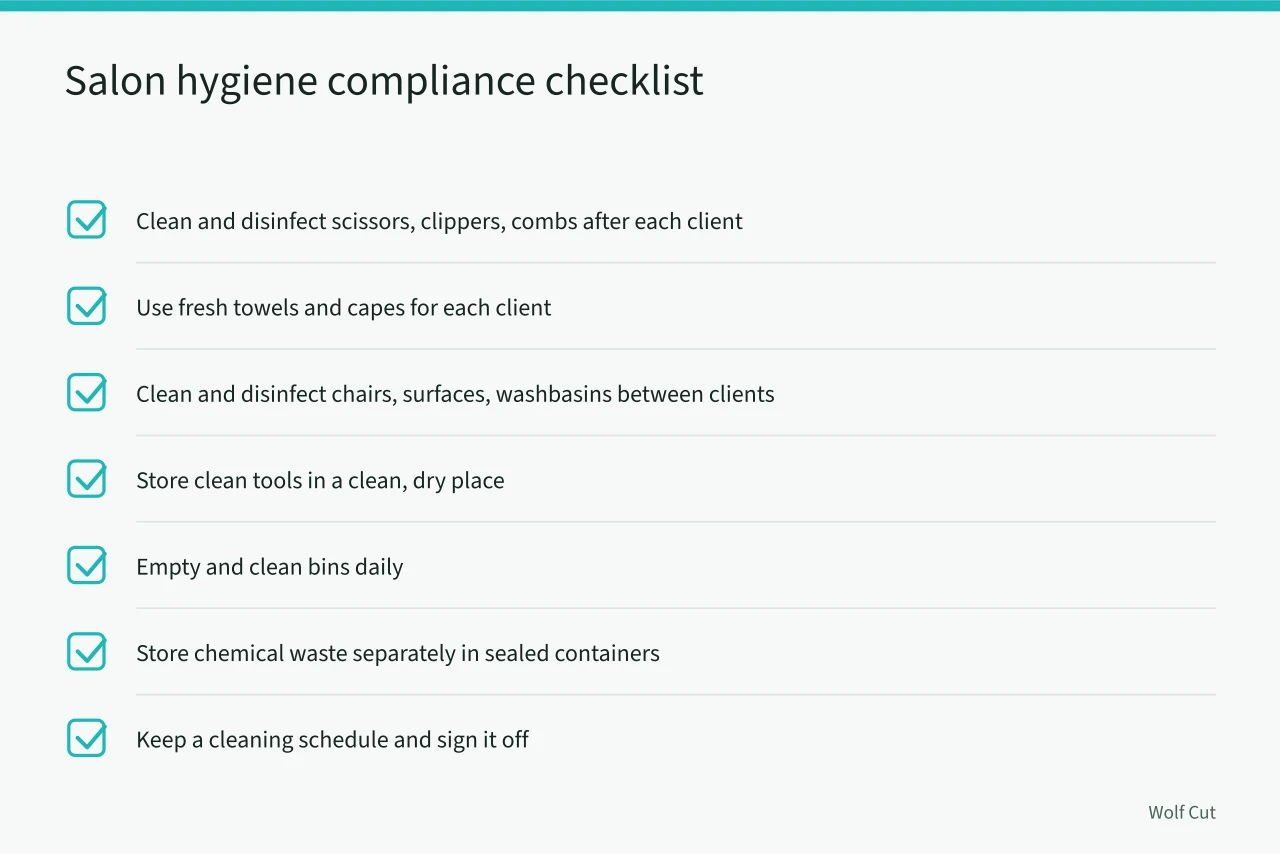
Use this checklist to stay compliant:
- Clean and disinfect scissors, clippers, and combs after each client.
- Use fresh towels and capes for each client, or wash them at a high temperature.
- Clean and disinfect chairs, work surfaces, and washbasins between clients.
- Store clean tools in a clean, dry place, separate from dirty tools.
- Empty and clean bins daily, using lined bins for general waste.
- Store chemical waste separately in sealed containers.
- Keep a cleaning schedule and sign it off.
For tools that cannot be immersed, use a spray or wipe disinfectant that meets the appropriate standard. Barbicide is a common choice, but any product with the correct approval is acceptable. Always follow the manufacturer's contact time. The scissor haircut checklist covers blood exposure and cleanup, which is essential for infection control.
Waste duty of care applies to all salon waste, including hair, chemicals, and packaging. You must store waste securely and transfer it only to a licensed waste carrier. Keep waste transfer notes for at least two years.
Use the Duty of care waste transfer note form - GOV.UK template to create your notes. This is a legal requirement, and environmental health officers will ask to see them.
COSHH and chemical storage in a Cardiff salon
COSHH (Control of Substances Hazardous to Health) requires you to assess the risks from chemicals used in your salon. This includes hair colour, bleach, perming solutions, and cleaning products. You must prevent or control exposure to these substances.
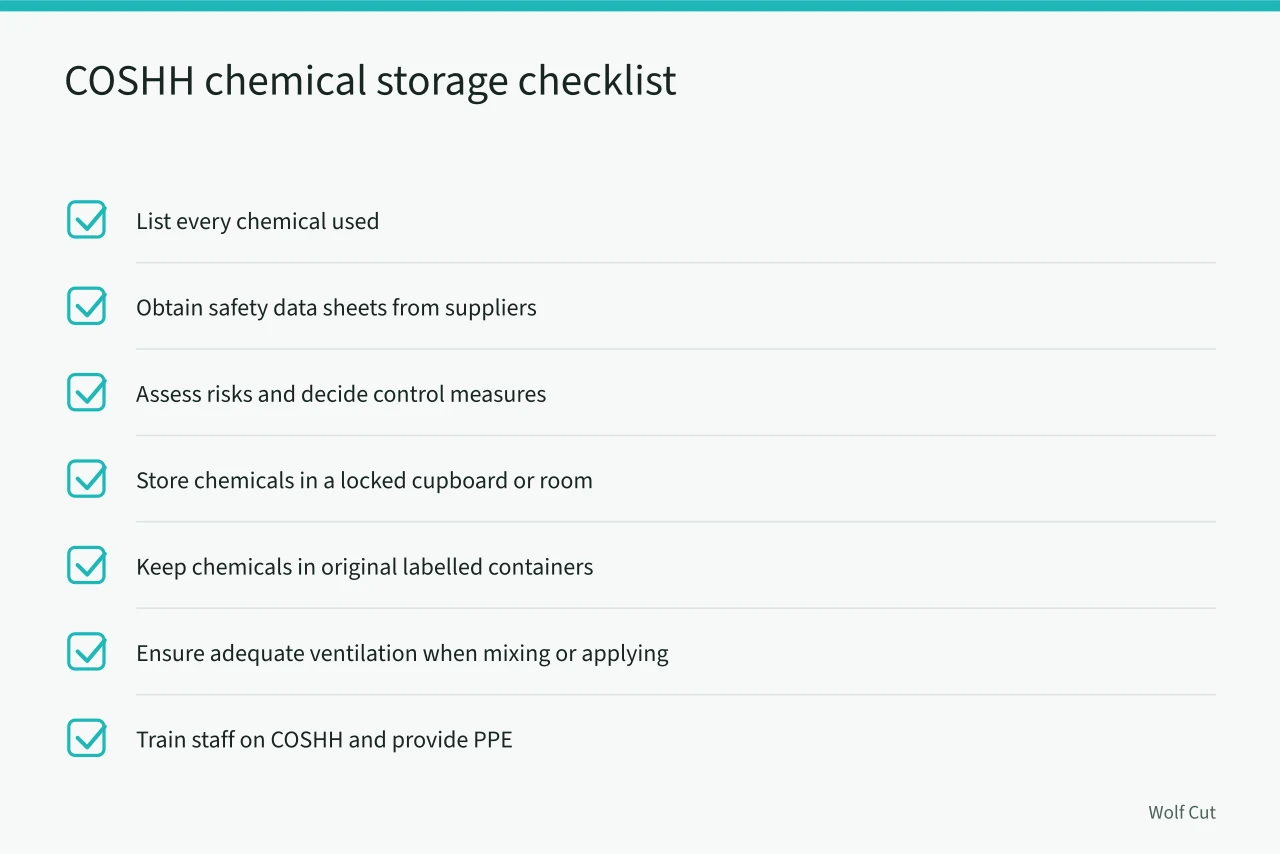
Shared Regulatory Services officers enforce COSHH in Cardiff salons. The Health and Safety Executive provides detailed guidance on Control of Substances Hazardous to Health (COSHH) - HSE.
Start by listing every chemical you use and obtaining safety data sheets from suppliers. Assess the risks and decide on control measures. Store chemicals in a locked cupboard or room, away from heat and direct sunlight. Keep them in original containers with labels intact. Never decant into unlabelled bottles. Ensure adequate ventilation when mixing or applying chemicals.
Staff must be trained on COSHH and know where to find safety data sheets. Provide personal protective equipment, such as gloves and aprons, where needed. If a staff member has a health condition that makes them more vulnerable, adjust controls accordingly.
Record your COSHH assessments and review them regularly. For infection control problems such as lice or broken skin, see the wolf cut checklist.
Records, training and reinspection readiness
Records prove you are meeting your legal duties. Keep them organised and up to date. Environmental health officers may ask for records during an inspection or after a complaint. Missing records can lead to enforcement action. The main records to keep are COSHH assessments, waste transfer notes, cleaning schedules, training certificates, and accident reports.
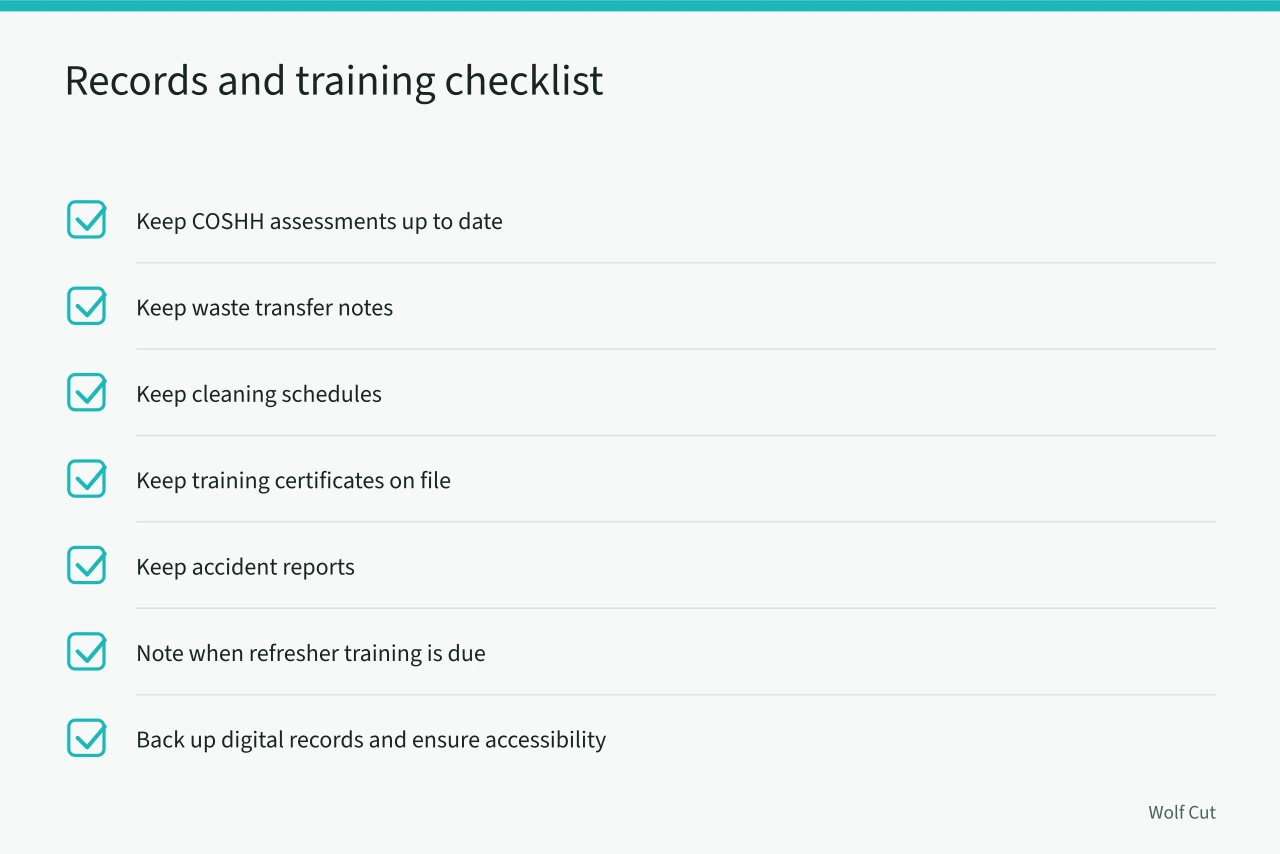
Training is essential. All staff should have training in infection control, COSHH, and safe working practices. The Chartered Institute of Environmental Health (CIEH) offers relevant courses. The National Hair & Beauty Federation (NHBF) also provides guidance and training for salon owners. Keep certificates on file and note when refresher training is due.
Reinspections happen periodically, but you should be ready at any time. Use a pre-inspection walkthrough to check your salon against the requirements. Fix any issues immediately. Keep a folder with all records, either physical or digital. If you use digital records, ensure they are backed up and accessible.
If you change your services, update your risk assessments and notify the council. If you move premises, register the new address. If you sell the business, inform the council and transfer records appropriately. Staying compliant is an ongoing process, not a one-time task.
Common questions
Do I need a licence to open a hair salon in Cardiff? You need to register the premises with Cardiff Council. If you offer skin piercing or special treatments, you need a separate licence. Check with the council's licensing team.
How often will environmental health inspect my salon? Inspection frequency depends on your risk rating. High-risk activities are inspected more often. You may also be inspected after a complaint.
What records must I keep for waste? You must keep waste transfer notes for at least two years. These show that you transferred waste to a licensed carrier.
Do I need COSHH assessments for hair colour? Yes. Any chemical product that is hazardous to health requires a COSHH assessment. Keep safety data sheets and records of control measures.
Can I run a salon from home in Cardiff? Yes, but you must register with the council and meet the same hygiene and safety standards. You may need planning permission if you see clients at home.
What happens if I fail an inspection? You will receive a report detailing the problems and a deadline to fix them. Serious issues can lead to closure or prosecution.