Rules
Part of From blade control to the final blend check: a clipper cutting guide
8 clipper cutting problems, and how to fix each one
Clipper cutting problems guide for dark lines, light patches, lost corners, high fades, scalp exposure, pulling, heat, contamination, and controlled repair choices.
What to take away
- Diagnose tone, length, density, direction, and head shape before recutting a shadow.
- Use the smallest setting change that can address a real band.
- Do not raise an entire fade to chase one patch.
- Stop immediately for heat, pulling, broken skin, or contaminated tools.
- Explain when growth is safer than further shortening.
Short hair makes every transition visible. The response to a flaw should preserve the remaining design, not spread the shortest length until the original boundary disappears. The method it departs from is in the clipper cutting guide.
Problem: a dark line remains
Brush the area clean and view it from several angles. Use the comb to compare length just below, on, and above the line. If the band is truly longer, work only on that narrow area with the appropriate intermediate setup and blade corner.
If length is already consistent, the darkness may come from higher density, a hollow in the skull, darker fiber, or a growth-direction change. More cutting may make the scalp lighter without removing the perceived contour.
Problem: a light patch appears
Stop. Do not shorten the surrounding zone immediately. Check whether the patch follows a scar, fold, low-density area, head prominence, or one accidental pass. Dry and brush the hair. Show the client under normal viewing conditions.
Possible responses include leaving the area to grow, softening only the nearest hard boundary, adjusting styling, or planning a shorter reset with fresh consent. A light patch cannot be filled during the service.
Problem: the fade rises too high
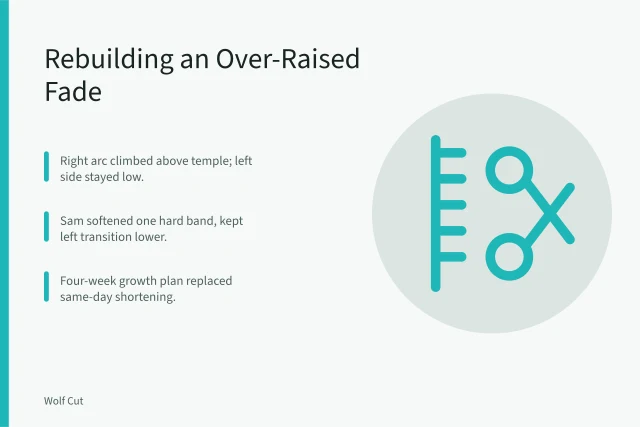
Mark the intended maximum and current highest short point. If only a small local area crossed it, preserve weight elsewhere and connect conservatively. If a broad zone is already high, offer a revised silhouette or staged growth plan. Do not describe the change as invisible. A conservative build sequence is set out in building a low taper.
Problem: the temple corner disappears
Repeated outlining or following the round of the head can remove a square corner. Stop pushing the line back. Balance can mean preserving the stronger side and planning growth rather than matching both to the most recessed point. Which structure was intended matters here, because taper, fade, undercut, and uniform cuts grow out differently.
Problem: the clipper pulls or sounds wrong
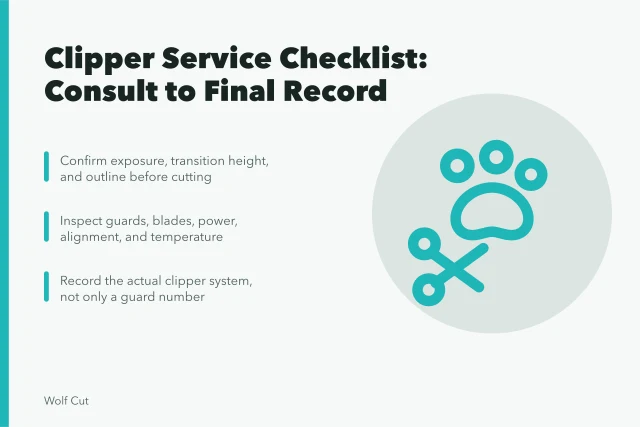
Remove it from the client's skin. Check blade attachment, alignment, debris, lubrication requirements, charge, and damaged teeth under the manufacturer's instructions. Use another verified clean tool or end the service. Do not compensate by pressing harder. The clipper service setup and finish checklist covers those checks before the client sits down.
Louisiana public-health guidance on barber infection control and electric clippers separates debris removal from a sanitizing process and distinguishes detachable from non-detachable blade designs. Current product and jurisdictional rules may differ, so follow the applicable method rather than copying an old shop habit.
Problem: the blade feels hot
Stop contact, ask about discomfort, and inspect the skin. Switch to a cool, properly prepared tool or allow the device to cool according to instructions. A coolant product is not a substitute for checking skin and tool condition. Record any irritation or incident under salon policy.
Problem: a used guard enters the clean area
Pause the service. Move the guard into the dirty workflow and replace it with a verified clean one. If a clean tool or surface was touched, treat it as contaminated under salon rules. Do not wipe the guard on a towel and continue.
Ohio's current rule on cleaning before disinfection states that visible debris can inactivate disinfectant and requires cleaning of nonporous implements before disinfection. It also addresses contact time, clean stations, solution changes, and blood or body-fluid spills. Use the requirements of the location where the service occurs.
Problem: the client wants the shadow completely gone
Explain whether the remaining tone is cuttable length or a natural visual difference. Demonstrate what another pass would expose and where it would raise the transition. Obtain consent for a changed boundary or leave the area. A perfectly uniform photograph under one light is not the only measure of a safe, balanced cut.
Common questions
Can a light patch be blended by cutting around it?
Sometimes a hard edge can be softened, but broad shortening may enlarge the visible scalp area.
Should the harder side set the fade height?
Not automatically. Preserve the agreed boundary and adapt technique to each side.
Can clipper spray cool and disinfect at the same time?
Only if the product label states the relevant uses and directions; local rules still apply.
What if a blade nicks the skin?
Stop the service and follow the salon's exposure, first-aid, disposal, cleaning, and incident procedure.