Features
Part of From blade control to the final blend check: a clipper cutting guide
An over-raised fade correction case: rebuilding one band at a time
Over-raised fade case showing how a barber mapped the shortest zone, protected remaining weight, corrected one hard band, reset the outline, and planned growth.
What to take away
- The shortest mistake became a fixed boundary, not a target for the whole head.
- Head shape and density explained part of the visible darkness.
- The barber protected upper weight and corrected one narrow hard band.
- The front corner remained uneven in length but more balanced in shape.
- A four-week growth plan replaced further same-day shortening.
This fictional case demonstrates decision-making, not one universal fade sequence. Tool settings are described functionally because guard and blade systems differ.
The starting problem
Eli arrived after trying to raise a low fade at home; a short arc climbed above the right temple while the left side stayed low. A dark band sat above the arc, and the right front corner was pushed back.
Eli asked barber Sam to "make both sides match." General versions of this situation are collected in clipper cutting problems.
Sam first clarified what match meant. Cutting the left side to the highest right point would create a high fade and remove a healthy corner. The distinctions matter, because taper, fade, undercut, and uniform cuts are different structures. Eli wanted to keep as much weight and front line as possible.
Mapping what could not be restored
Sam photographed the sides with consent and marked:
- highest exposed point on the right;
- intended lower boundary on the left;
- remaining upper weight;
- true longer band above the right arc;
- right temple recession created by outlining;
- natural density difference above each ear.
The haircut could become visually balanced, but not measurably symmetric in one appointment.
The revised plan
The plan kept the left transition slightly lower than the right, softened the right hard band locally, retained the widest upper area, and preserved the left temple corner. The outline would follow the current natural front rather than move both sides backward.
The official unit for cutting hair with over-comb techniques specifies planned guidelines, smooth clipper-over-comb action, blending at different comb angles, attachments, outlining, client review, and agreed remedial action. Sam used those checkpoints to control the repair rather than treating the highest error as the new full-head guide.
Correcting the right band
Sam brushed and dried the area, then compared length with the comb. The band's center was longer; its darkest lower edge sat in a shallow skull hollow.
Using the blade corner at an intermediate setup, Sam cut only the longer fibers. The hollow stayed slightly dark under direct overhead light, so he removed no more length there.
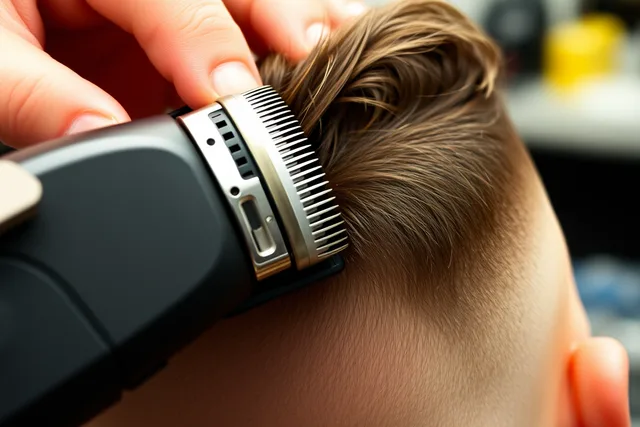
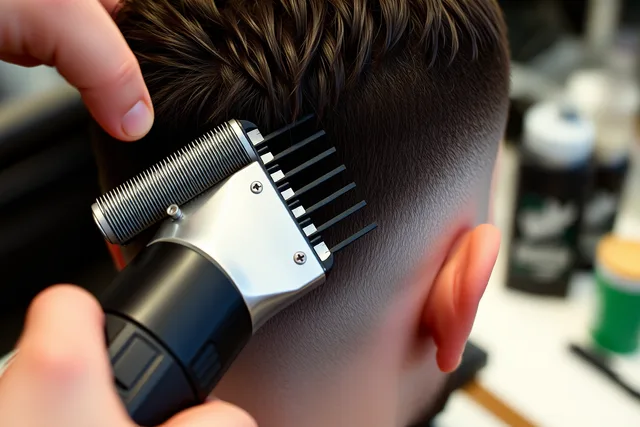
Clipper-over-comb connected the upper band into preserved weight. The comb angle stayed flatter through the side to avoid rounding away the square silhouette. The clipper cutting guide explains why the comb angle, not the guard, sets the silhouette.
Balancing the left side
The left fade remained below the right maximum. Sam softened its transition enough to echo the overall gradient without raising it. From the front, the upper weight and side widths looked balanced. Close measurement still showed different fade heights, which the service note recorded as intentional for this stage.
Protecting posture and skin
Sam changed chair height by zone and kept Eli upright for comparison. Skills England's current Barbering Professional end-point assessment integrates consultation, cut and restyle work, clippers, guards, trimmers, scissors, multiple techniques, evaluation, and aftercare. That whole-service structure supports checking the agreed result and client experience instead of concentrating on one line at close range.
The blades were checked for heat throughout. The home-cut area showed no broken skin, and Sam used only prepared, disinfected tools. A clean build of the same structure is in building a low taper.
Outline and finish
Sam cleaned loose hair, then defined the nape and sideburns lightly. The right front corner was not pushed farther back. The left corner was softened just enough to reduce contrast without matching the recession.
Eli saw both profiles and the back. At conversational distance, the fade read as balanced, though the right transition was still slightly higher. Sam showed the remaining density shadow and explained why further cutting would expose more scalp.
Growth plan
The record specified:
- no home outlining at the front corner;
- preserve upper side weight for four weeks;
- review the right temple after new growth;
- keep the next baseline below the former high point;
- decide later whether to lower the visible transition through growth or reset both sides shorter.
Common questions
Why was the left fade not raised to match?
That would have spread the error and removed the retained low-fade shape.
Why did one dark area remain?
The hair length was correct there; skull contour and density still produced a shadow under direct light.
Could the right temple corner be restored immediately?
No. Missing length required growth, so the stronger left corner was protected.
Was the final cut perfectly symmetric?
No. It was intentionally balanced through a staged correction while preserving length.