Maintenance
Part of From blade control to the final blend check: a clipper cutting guide
The clipper service checklist runs from consultation to final record
Clipper service checklist for consultation, blade and guard inspection, sanitation, taper mapping, transition control, skin and heat checks, outlining, and records.
What to take away
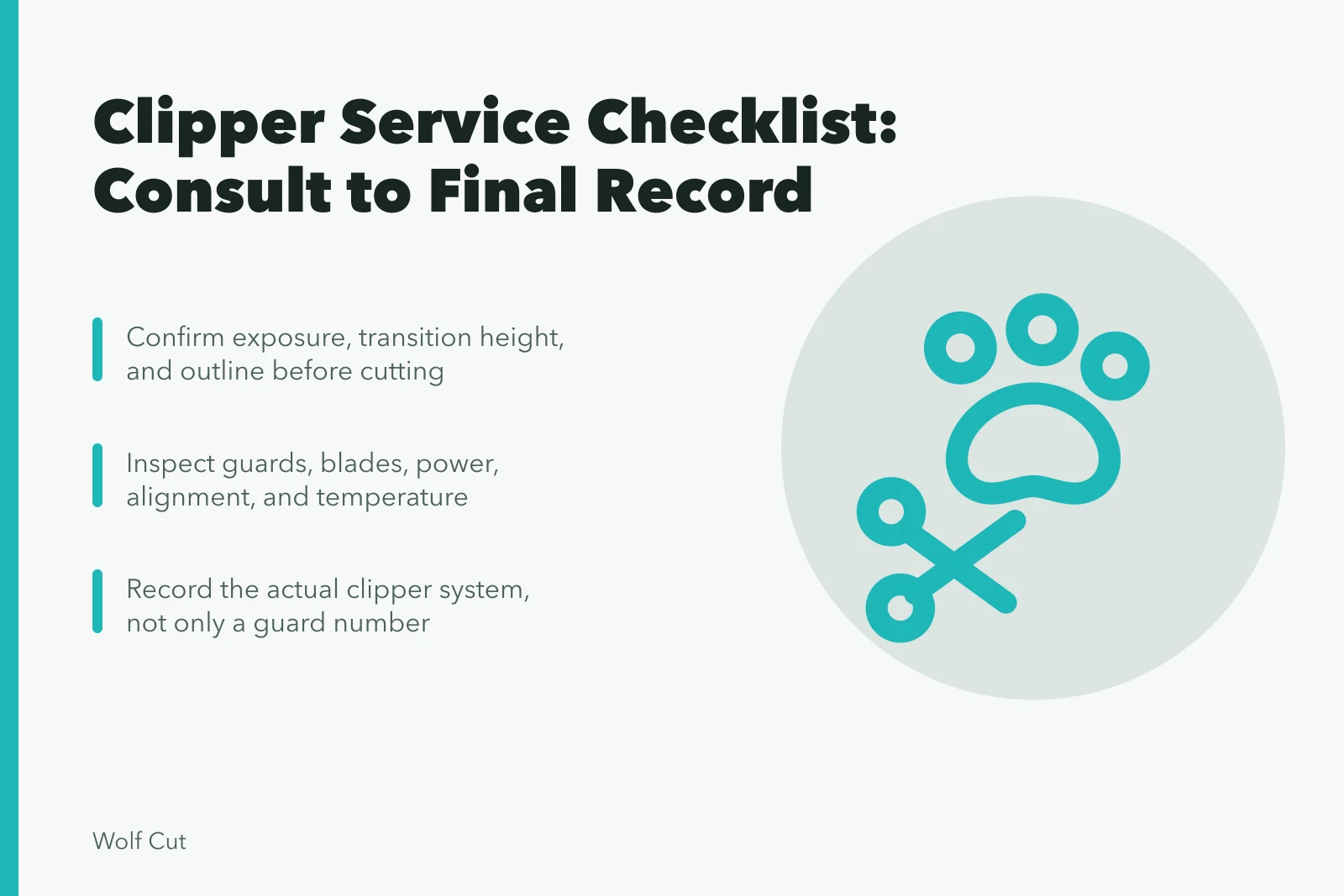
- Confirm exposure, transition height, and outline before cutting.
- Inspect guards, blades, power, alignment, and temperature.
- Remove debris before applying an appropriate disinfectant.
- Work through known length changes and visible checkpoints.
- Record the actual clipper system, not only a guard number.
Use this checklist with the rules, product labels, and manufacturer instructions that apply to the salon. The cutting side of the service is covered in the clipper cutting guide. A checklist cannot make an unsafe or damaged electrical tool suitable for service. Which short structure is being built is a separate decision, compared in taper, fade, undercut, and uniform work.
Consultation and scalp check
- Shortest visible zone demonstrated.
- Taper or fade boundary shown on the head.
- Sideburn and neckline shape agreed.
- Top connection or disconnection agreed.
- Scalp exposure discussed under consistent light.
- Growth direction and density changes mapped.
- Folds, scars, moles, irritation, broken skin, and tenderness addressed under policy.
- Minimum length and protected areas recorded.
Clean tool readiness
- Clipper was cleaned and disinfected after the previous use.
- Clean tool is stored away from contaminated items.
- Blade, body, handle, cord, charger, and removable parts are visibly clean.
- Guards are clean, dry, intact, and correctly seated.
- Disinfectant is appropriate, in date, and used for its label contact time.
- Clean brush or approved method available for debris removal.
California's barbering and cosmetology rules for disinfecting electrical tools require visible debris removal before an EPA-registered bactericidal, fungicidal, and virucidal spray or wipe is used as instructed. They also require clean storage and separation of soiled electrical tools.
Apply the law of the salon's own jurisdiction, which may differ. A worked taper that depends on that setup is in building a low taper.
Mechanical and electrical check
- Housing and cord have no visible damage.
- Blade teeth are complete and aligned.
- Lever moves and holds position.
- Detachable blade or guard locks securely.
- Motor sounds and runs normally.
- Battery supports the planned service or approved power is available.
- Blade oil or coolant is used only as instructed.
- Heat checked before contact and during long use.
Cutting map
- Baseline set below the maximum agreed height.
- Lower and upper transition zones marked.
- Weight area and ridge response defined.
- Guard, blade, and lever sequence written.
- Over-comb area identified.
- Outline planned as natural, tapered, or sharp.
- Cross-check views and stop points chosen.
During the service
- Client posture and comfort checked.
- Skin stabilized without excess pressure.
- Hair brushed away so loose clippings do not hide bands.
- Each setting used only in its planned zone.
- Blade corner used for local correction.
- Dark areas checked for density and head shape before shortening.
- Blade temperature checked and client feedback invited.
- Damaged or pulling equipment removed from service.
Connecticut's salon infection-control guidance for electric clippers requires cleaning and disinfecting after each use: body, handle, cord, removable guards, blades. Remove visible hair and debris, keep surfaces wet for the disinfectant label's contact time, and store cleaned tools appropriately.
Scissor work has its own setup list in the sectioning and cross-check checklist.
Finish and review
- Transition checked under more than one light angle.
- Front, profiles, back, and top views checked.
- Ears and nape inspected for missed hair and skin discomfort.
- Outline matches agreement without unnecessary pushback.
- Top connection holds when hair moves.
- Loose hair removed without abrasive brushing.
- Client sees all sides and confirms the result.
Record and turnover
- Clipper model or blade system recorded.
- Guard and lever sequence recorded in salon language.
- Transition height and outline recorded.
- Protected or intentionally darker areas recorded.
- Used tools placed in the dirty workflow.
- Station and chair cleaned under policy.
- Maintenance fault logged and tool quarantined if needed.
Common questions
Is brushing hair off a clipper enough?
No. Cleaning removes debris; disinfection is a separate labeled process under applicable rules.
Should the clipper body be included?
Yes, when required by local guidance, along with handles, cords, guards, and removable parts.
Can a cracked guard be used carefully?
No. Remove damaged guards from service because they can detach, scratch, or cut unevenly.
Why record the clipper system?
Guard labels vary, so the system makes the service note more reproducible.