Reviews
Part of From blade control to the final blend check: a clipper cutting guide
Taper, fade, undercut and uniform short-cut structures compared
Taper, fade, undercut, and uniform short cut compared by length map, connection, scalp exposure, tools, styling, maintenance, and growth-out.
What to take away
- A taper concentrates shortening at selected edges; a fade creates a broader transition toward very short hair.
- An undercut preserves a visible disconnection between longer and shorter zones.
- A uniform short cut aims for a consistent length relationship across the head.
- Tool choice does not define the structure by itself.
- Maintenance depends on edge sharpness, transition height, growth, and client tolerance.
The same clipper can create four different structures. A useful consultation describes where lengths change and whether zones connect, not merely which tool or guard is used. The clipper cutting guide works through that map in order.
Structural comparison
| Structure | Length map | Connection | Typical focus |
|---|---|---|---|
| Taper | Shorter at temple, sideburn, or nape edges | Usually blended locally | Clean edges with retained surrounding weight |
| Fade | Progresses from very short into longer hair over a visible area | Graduated transition | Smooth tonal and length progression |
| Undercut | Short lower or interior zone beneath longer hair | Intentionally disconnected | Contrast and removable overhang |
| Uniform short cut | Similar length relationship across the head | Generally continuous | Even coverage and simple repeatability |
Taper
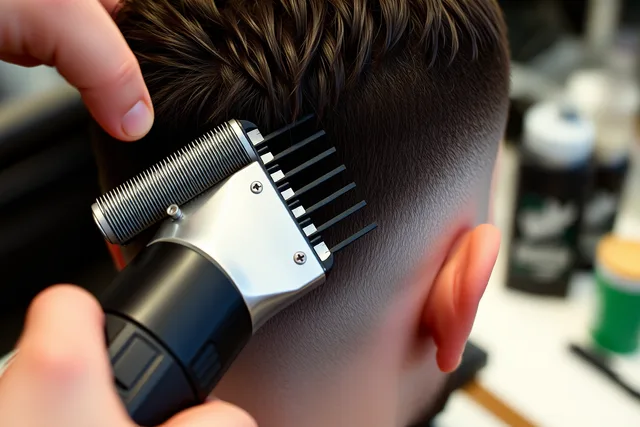
A taper can be limited to temples and nape or extend more broadly. It does not automatically expose skin. The client should approve its height, width, sideburn, and neckline. It often grows out with more retained weight than a high fade, but sharp outlines can still require frequent upkeep. A worked sequence for one is in building a low taper.
Fade
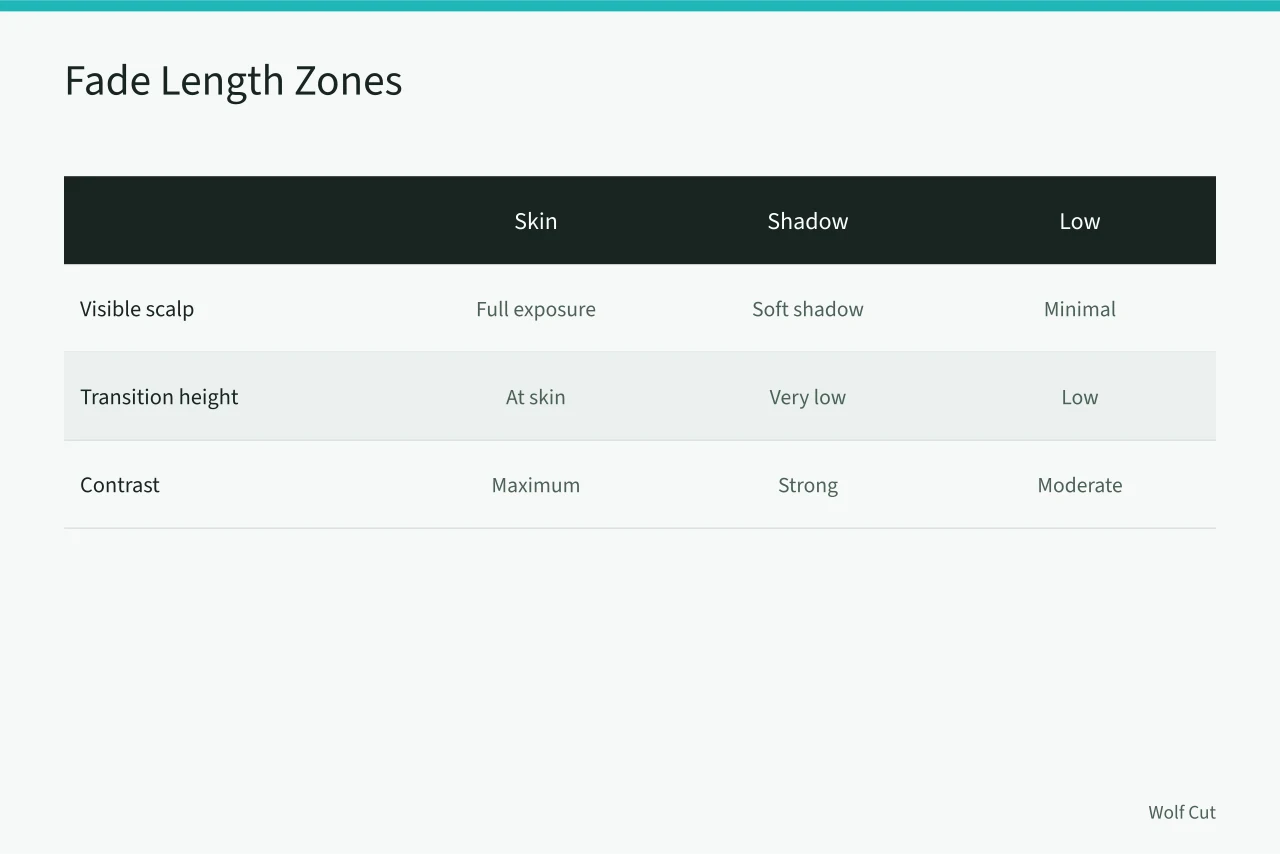
A fade uses successive lengths to reduce contrast from the shortest area into upper weight. "Skin," "shadow," "low," "mid," and "high" need physical demonstration. Density, color contrast, scalp tone, skull shape, and growth direction affect how smooth the transition looks.
Skills England's Barbering Professional occupational standard includes clippers, attachments, trimmers, scissors, over-comb methods, tapering, graduation, layering, texturizing, and fading within broader cutting competence. That list separates the tool from the structural decision: clippers support the work, but the map of lengths creates the fade.
Undercut
An undercut leaves a deliberate boundary between a short zone and longer hair. The overhang may cover the short section, reveal it with styling, or sit beside it. The key consultation questions are boundary, connection, overhang length, parting flexibility, and growth-out.
Blending an undercut by habit destroys the design. Mark the disconnection and keep cross-checks from crossing it. A sectioning and cross-check checklist is where an intentional disconnection gets recorded so nobody blends it away.
Uniform short cut
A uniform result aims for a consistent relationship across the head, commonly using one guarded setting, freehand control, or layered technique. The head curve and growth direction can make the same nominal setting look lighter at prominences and darker in hollows.
Uniform does not mean a machine can be passed randomly. Work in overlapping paths against the relevant growth directions, check missed areas, and protect unsuitable skin. Tool condition and turnover belong to the clipper service setup and finish list.
The Department for Education's barbering technical content outline distinguishes close cutting, precision edges, graduation, weight distribution, natural growth, balance, and multiple short-cutting methods. That framework supports comparing structures by their planned effect rather than reducing all short work to guard length.
Choose by daily reality
Ask about:
- desired scalp exposure;
- acceptable contrast as hair grows;
- time between services;
- hat, helmet, and workplace needs;
- willingness to style longer top hair;
- flexibility to change parting;
- scars, bumps, folds, sensitivity, or irritation;
- tolerance for a disconnected growth-out stage.
Common mix-ups
- A taper can contain a fade-like local transition without becoming a full-head fade.
- A high fade is not an undercut unless a deliberate unblended boundary remains.
- One guard all over is not visually identical on every head area.
- A sharp outline is a detailing choice, not proof of a sound internal structure.
Common questions
Is every taper a fade?
Not in common salon use. A taper is often localized, while a fade covers a broader planned transition.
Can an undercut be hidden?
Yes, if the overhanging hair is long and dense enough in the chosen parting.
Does one guard create a uniform appearance?
It creates a repeatable machine setup, but head shape, density, and growth can change the visible tone.
Which structure needs the most maintenance?
The one whose acceptable growth-out window is shortest for that client, often a very sharp or exposed finish.