Rules
How HMRC self-assessment and VAT rules apply to UK mobile hairdressers
UK mobile hairdressers tax: self-assessment, the VAT threshold and allowable expenses explained, with rate-setting examples for sole traders.
What to take away
- UK mobile hairdressers tax means registering for self-assessment with HMRC and filing a tax return by 31 January each year.
- The VAT registration threshold is £90,000 of turnover over any rolling 12 months; below that, you usually need not register.
- Allowable expenses include mileage, products, kit, insurance and a home workspace, as long as they are wholly and exclusively for the business.
- Making Tax Digital for Income Tax starts for sole traders with turnover above £50,000 from April 2026, then £30,000 from April 2027.
- Build tax and VAT into your price list: set aside roughly 20 to 30 per cent of profit for tax and National Insurance.
Who counts as a mobile hairdresser for HMRC self-assessment
If you travel to clients' homes, workplaces or events to cut hair, you are a mobile hairdresser. HMRC treats you as a sole trader if you work for yourself, control your own hours and provide your own tools.
Sole traders must register for self-assessment. That applies whether you work full time, part time or alongside a salon job. The test is whether you are self-employed, not how many clients you see.
You may also be a mobile hairdresser if you rent a chair in a salon but travel to clients outside those hours. HMRC looks at the whole picture: who sets prices, who bears the financial risk, and whether you can send someone else to do the work.
If you operate through a limited company, different rules apply. Most mobile stylists start as sole traders because it is simpler and cheaper to run. You can read more about setting up a business on the Start your business guidance.
A useful first step is to write down what you do and where you do it. That record helps when you register and later when you fill in your tax return. It also supports any claim for expenses.
Self-assessment registration, filing dates and records for stylists on the road
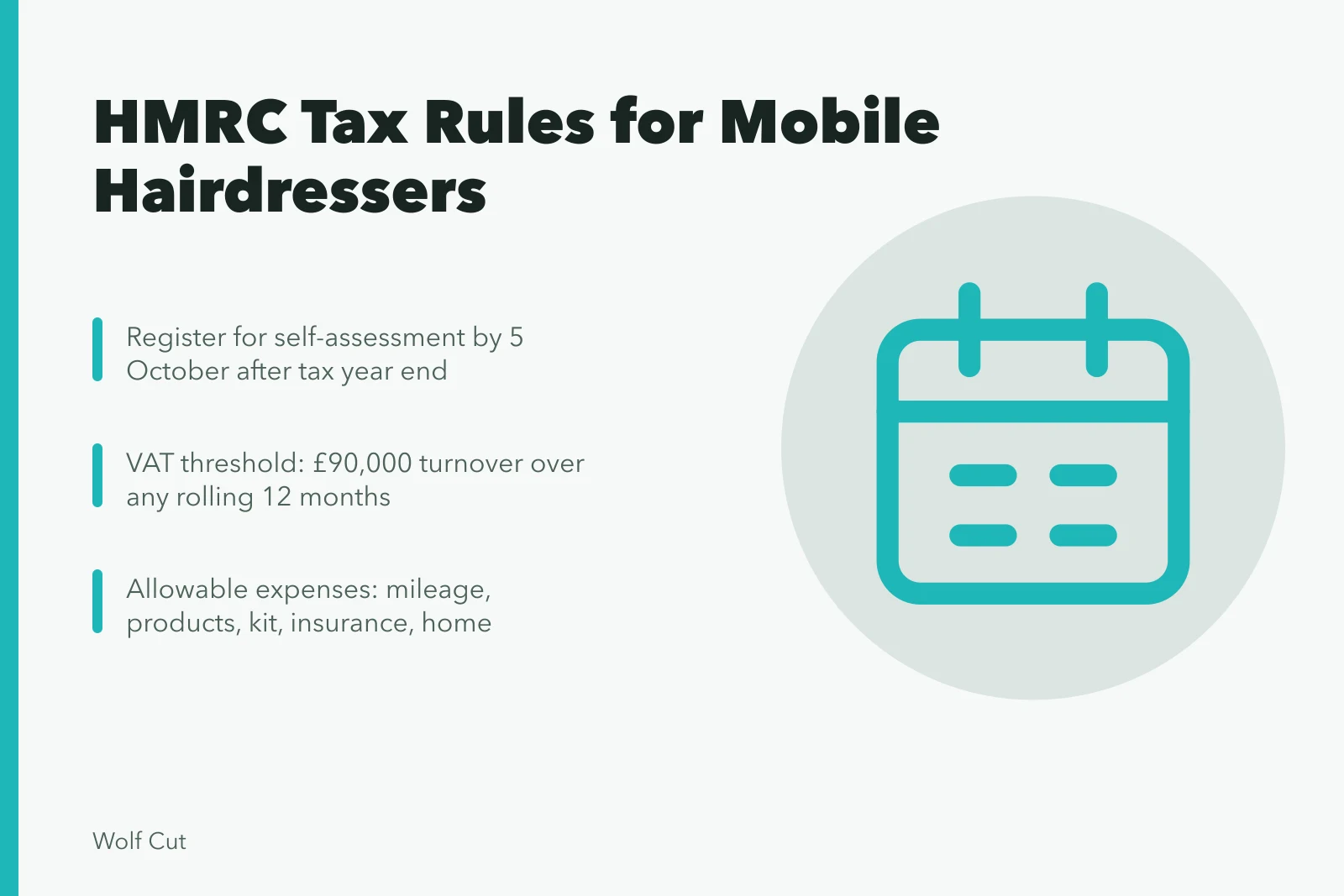
Register for self-assessment as soon as you start trading. HMRC expects registration by 5 October after the end of the tax year in which you started. If you miss that date, you may face a penalty.
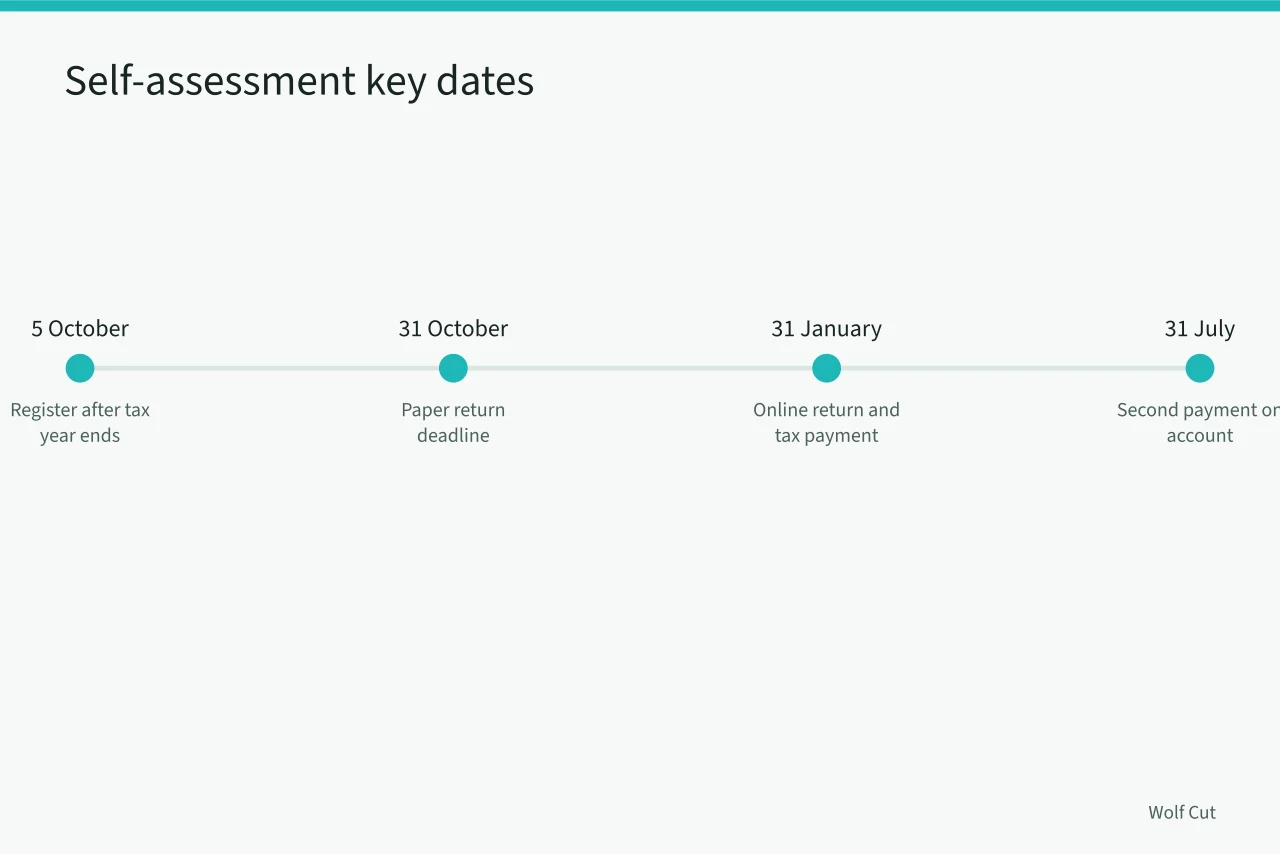
Once registered, you file a tax return each year. The tax year runs from 6 April to 5 April. Paper returns are due by 31 October, and online returns by 31 January the following year.
The 31 January deadline is also when you pay any tax owed. If you make payments on account, a second payment is due by 31 July. Those payments are advance instalments towards next year's bill.
You must keep records of income and expenses. HMRC can ask to see them, so keep receipts, bank statements and mileage logs. Digital records are fine, and most stylists use a simple spreadsheet or accounting app.
The Self Assessment tax returns: Overview - GOV.UK page sets out the filing obligations for self-employed people. Read it before your first return so you know what is expected.
A mobile stylist's records should show each appointment, the amount charged, and any travel. If you use your car for work, note the date, destination and miles. Those notes turn into a mileage claim at the end of the year.
The VAT registration threshold and when mobile hairdressers must register
The VAT registration threshold is £90,000. It applies to your total taxable turnover over any rolling 12-month period, not just the tax year. If your turnover goes above that figure, you must register for VAT.
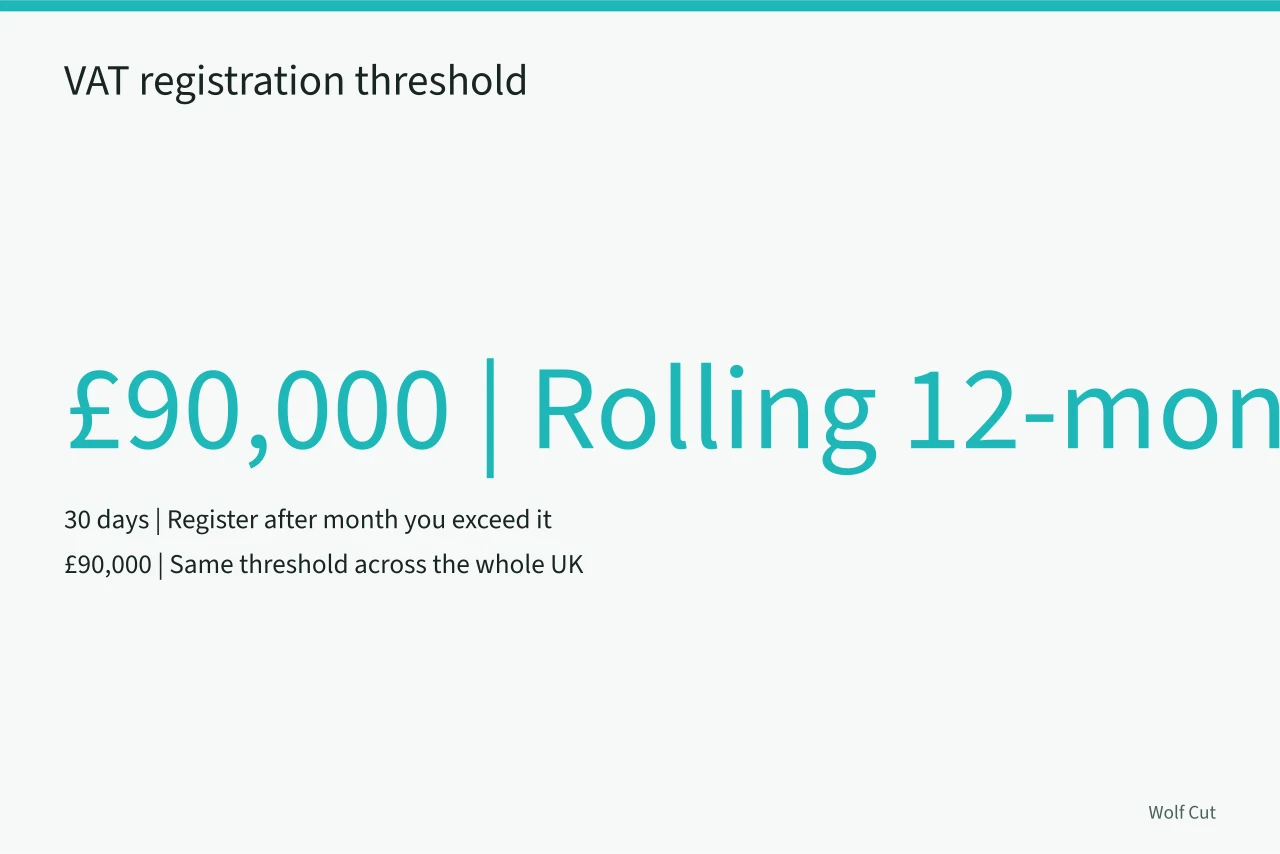
You must register within 30 days of the end of the month in which you exceeded the threshold. HMRC then sends a VAT registration certificate. From the effective date, you charge VAT on your services and reclaim VAT on business purchases.
You can also register voluntarily if your turnover is below £90,000. That can help if you buy a lot of kit and want to reclaim VAT, but it adds admin. Many mobile hairdressers wait until they must register.
Watch your turnover carefully if you are near the threshold. A busy wedding season or a price rise can push you over. Once registered, you cannot simply stop charging VAT because work slows down.
For the official rules, see Register for VAT: When to register for VAT - GOV.UK. It explains the rolling 12-month test and the 30-day deadline.
The threshold is a single figure for the whole of the UK. It does not vary by region, so a mobile stylist in Glasgow faces the same test as one in Bristol.
VAT rates, hairdressing exemptions and partial exemption in plain terms
Most hairdressing services are standard-rated for VAT at 20 per cent. That includes cutting, colouring, styling and blow-dries. If you are VAT-registered, you add VAT to those prices.
Some services may be exempt, but the rules are narrow. Hairdressing itself is not a health service, so it does not qualify for the exemption that applies to medical care. Do not assume your work is exempt.
If you sell products, those are standard-rated too. Retail sales of shampoo or styling products carry VAT at 20 per cent. Keep product sales separate in your records so you can report them correctly.
The VAT rates on different goods and services - GOV.UK page lists the rates for common goods and services. Check it before you decide how to treat a new service.
Partial exemption matters if you make both taxable and exempt supplies. Most mobile hairdressers make only standard-rated supplies, so they do not need to worry about it. If you also provide exempt services, speak to an accountant.
When you are VAT-registered, your price list should show prices including VAT. Clients care about the total they pay, so quote the gross figure. Keep the VAT element visible in your records for your return.
Allowable expenses: mileage, products, kit, insurance and home workspace
Allowable expenses are costs you incur wholly and exclusively for your business. They reduce your taxable profit. You cannot claim for personal spending or for anything you also use privately without adjusting for that use.
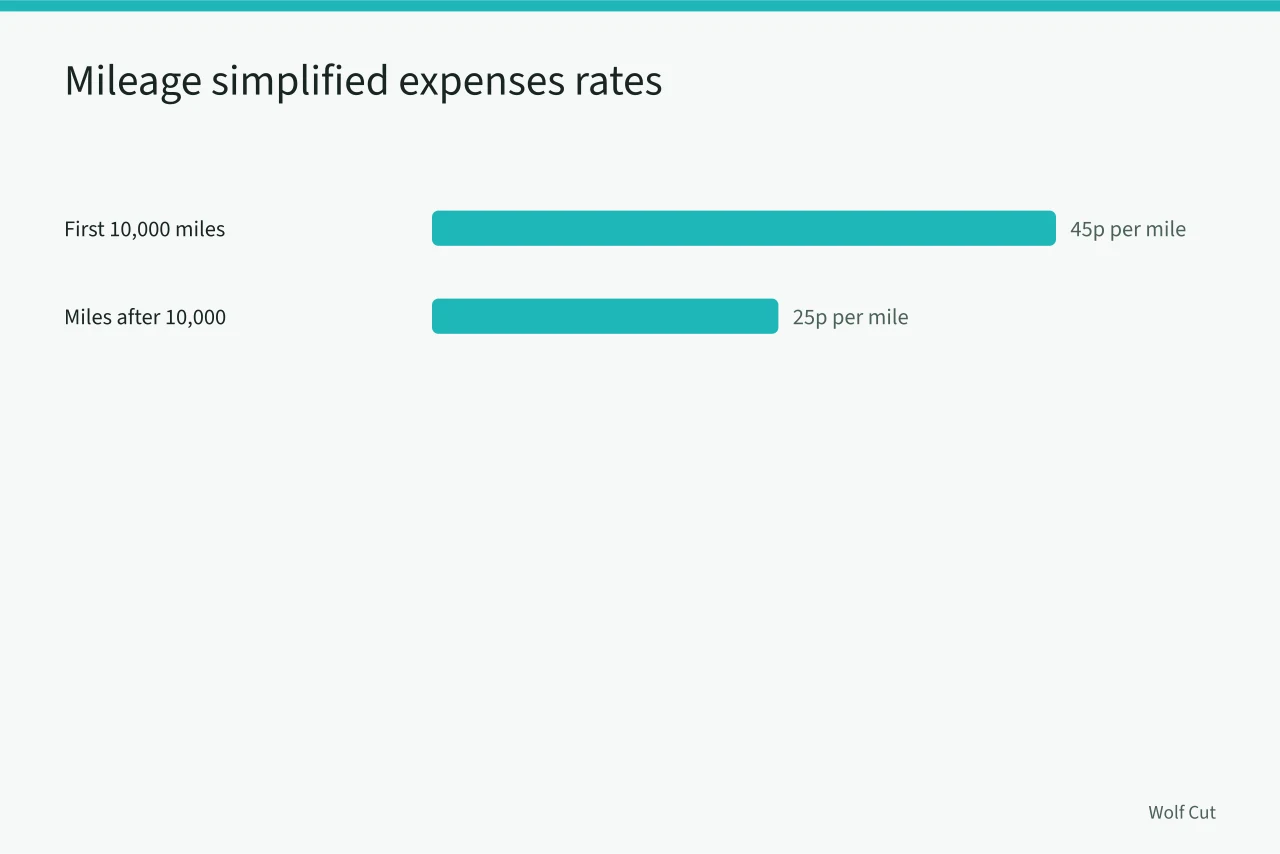
Mileage is a common claim for mobile stylists. You can use simplified expenses at 45p per mile for the first 10,000 miles in a tax year, then 25p per mile after that. Alternatively, you can claim a proportion of actual running costs.
Products you use on clients are allowable. That includes colour, developer, shampoo, foils and gloves. If you buy in bulk, keep the receipts and note how much you use for work.
Kit and equipment are allowable, but larger items may need to be claimed over several years as capital allowances. Scissors, clippers, brushes and a portable basin are typical examples. Keep a record of what you buy and when.
Insurance is allowable. Public liability insurance and professional indemnity cover protect you if something goes wrong. If you insure your car for business use, the business portion of the premium may be claimable.
A home workspace can be claimed if you use part of your home for admin, storing kit or washing towels. You can claim a flat rate for hours worked at home, or a proportion of household bills. Be careful not to claim for a room used mainly as a living space.
Other allowable costs include phone and internet used for bookings, accounting fees, and training that maintains your existing skills. Client records and consent forms are part of good practice, as covered in our scissor cutting techniques compared.
Making Tax Digital for Income Tax and what sole traders need to change
Making Tax Digital for Income Tax changes how sole traders report to HMRC. Instead of one annual return, you use compatible software to keep digital records and send quarterly updates.
From April 2026, it applies to sole traders with qualifying income above £50,000. From April 2027, it extends to those with income above £30,000. The thresholds are based on turnover, not profit.
If you are affected, you need to choose software and sign up. You will send four quarterly updates during the year, plus a final declaration after the year ends. The final declaration replaces the old tax return.
The Making Tax Digital for Income Tax for sole traders and landlords: step by step - GOV.UK collection explains the steps. Start by checking whether your income is above the threshold.
Digital records mean keeping your income and expenses in software rather than on paper. Many apps let you photograph receipts and track mileage. That suits mobile stylists who work from a car.
If you are below the threshold, you can still join voluntarily. It may help you get used to digital records before you must. Ask your accountant whether it makes sense for your business.
Rate-setting examples: building tax and VAT into a mobile price list
Setting prices as a mobile hairdresser means covering your costs, your time and your tax. Start with the amount you need to take home, then work upwards.
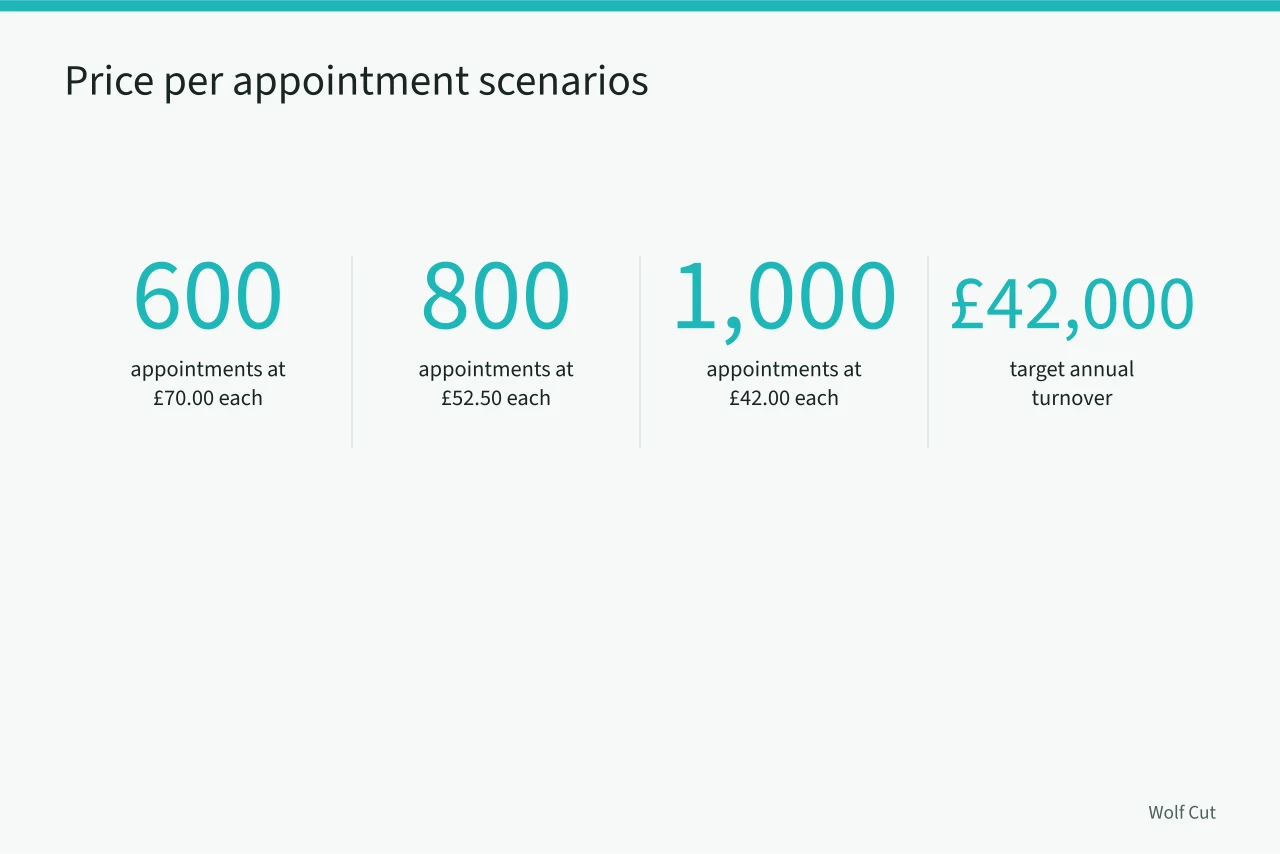
A worked example shows how tax and VAT change the picture. Suppose you want £30,000 net profit a year. You estimate allowable expenses of £6,000, so your taxable profit needs to be £30,000 plus tax and National Insurance.
If your tax and NI bill is around £6,000, you need a profit before tax of £36,000. Add expenses of £6,000 and your turnover target is £42,000. Divide by the number of appointments you can realistically do.
If you do 800 appointments a year, your average price must be £52.50. That is before VAT. If you are VAT-registered, you add 20 per cent, making the gross price £63.00. Clients see the gross price.
If you are not VAT-registered, you charge £52.50. That is why crossing the VAT threshold can feel like a pay cut unless you raise prices. Plan for it before you reach £90,000.
Use a table to test different scenarios. The figures below are illustrative and assume a sole trader with no other income.
| Annual appointments | Target turnover | Average price (no VAT) | Average price (with VAT) |
|---|---|---|---|
| 600 | £42,000 | £70.00 | £84.00 |
| 800 | £42,000 | £52.50 | £63.00 |
| 1,000 | £42,000 | £42.00 | £50.40 |
Your own figures will differ. Use your actual expenses and your own tax calculation. An accountant can check your assumptions.
When you set a price list, include travel time and mileage in your thinking. A client 30 minutes away costs you more than one nearby. Some stylists charge a travel fee or set a minimum spend for distant jobs.
Our haircut guideline guide shows how to talk through price and expectations before the appointment. That conversation reduces surprises and protects your margin.
For mobile work, keep your kit clean and ready between clients. The how to build a low taper guide covers the routines that also protect your reputation.
If you offer a wolf cut, price it according to the time and skill it takes. Our wolf cut checklist sets out the consultation points that affect timing. A clipper service may be quicker, and the clipper service checklist helps you cost it accurately.
Invoicing, deposits and client records that satisfy HMRC
Every mobile hairdresser should issue an invoice or receipt for each job. It does not need to be fancy, but it must show the date, the client, the service and the amount. If you are VAT-registered, it must also show your VAT number and the VAT charged.
Deposits are common for wedding and event work. Record them as income when you receive them, or as a liability if they are refundable. HMRC expects you to account for deposits correctly, so keep a clear note of your policy.
Client records help you run the business and satisfy data protection rules. Keep names, contact details and appointment history secure. Do not keep more than you need, and delete old records when they are no longer useful.
A simple invoice template works well. Include your business name, address, invoice number, date, description, total and payment terms. Send it by email and keep a copy in your accounting software.
For tax purposes, your records must support the figures in your return. If you claim mileage, keep a log. If you claim a home workspace, keep a note of the hours and the calculation. HMRC can ask for evidence up to six years after the tax year.
Common questions
Do I need to register for self-assessment if I only do mobile hairdressing part time? Yes, if you are self-employed and earn more than £1,000 in a tax year. You must register with HMRC by 5 October after the tax year in which you started.
What is the VAT registration threshold for mobile hairdressers? The threshold is £90,000 of taxable turnover over any rolling 12-month period. If you exceed it, you must register within 30 days of the end of that month.
Can I claim mileage for travelling between clients? Yes. You can use simplified expenses at 45p per mile for the first 10,000 miles, then 25p per mile. Keep a log of dates, destinations and miles.
Is hairdressing exempt from VAT? No. Hairdressing services are standard-rated at 20 per cent. The exemption for medical care does not apply to salon or mobile hairdressing.
When does Making Tax Digital for Income Tax start for sole traders? It starts in April 2026 for those with qualifying income above £50,000, and in April 2027 for those above £30,000. You will use software to send quarterly updates.
How long should I keep business records? Keep records for at least six years after the 31 January deadline for the relevant tax year. HMRC can ask to see them during that period.