Reviews
Part of Haircut design fundamentals: shape, weight, texture, and movement in 2027
Density, diameter, texture and growth pattern compared, not confused
Hair density, strand diameter, texture, and growth pattern compared so haircut plans use distinct observations instead of vague type labels or stereotypes.
What to take away
- Density counts fibers in an area; strand diameter describes each fiber's thickness.
- Texture can refer to curl behavior or surface feel, so define the term.
- Growth pattern describes root direction, not the full shape of a long strand.
- Porosity, elasticity, condition, and styling history require separate notes.
- Design decisions should follow observed zones, not ancestry-based assumptions.
Hair consultations often collapse several properties into "thick," "fine," or "curly." Those shortcuts are too vague for a cutting plan. A person can have many fine strands, few coarse strands, different curl patterns across the head, and a strong crown whorl at the same time. Those observations feed the plan described in haircut design fundamentals.
The core distinctions
| Characteristic | What it describes | How to observe it | Common planning effect |
|---|---|---|---|
| Density | Number of fibers in a scalp area | Partings and scalp visibility by zone | Weight, exposure, section size |
| Strand diameter | Width of an individual fiber | Visual and tactile comparison | Edge strength, tool pressure, detail |
| Curl or wave behavior | Three-dimensional path of fibers | Dry natural fall and gentle extension | Shrinkage, movement, section control |
| Growth pattern | Direction fibers emerge and travel near roots | Root observation at crown and hairlines | Lift, split, fall, short-cut behavior |
| Condition | Current physical state of fiber | Breakage, roughness, stretch, prior work | Tension and technique limits |
Density is not strand diameter
Density can vary from front to crown, sides, and nape. A dense zone may hide sectioning and build bulk quickly. A lower-density zone may reveal the scalp when shortened or heavily texturized. Assess with clean partings under consistent light without treating visible scalp alone as a medical conclusion.
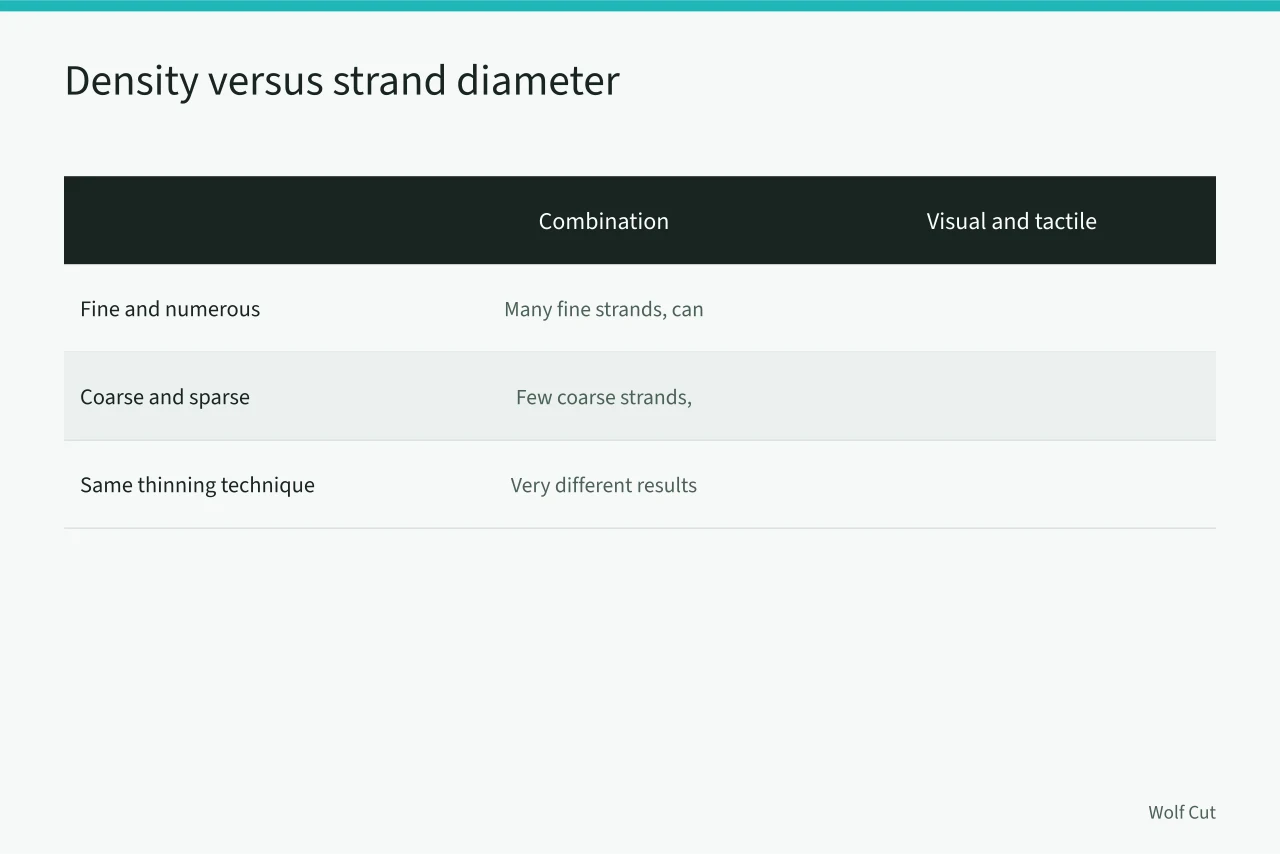
Strand diameter concerns the individual fiber. Fine strands can be numerous. Coarse strands can be sparse. Record both because the same thinning technique can create very different visual and tactile outcomes in those two combinations.
Curl is not a demographic category
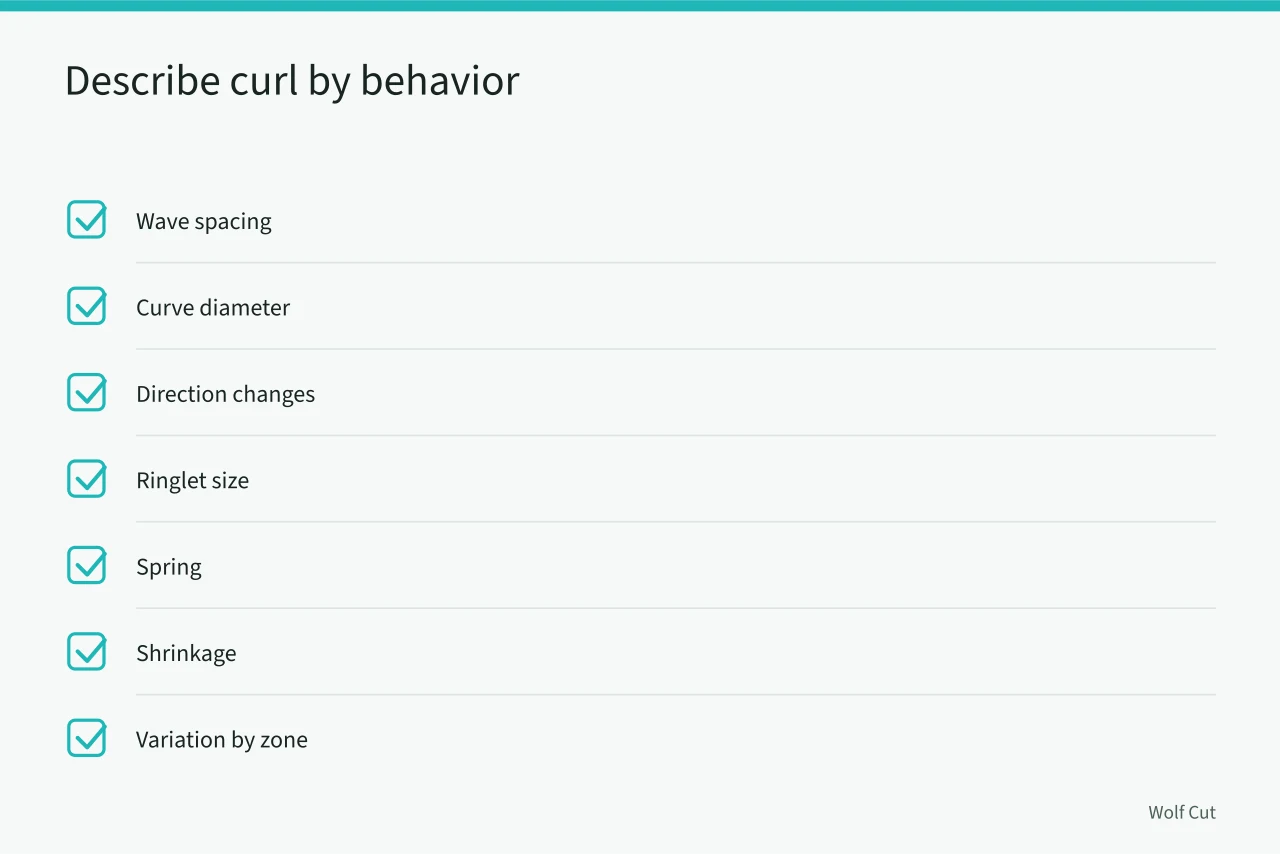
Describe what the fibers do: wave spacing, curve diameter, direction changes, ringlet size, spring, shrinkage, and variation by zone. Avoid using racial categories as cutting instructions. For curl, a shrinkage checklist records what the hair does from zone to zone.
A scientific review indexed by PubMed on variation in human hair fiber characteristics reports substantial diversity within and between broad population groups. It criticizes simple geo-racial classification.
It recommends reporting measurable traits: cross-sectional diameter or area, curl type, and color. In salon language, examine the person's actual fibers rather than predict behavior from identity.
Growth pattern is a root map
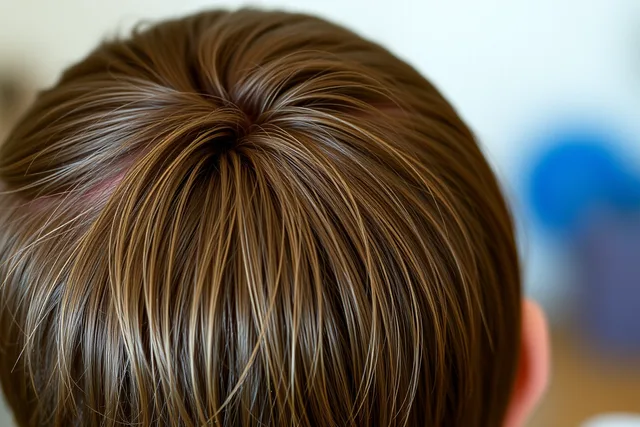
A crown whorl, forward hairline, nape swirl, or flat side growth describes direction close to the scalp. Length, gravity, curl, product, heat, and an old cut may change the visible result farther away.
For a short cut, root direction can dominate the silhouette. At longer lengths, weight may pull a strong direction flatter. Test the proposed length instead of applying a fixed rule such as "never cut a cowlick short." A head shape and movement map records the direction that test is checking.
Structure and behavior are related but not interchangeable
The NCBI's plain-language explanation of hair structure and growth distinguishes the visible shaft from the root and follicle. It explains that shaft form relates to the way hair grows.
Rounder cross sections tend to produce straighter hair; more oval sections tend to be curlier. That general relationship does not let a stylist infer every property from curl alone.
Moisture, chemical history, mechanical wear, and styling can change how a strand feels and behaves. "Dry" may describe low lubrication, product residue, surface damage, or simply the client's sensory description. Record the observation and ask relevant history before choosing tension or texturizing.
Translate observations into design
Use a matrix rather than one hair-type box:
| Zone | Density | Diameter | Curl or wave | Root direction | Condition |
|---|---|---|---|---|---|
| Front | |||||
| Crown | |||||
| Sides | |||||
| Back | |||||
| Nape |
Attach one design response to each material observation, preserving length where shrinkage or exposure demands it. Adjust section size in dense zones, reduce tension on fragile or highly elastic areas, and change elevation where a head curve would create a shelf.
Use fewer labels and more visible evidence; the pre-cut consultation and design plan is where evidence gets written down.
Common questions
Can someone have fine, dense hair?
Yes. Diameter and density measure different things.
Does one curl label describe the whole head?
Often not. Patterns and behavior can differ by zone and even within one section.
Is porosity the same as dryness?
No. Porosity concerns how the fiber takes up and releases moisture, while dryness is used for several different observations.
Why map growth direction on long hair?
It helps explain parting, crown lift, hairline splits, and what may happen if the design becomes shorter.