Features
Part of Crown shape, side weight and daily styling: the wolf cut guide
Adapting a dramatic wolf cut for low-density hair case in 2027
Low-density wolf cut case showing how a stylist protected the perimeter, moderated crown layers, controlled disconnection, tested styling, and planned maintenance.
What to take away
- This fictional case shows a decision process, not a result guarantee.
- The client kept the desired contrast without copying the reference's shortest crown.
- A protected perimeter and fuller sides mattered more than aggressive texturizing.
- The stylist tested a low-effort finish before making final adjustments.
- The record included limits and future options, not only the finished photograph.
Case brief
Maya, a fictional client, arrived with hair below the shoulders, low visual density through the sides, finer strands near the temples, and a stronger but weathered back section. Her reference showed a short, high crown, narrow sides, a full fringe, and a long wispy nape.
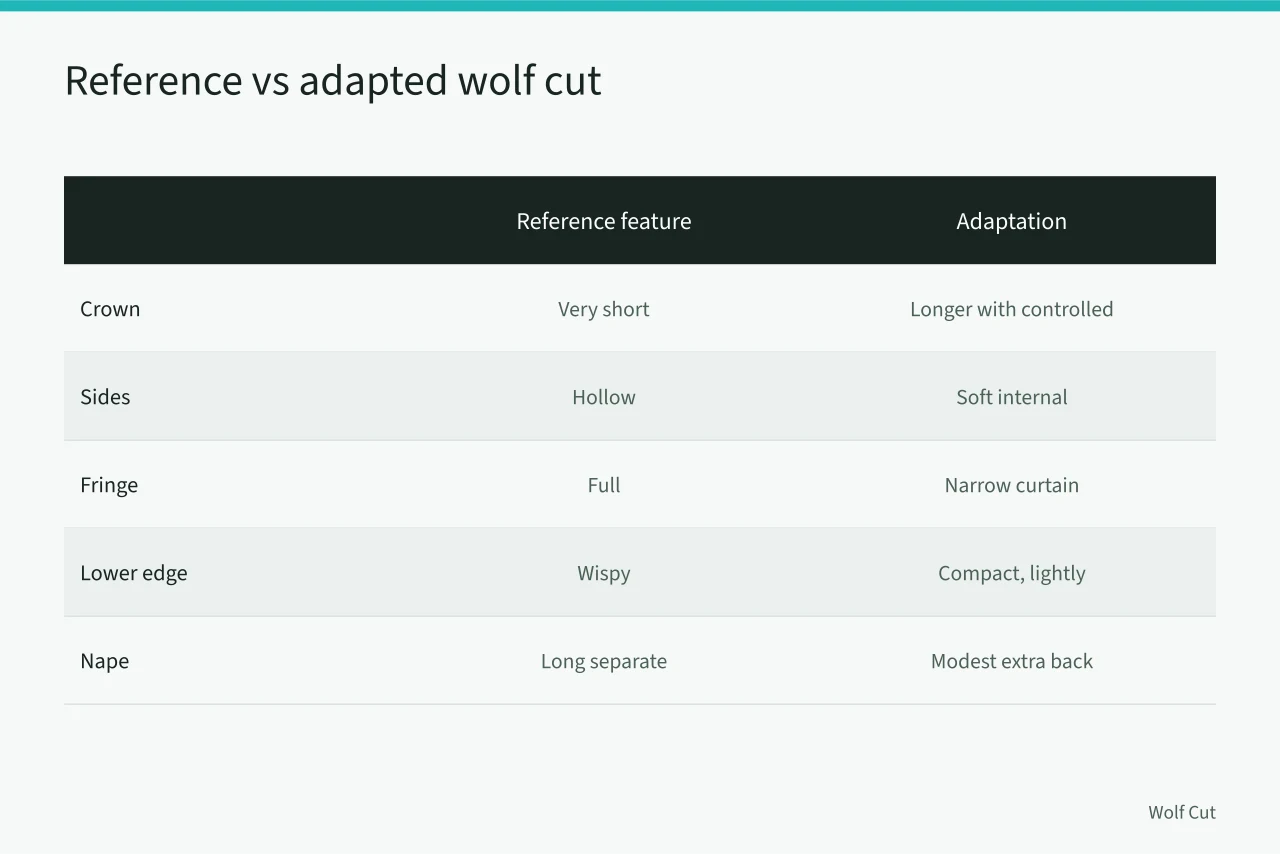
She wanted obvious movement and a new fringe but did not want the bottom to look thinner. She usually air-dried, used a diffuser on weekends, and needed enough side length to tuck behind her ears.
The conflict was clear: copying the short upper structure would remove many of the strands supporting the lower outline. The five decisions behind that structure are separated in the wolf cut guide.
Assessment
The stylist observed the hair dry, then checked it lightly misted. Density was lowest above the ears and behind the temples.
The crown had a mild split but enough hair for a longer mobile layer. The existing perimeter was uneven from normal wear and previous color work. Recording density, diameter, and texture apart makes such a map usable.
Hair length increases exposure to daily grooming and environmental wear, and the review Hair Cosmetics: An Overview describes progressive shaft weathering toward the tip. It links severe weathering with roughness, tangling, frizz, cuticle damage, and fracture.
Here, that evidence supported gentle handling and a restrained texture plan. It did not establish the cause of Maya's density or justify a medical conclusion.
The stylist also tested two fringe sections in natural fall. A dense full fringe would have borrowed too much hair from the already light temple area. Maya agreed to a narrower curtain fringe instead.
The revised design
The final plan kept the mood of the reference while changing its structure:
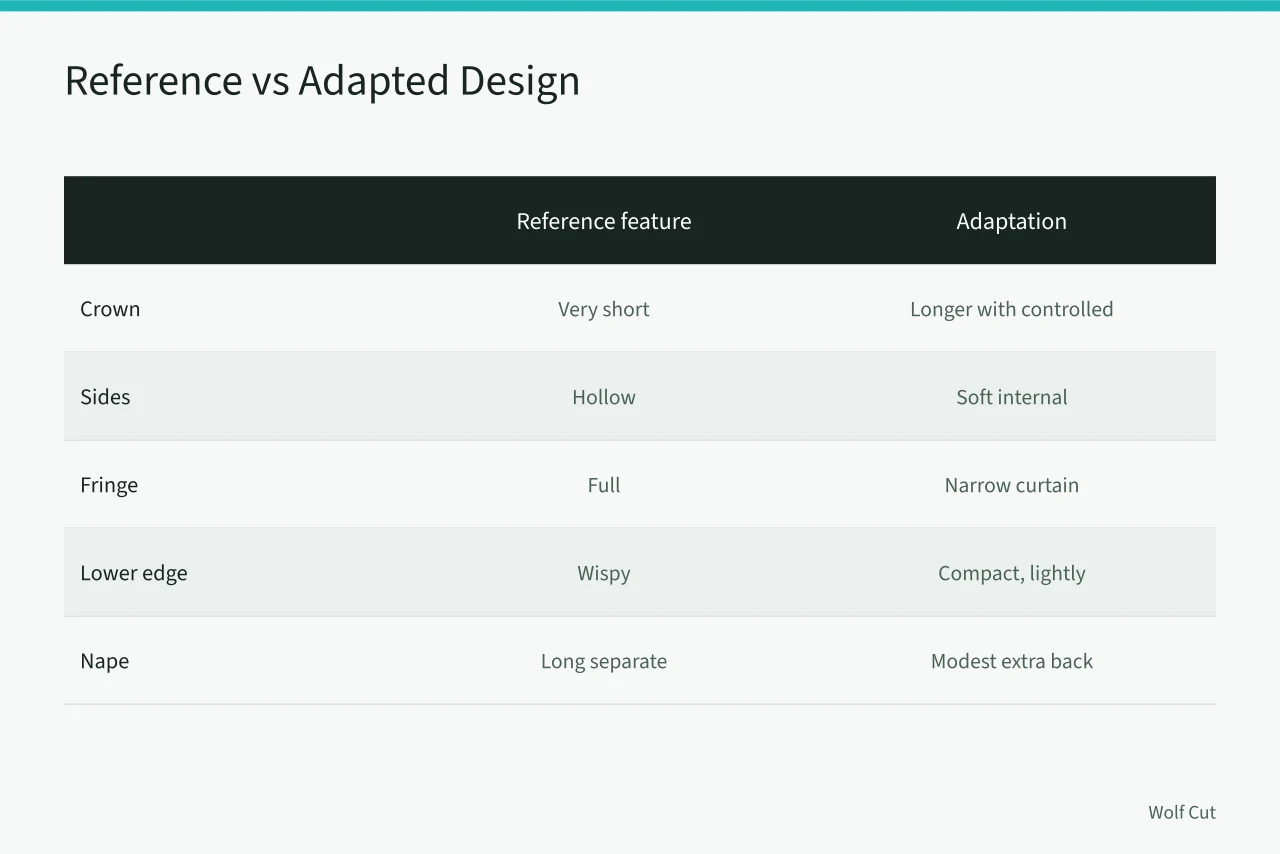
| Reference feature | Adaptation | Reason |
|---|---|---|
| Very short crown | Longer crown layer with controlled lift | Preserve coverage and prevent a split top |
| Hollow sides | Soft internal movement with full outer coverage | Keep ear-tuck function and visual density |
| Full fringe | Narrow curtain fringe | Avoid borrowing from sparse temples |
| Wispy lower edge | Compact, lightly broken perimeter | Retain the strongest available outline |
| Long separate nape | Modest extra back length | Create contrast without a thin tail |
They marked the shortest acceptable crown point and the minimum bottom length on the consultation record. Maya approved a softer interpretation rather than an exact copy. The planning route to that interpretation is the customized wolf cut plan.
Cutting sequence
The stylist began by setting the perimeter at its strongest practical line. This removed visibly worn ends without chasing a perfectly dense edge that would have required much more length.
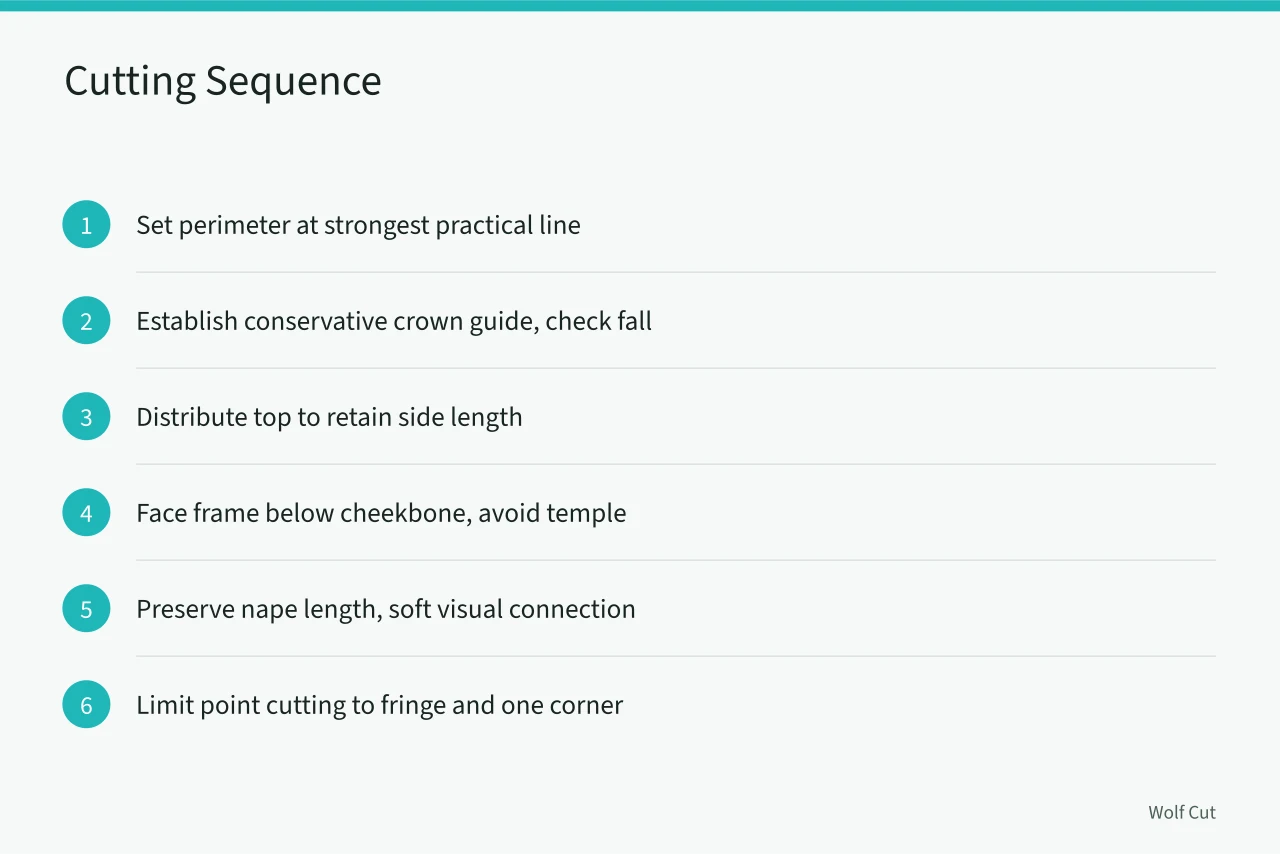
Next, a conservative crown guide was established and released. The stylist checked its fall from the front and profile before extending the layer. The top was distributed to retain more length toward the sides. Face framing began below the cheekbone and moved into the outer side without exposing the temple.
The official unit for creating layered haircut structures links layered design to client consultation, analysis of density, texture, growth, fall and movement, planned guidelines, suitable lift and distribution, consistent working state, finishing, review, and agreed remedies. Those controls explain why this case used checkpoints rather than one preset wolf-cut pattern.
At the back, the stylist preserved slightly more nape length, and a soft visual connection replaced a dramatic separate tail. The scissors created the main structure, while point cutting stayed limited to the fringe edge and one dense back corner.
No thinning shears were used through the low-density sides; restraint avoids faults collected in wolf cut layer problems.
Dry review
The first finish used only leave-in conditioner and gentle diffuser airflow. It showed enough crown movement but revealed one heavy corner behind the stronger side. The stylist softened that corner in a small section, released it, and stopped.
A second finish added a small amount of light styling product at the crown. Maya practiced lifting the roots with her fingers and directing the fringe away from her face. The stylist did not use a round-brush set because Maya would not repeat it at home.
The side view retained ear coverage. The back was visibly longer, but the perimeter did not dissolve into a few strands. The result was less extreme than the reference and more consistent with Maya's stated priorities. Naming where it landed among named layered shapes helps the next appointment start from the record.
Record and maintenance plan
The service record included:
- the protected crown and perimeter lengths;
- the narrower fringe section;
- longer side distribution;
- the soft back disconnection;
- the one area of point-cut refinement;
- the diffuser response;
- the client's decision against a thinner edge.
The stylist explained that the fringe would change first and that the crown could be shortened later if the initial version felt too quiet. The next appointment would review the air-dried photographs Maya chose to take at home. A stronger contrast remained an option, but only after seeing how the perimeter and sides behaved through normal wear.
What this case does not prove
One result cannot predict how all low-density hair will respond. Strand diameter, distribution, growth, curl, damage, styling, and personal preferences differ. Sudden or unexplained thinning is not a haircut-design question and should be assessed by a qualified clinician.
The transferable lesson is narrower: preserve the areas that create visible density, make contrast where the hair can support it, and test each irreversible change against the client's stated limits.
Common questions
Can low-density hair have a dramatic wolf cut?
Sometimes, but the placement and degree of contrast must fit the density map and the client's tolerance for a lighter perimeter.
Why was the crown left longer?
The longer guide preserved coverage around a crown split and kept more strands contributing to the overall shape.
Why avoid thinning shears on the sides?
Those zones already lacked visual density. Removing more internal hair would have worked against the agreed goal.
Could the cut become stronger later?
Yes. A staged plan lets the client test styling and perimeter behavior before consenting to shorter upper layers or narrower sides.