Guides
How to vet a wolf cut specialist in Austin before you book
Vetting a wolf cut specialist in Austin means checking a Texas cosmetology license lookup, asking the right questions, and walking away from vague answers.
What to take away
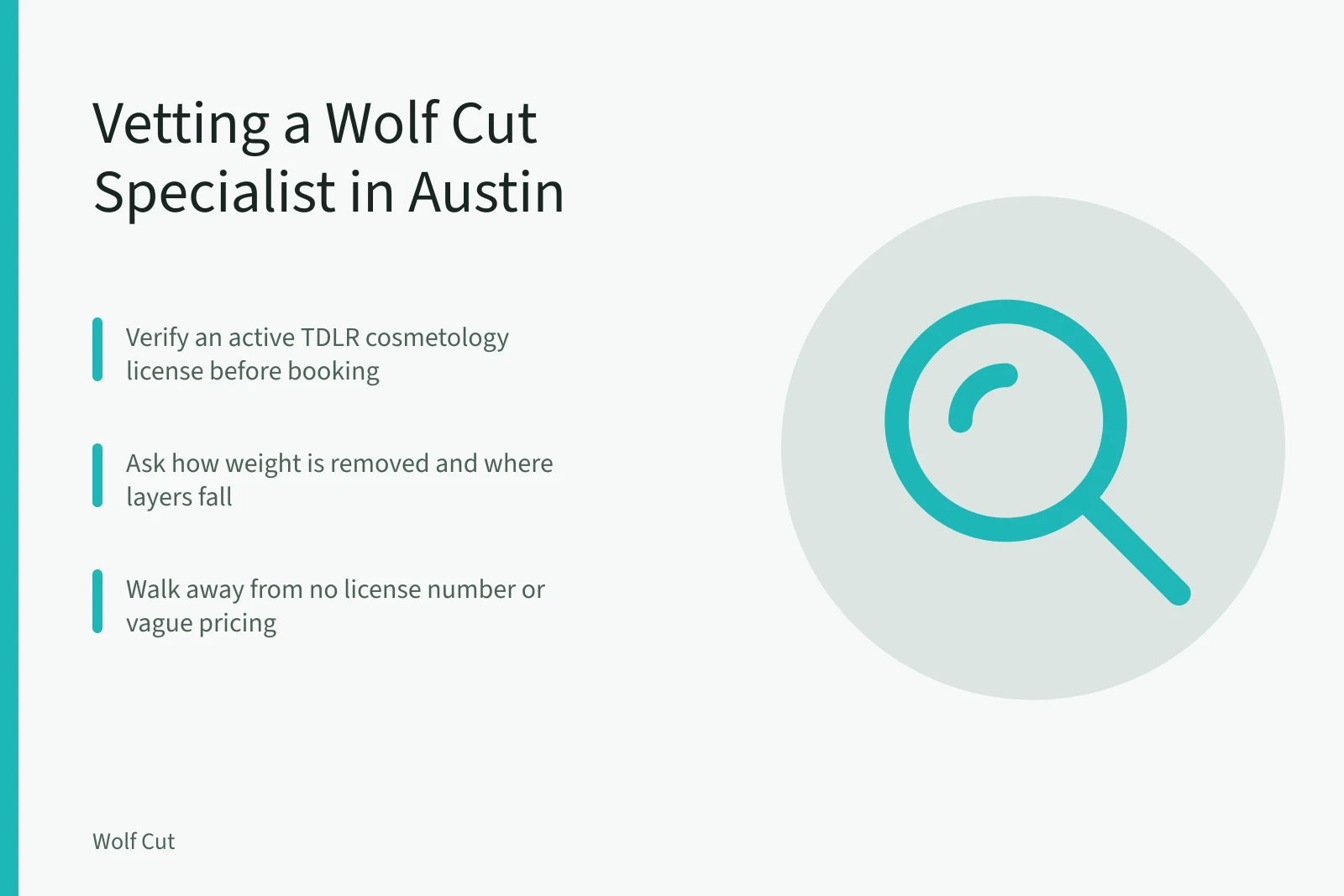
- Every stylist working on your hair in Texas must hold a current license from the Texas Department of Licensing and Regulation (TDLR). Verify the number yourself before the appointment.
- A wolf cut is a layered shape with a distinct crown and face frame. Ask how the stylist plans to remove weight before you sit down.
- Three answers should end the conversation: no license number, no dry-hair consultation, and a price quoted before anyone looks at your hair.
- Written confirmation of price, timing and any chemical add-ons protects you if the result is not what was described.
Why the license check comes first
A confident manner and a full Instagram grid prove nothing about the person holding the shears. Texas regulates haircutting, and the state publishes the record you need.
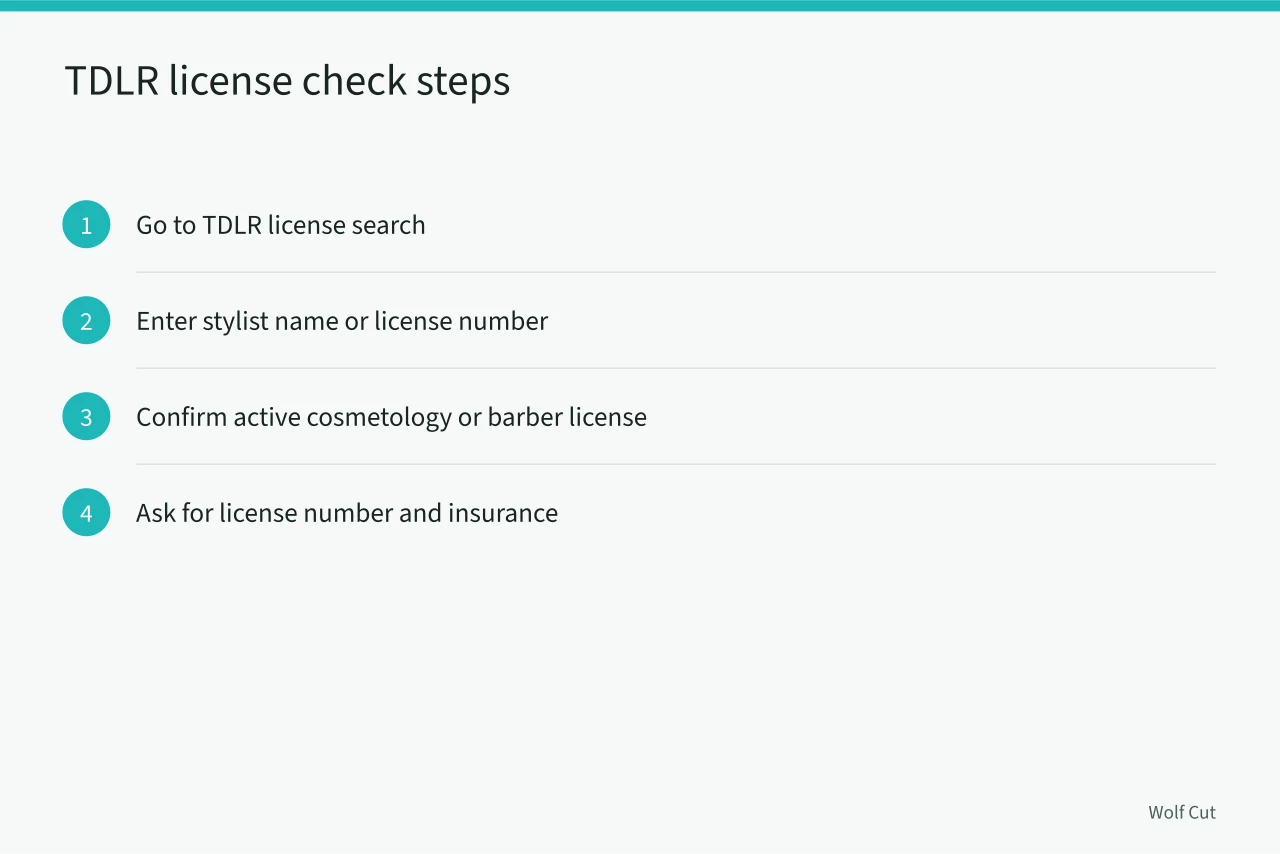
Go to the TDLR license search and enter the stylist's name or license number. You want an active cosmetology or barber license, not an expired one. The Bureau of Labor Statistics lists licensing among the standard entry requirements for barbers, hairstylists and cosmetologists, so this is a baseline, not a bonus.
If the salon cannot give you a license number, that is your answer. Independent booth renters hold their own license and their own insurance. Ask for both.
Questions to ask before you book
Write these down. Ask them the way you would ask any tradesperson about a job.
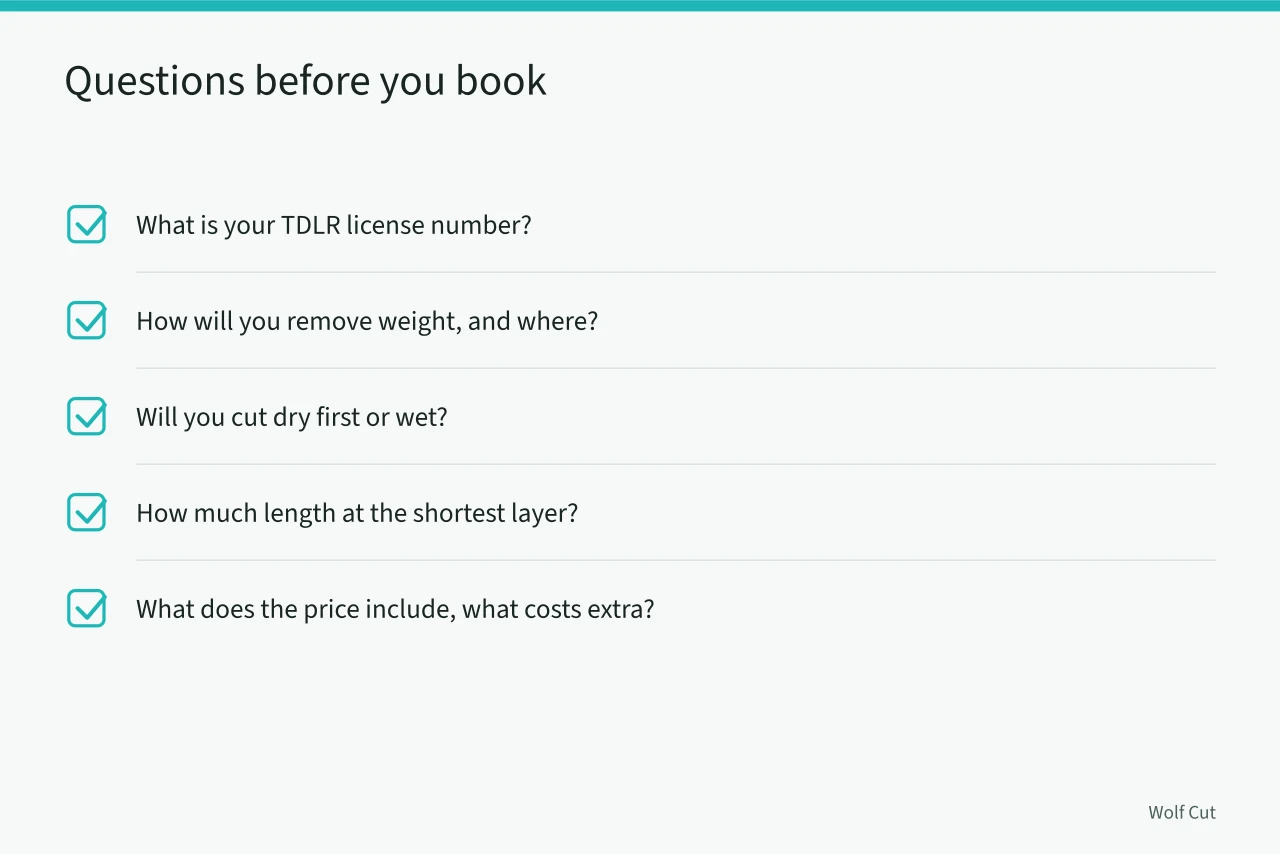
- "What is your TDLR license number?"
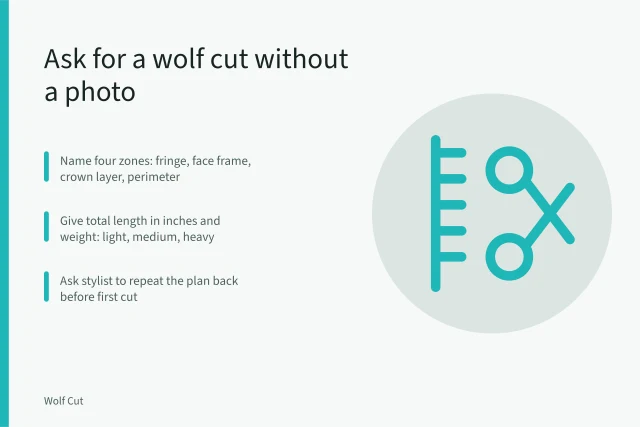
- "How do you plan to remove weight from my hair, and where?"
- "Will you cut my hair dry first, or wet the whole way through?"
- "How much length will I lose at the shortest layer?"
- "What does the price include, and what costs extra?"
A wolf cut depends on where bulk is taken out and how the layers fall once dry. A stylist who cannot describe that plan in plain words is guessing. General communication habits matter here: the person who asks about your routine and your last cut is usually the person who listens during the cut.
Ask whether the salon charges by hour or by service. Ask what happens if you want a correction within two weeks.
Evidence worth requesting
Photos help, but only photos of hair close to yours in density and pattern. A stylist with a portfolio of thick, straight hair may have never cut a wolf shape into fine or coily hair.
Ask for two or three clients whose hair matches yours and who had the cut more than a month ago. A fresh blowout hides a shape that collapses after the first wash. If you have a curl pattern, read our notes on adapting wolf cuts for curly textures before you compare portfolios.
Request the license record and a certificate of insurance. Both should be current.
Answers that should end the conversation
Some replies tell you to keep looking. Three in particular.
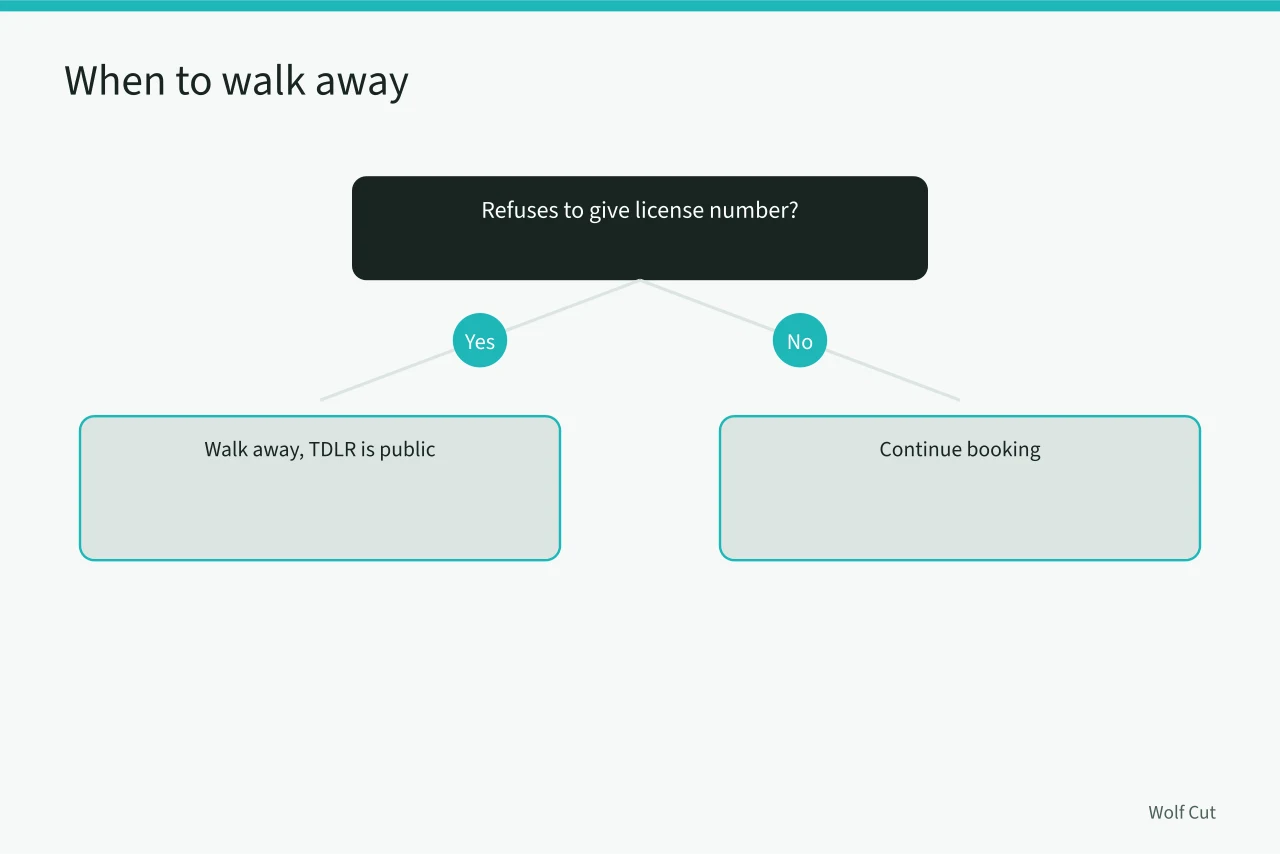
- "I have been doing this for fifteen years, I do not need to look it up." Experience is not a license number. TDLR records are public and take under a minute to check.
- "We can decide the shape when you get here." A wolf cut is a structural decision. Choosing it mid-cut usually means losing more length than you agreed to.
- "The price depends on how it turns out." A quote that moves after the fact is not a quote. Ask for the range in writing before the first snip.
A fourth reply worth noting: "I only cut wet." Some stylists finish dry, and some do not. Neither is automatically wrong, but a refusal to check the shape on dry hair is a real limitation for a layered cut.
What the booking confirmation must say
Get the details in a text or email, even for a chair rental. The message should name the service, the price or price range, the deposit, and the cancellation terms.
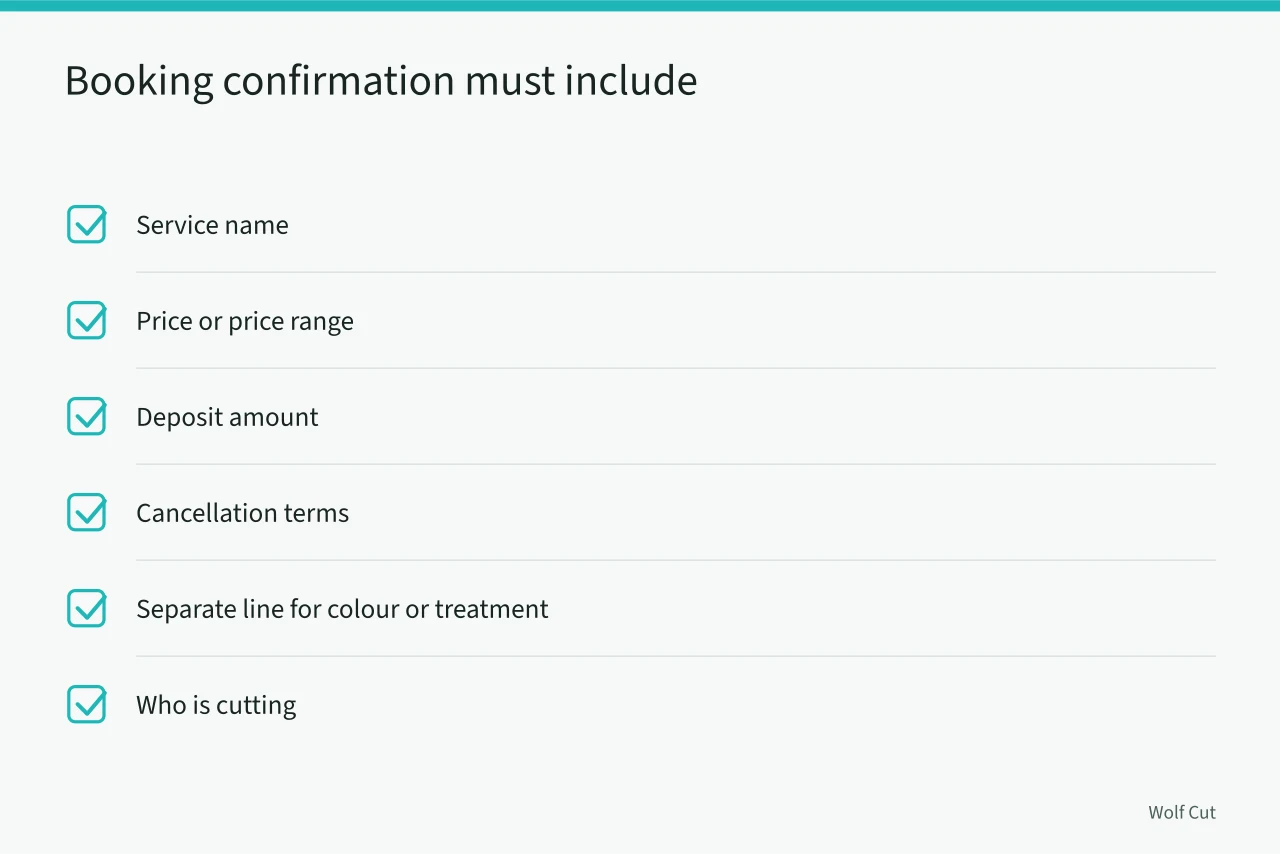
If a colour or treatment is bundled, ask for it as a separate line. A cut with a gloss is two services with two prices, and you should see both before you agree.
Confirm who is cutting. Some Austin salons book a senior stylist and assign an assistant. That is fine if you agreed to it and the price reflects it.
Example of a clean booking
A client calls a salon on South Congress. She gives her license number, describes a dry consultation first, and quotes a range for a layered cut with a face frame. She asks for a deposit and sends a text confirming the range and the two-week correction policy. The client books.
Nothing in that exchange was unusual. It was simply specific. Specific is the whole test.
Common questions
Can I check a Texas license without the stylist's number? Yes. The TDLR search accepts a name, and you can filter by city. If several people share a name, ask the salon for the number directly.
Does a barber license cover a wolf cut? Texas licenses barbers and cosmetologists separately, and both can cut hair. What matters is that the license is active and the person is insured for the service.
How far ahead should I ask these questions? At the time of booking, not in the chair. A stylist who will not answer before a deposit is taken will not answer after.
What if the cut is wrong? Return within the salon's stated correction window and describe the problem in terms of length and weight, not style words. Most disputes are about what was agreed, so keep the text.