Maintenance
Part of Haircut design fundamentals: shape, weight, texture, and movement in 2027
Pre-cut consultation and design-plan checklist for 2027
Pre-cut consultation checklist for goals, hair and scalp observations, service limits, length, shape, maintenance, consent, design notes, and final agreement.
What to take away
- Agree on visible outcomes, not only a haircut name.
- Examine the hair and scalp within professional scope before shampooing.
- Record exact length limits, styling effort, and maintenance expectations.
- Explain adaptations before cutting begins.
- Stop when a suspected condition, consent issue, or design conflict remains unresolved.
Use this checklist before each new design and whenever a returning client's goal, hair, health disclosure, or recent services have changed. The design thinking behind it is in haircut design fundamentals. Initial each applicable line and record the evidence or agreed answer. A head shape and movement map is a useful attachment to this checklist.
Client goal
- Client describes what they want to see from front, side, and back.
- Preferred shortest and longest areas identified.
- Features to reveal, soften, keep covered, or avoid discussed.
- Parting preference and flexibility stated.
- Reference images reviewed for shape, length, texture, and styling separately.
- Elements the client does not want recorded.
Hair and scalp observation
- Hair observed dry and in its arrival state.
- Density checked by zone.
- Individual strand diameter described.
- Curl, wave, shrinkage, and pattern variation noted.
- Crown, hairline, nape, and behind-ear growth directions mapped.
- Elasticity, porosity, breakage, tangling, and prior chemical work discussed.
- Extensions, hair systems, medications disclosed voluntarily, or recent procedures considered where relevant.
- Scalp observed without diagnosing a condition.
The official Hair Professional assessment plan expects consultation to cover adverse hair, skin, and scalp conditions and prior service incompatibility. It must cover lifestyle, test results, hair classification, density, and texture. It must cover elasticity, porosity, condition, and growth patterns, but stylists must work within training and local rules.
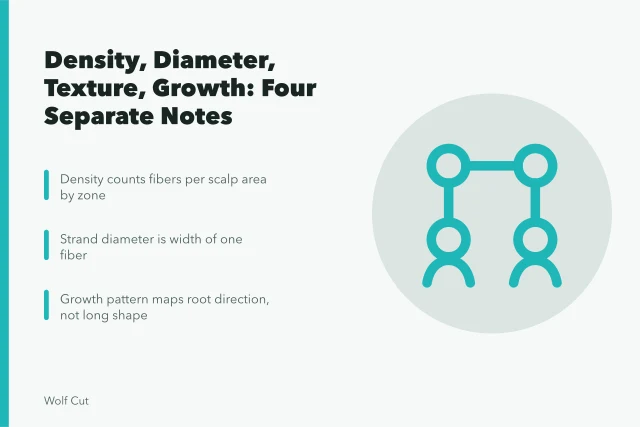
Record density, diameter, texture, and growth as separate lines, not one hair-type box.
Service suitability and boundaries
- Suspected infection, infestation, open skin, bleeding, severe irritation, or unexplained hair loss addressed under salon policy.
- Stylist has the training, tools, time, and accessible setup required.
- Proposed technique does not conflict with extensions, recent chemical work, or fragile areas.
- Alternative or referral explained when service cannot proceed safely.
- No medical diagnosis or treatment promised.
Record the exact reason for any limit in neutral language. Offer a safe next step, such as postponement, a modified service, or referral, without pressuring the client to disclose more health information than the service requires.
Lancaster City Council's barbering services code of practice treats some hair, skin, and scalp conditions as contraindications that may prevent or restrict a service. Follow the salon's current jurisdictional requirements and infection-control procedure; do not improvise a clinical judgment.
Design agreement
- Finished silhouette named in plain language.
- Perimeter length demonstrated physically.
- Fringe or front length demonstrated at natural fall.
- Crown height and side width agreed.
- Weight lines, graduation, layers, and disconnections explained.
- Intentional asymmetry marked.
- Wet-to-dry movement and shrinkage uncertainty explained.
- Expected scalp, ear, neck, or facial exposure confirmed.
Daily life and maintenance
- Typical wash and dry routine discussed.
- Available time, tools, products, dexterity, and sensory preferences discussed.
- Headwear, workplace needs, sports, climate, and sleep routine considered when relevant.
- Natural-air-dry outcome distinguished from salon finish.
- Refresh and return interval discussed without guarantee.
- Growth-out route described.
Technical plan
- Starting state chosen: dry, damp, wet, or combined.
- Primary sectioning and body position planned.
- First guideline and cutting order written.
- Elevation, distribution, tension, and cutting line assigned by zone.
- Cross-check directions selected.
- Drying method and dry-detail limits selected.
- Stop points set before fringe, crown, ears, and final perimeter.
Consent and record
- Price range and expected appointment time stated.
- Design and material limitations explained.
- Client has a chance to ask questions.
- Client agrees before irreversible length removal.
- Photography consent separate from service consent.
- Accessibility and communication preferences recorded with permission.
- Minimum necessary service note saved under the salon's privacy policy.
Final verbal check
Ask the client to describe the plan back in their own words: intended length, visible shape, maintenance, and any protected area. Correct differences before caping or shampooing. A nod to a haircut name is not enough. For a layered request, the differences between named layered shapes are worth walking through.
Common questions
Must a returning client have another consultation?
Yes. Goals, hair condition, routine, health disclosures, and previous results can change.
Is a reference photo consent to copy every detail?
No. Identify which elements the client wants and which depend on different hair, styling, lighting, or editing.
Can a stylist diagnose a scalp condition?
Not without appropriate clinical qualifications. Observe, document within policy, defer the service when needed, and refer appropriately.
When is the plan agreed?
When both parties can describe the same length, shape, exposure, styling effort, and limitations.