Rules
Part of Haircut design fundamentals: shape, weight, texture, and movement in 2027
Nine planning problems that surface before the scissors even open
Haircut planning problems guide for vague goals, conflicting photos, shrinkage, scalp warning signs, suspected lice, fragile hair, time limits, and safe responses.
What to take away
- Convert vague style words into visible shape and length decisions.
- Test shrinkage and natural movement before setting a short limit.
- Do not cut through suspected infection, infestation, open skin, or unexplained acute symptoms.
- Offer a scaled design when time, condition, or home routine cannot support the request.
- Document why a plan changed or a service stopped.
Planning problems are not invitations to guess. Pause, identify the unresolved fact, and choose a response that protects consent, health, and the intended design. For a heavily layered request, the wolf cut consultation checklist turns that pause into specific questions.
Problem: the haircut name means different things
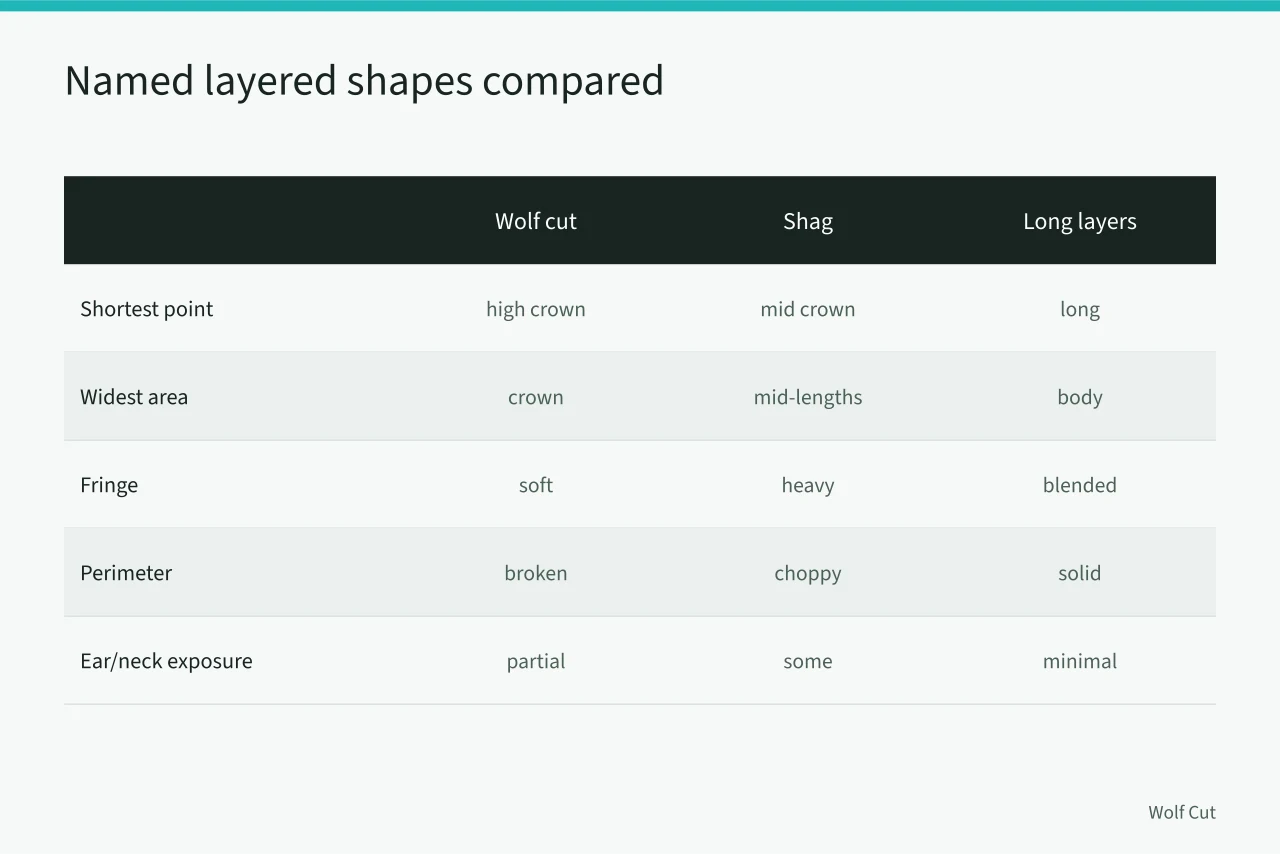
"Wolf cut," "shag," "long layers," and "taper" can describe several silhouettes. Ask the client to point to the shortest point, widest area, fringe, perimeter, and amount of ear or neck exposure. Sketch the profile or use a mirror. Confirm what must remain unchanged. The differences between named layered shapes are worth showing at that point.
Replace "make it lighter" with a choice: less visual width, less internal density, shorter layers, a weaker perimeter, or easier drying. Those are different services.
Problem: the reference photos conflict
One photo shows a compact crown, another shows high volume, and a third hides the sides. Sort images into "shape," "front," "texture," and "finish." Ask which element has priority. If two requirements cannot coexist on the current length or density, explain the conflict and offer alternatives.
Problem: wet length hides dry behavior
A wet curl, stretched coil, strong wave, or elastic fringe may finish shorter than expected. Establish a dry reference, use low or controlled tension, leave a safety margin, and dry-check before taking more. Do not promise a fixed shrinkage percentage for the entire head. A shrinkage checklist by zone records what each area actually does.
Problem: the scalp shows a warning sign
Stop manipulating the area for unexpected tenderness, burning, intense itching, pus, or open sores. Stop for marked redness, swelling, scaly bald patches, or sudden unexplained loss.
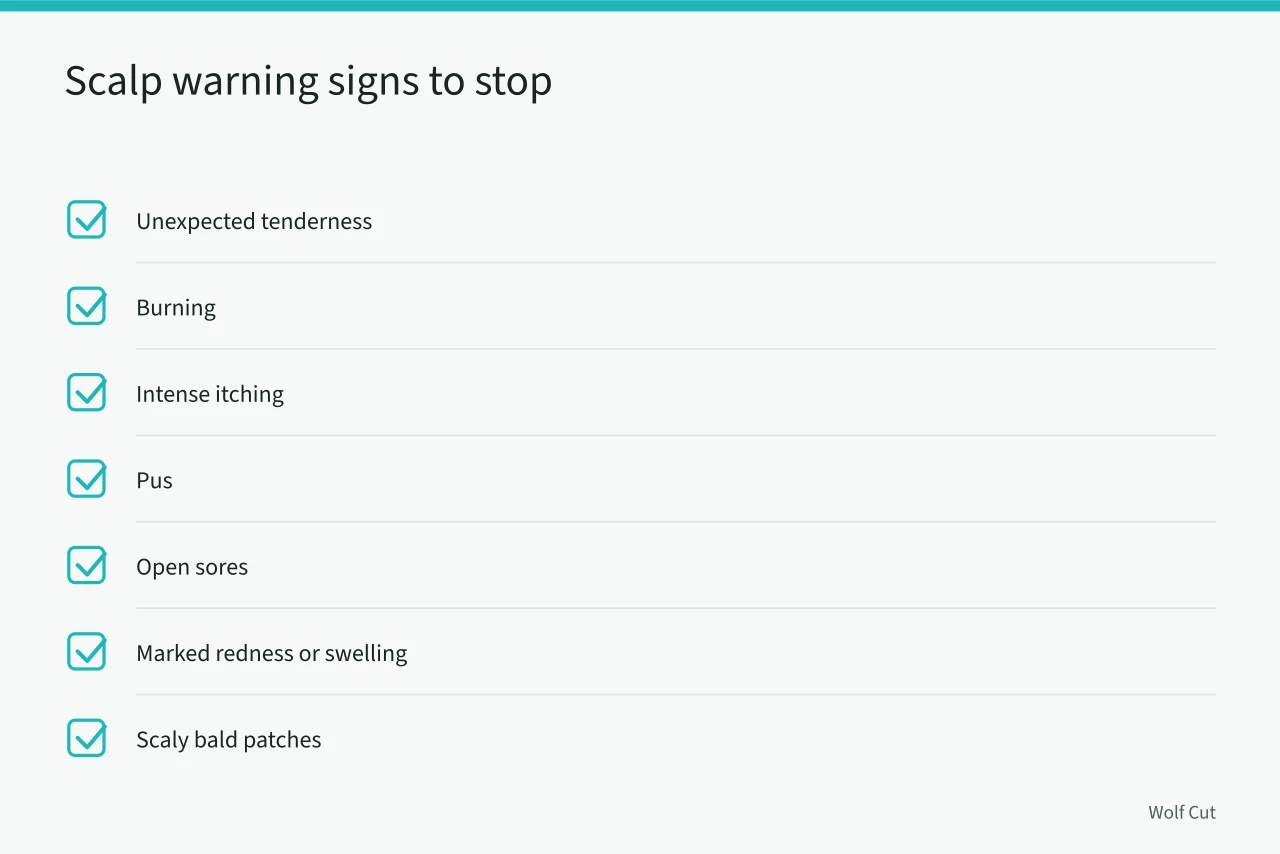
The American Academy of Dermatology lists hair-loss signs that can accompany infection or inflammation: intense itching or tenderness, scaly bald patches with sores, and redness or swelling with draining sores. A stylist can observe signs but not diagnose their cause.
Follow the salon's deferral, cleaning, documentation, and referral procedure. Phrase the note objectively: what was visible, where, what the client reported, and why the service did not proceed.
Keep the discussion discreet and avoid photographing a health concern unless policy, lawful purpose, and specific consent support it. Sanitize any contacted surface or reusable item according to the salon procedure, then record who completed the response.
Problem: suspected head lice appear
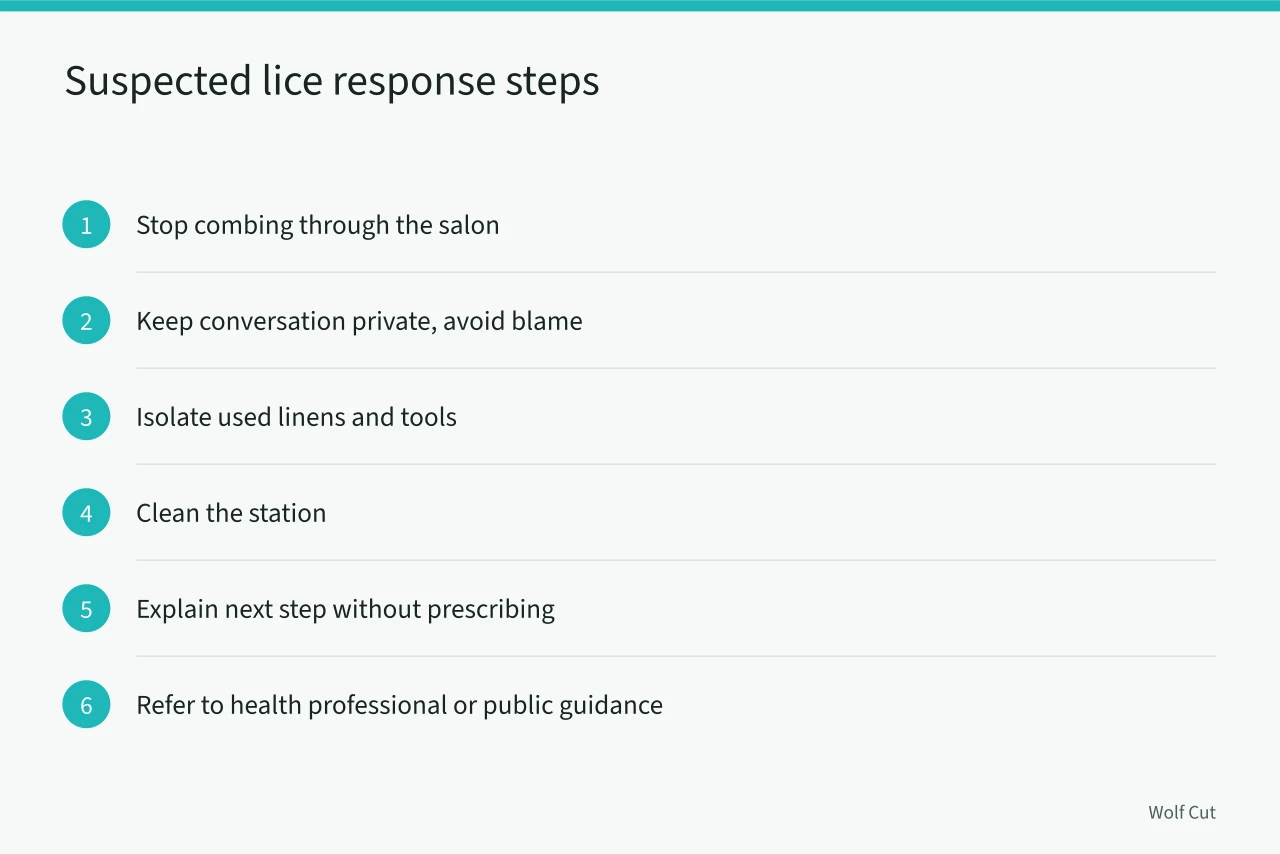
Do not continue combing through the salon. Keep the conversation private, avoid blame, isolate used linens and tools under policy, clean the station, and explain the next step without prescribing beyond your role.
The CDC's page on recognizing head lice says finding a live nymph or adult on the scalp or hair is the best way to diagnose an infestation. It distinguishes crawling lice from nits that may remain after treatment.
A stylist not qualified to diagnose should follow local salon policy. Direct the client to an appropriate health professional or evidence-based public guidance.
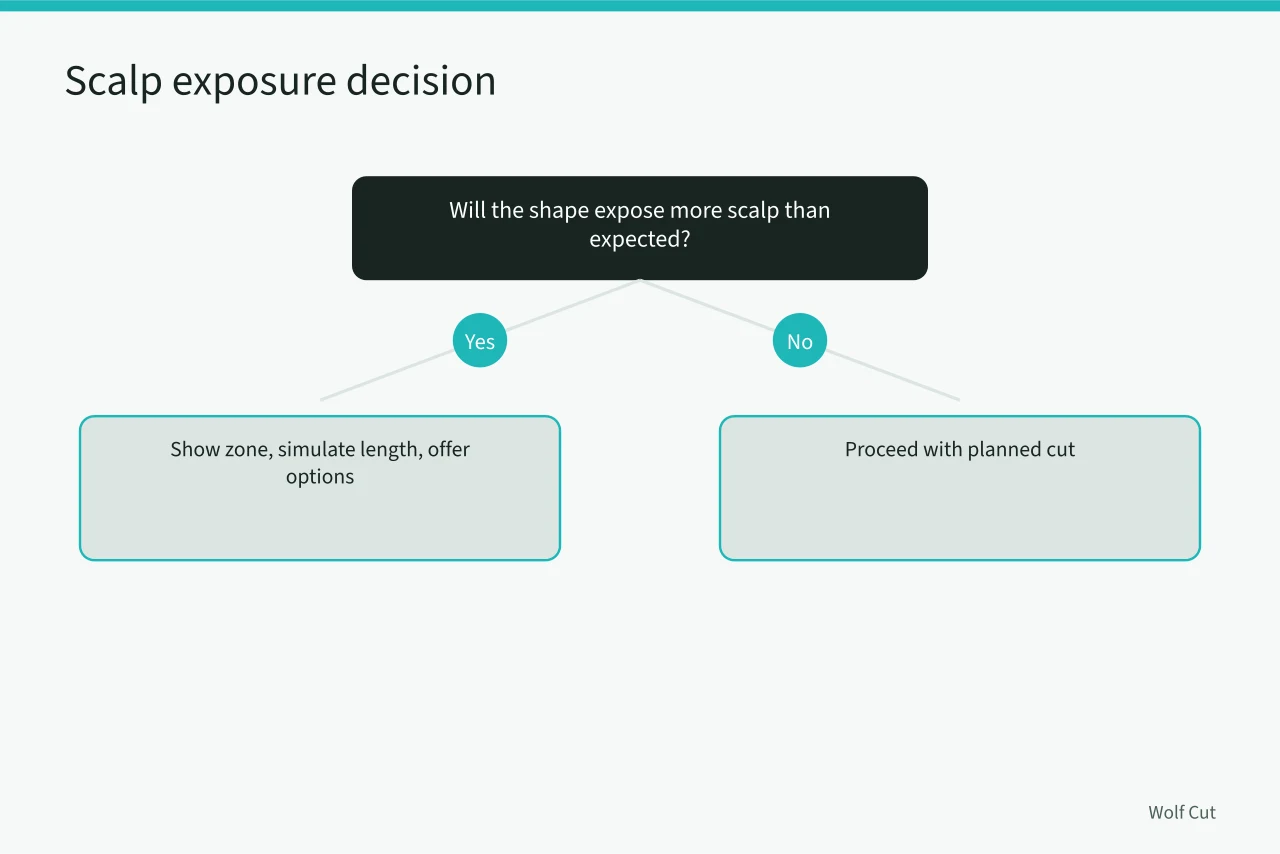
Problem: the requested shape exposes more scalp than expected
Show the client the relevant zone before cutting. Use temporary clips or a comb to simulate the proposed length. Options may include preserving more length, shifting the widest point, reducing elevation, avoiding aggressive texturizing, or choosing a staged result. Never promise that cutting will treat thinning or change growth.
Problem: the hair is too fragile for the technique
If fibers snap under gentle handling, avoid high tension, repeated razor passes, aggressive thinning, and a finish that requires excessive heat. Separate the haircut decision from any chemical service. Offer a stronger perimeter, fewer stress points, gentler preparation, or a smaller first change. Refer medical or unexplained loss concerns rather than assigning a cosmetic cause.
Problem: the client cannot reproduce the finish
Ask for the real home routine. If the reference depends on a diffuser, round brush, iron, multiple products, or daily setting, show the likely low-effort version. Redesign the cut to work acceptably in that state, or agree that the salon finish is optional rather than structural.
Problem: the appointment cannot contain the work
Do not compress consultation, sanitation, sectioning, and checking to protect a booking schedule. Scale the service, reschedule, or divide it into stages. State what can be completed safely today and what the unfinished result would look like. Obtain agreement before starting.
Problem: stylist and client still picture different outcomes
Stop before cutting. Repeat the plan using physical landmarks and mirror views. Ask the client to show the shortest acceptable point with their hand. If agreement remains unclear, decline or rebook. A pre-cut consultation and design plan is what makes that agreement checkable. A technically possible cut is not consented when the outcome is still ambiguous.
Common questions
Should the stylist continue around an irritated patch?
Not by default. Follow salon policy, consider cross-contamination and client comfort, and refer when the sign is outside professional scope.
Are nits and live lice the same finding?
No. Public-health guidance distinguishes them; do not make an unsupported diagnosis from residue alone.
Can a client waive shrinkage risk?
Consent does not remove the need for a controlled test, clear limit, and competent technique.
What if the request does not fit the appointment time?
Scale it, stage it, or reschedule it with the client's agreement.