Rules
Part of Sectioning through dry refinement: a scissor haircutting guide
8 things about scissor haircut problems worth your time
Scissor haircut problems guide for lost guidelines, holes, shelves, drift, uneven perimeters, wet-to-dry change, pushed hair, and controlled correction steps.
What to take away
- Stop following a reference once it becomes uncertain.
- Diagnose whether the error came from section, elevation, distribution, tension, or posture.
- Correct the smallest affected zone first.
- Dry and release hair before removing more to chase balance.
- Explain any design change before crossing the agreed length limit.
Most scissor-cutting errors are traceable. The repair begins by locating the last section that still matches the plan. Continuing from a guessed guide spreads the problem and reduces the length available for correction. Rebuilding one is covered in build and follow a haircut guideline.
Problem: the guideline disappears
Likely causes
- subsection is too thick;
- too little previous hair was borrowed;
- traveling guide moved too fast;
- moisture or curl obscures the reference;
- structure changed without a new guide.
Controlled response
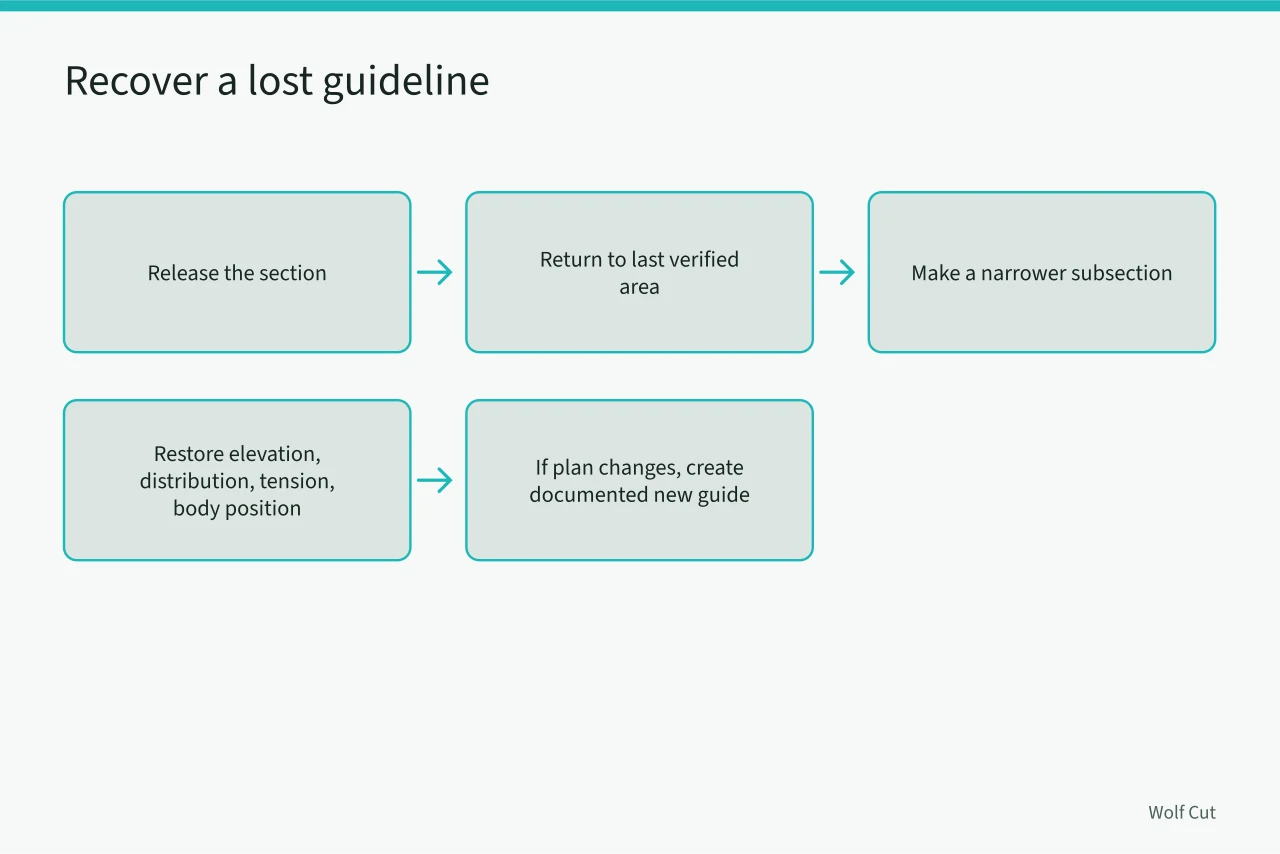
Release the section. Return to the last verified area, make a narrower subsection, and restore the original elevation, distribution, tension, and body position. If the plan changes at that point, create a documented new guide.
Problem: a hole appears inside the shape
A hole can come from deep point work, uncontrolled channel or slide cutting, excessive overdirection, a section cut from the wrong guide, or shrinkage in one zone. Do not thin the surrounding hair to make the hole look intentional. Which action created it is worth naming, as blunt, point, slide, and channel cutting sets out.
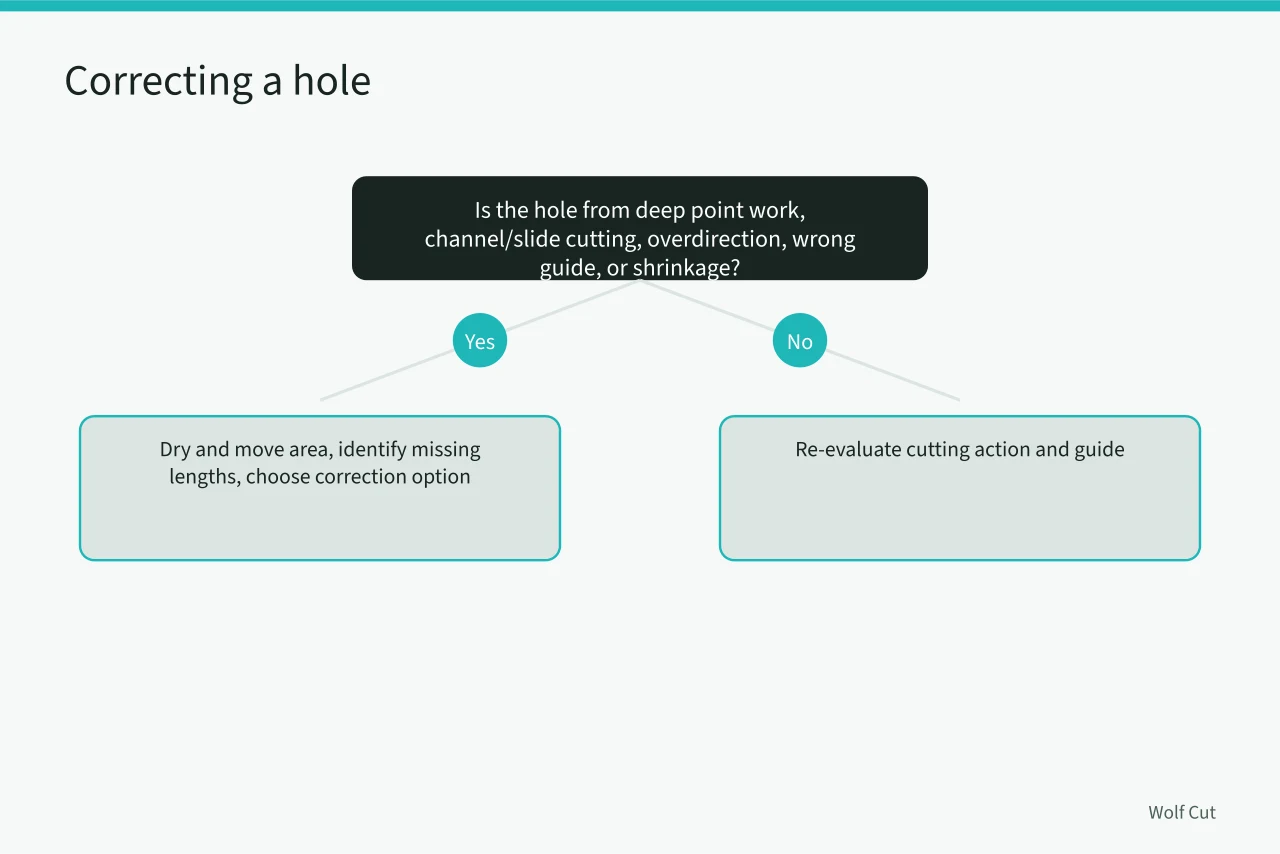
Dry and move the area. Identify exactly which lengths are missing and how the hair sits in normal use. Options include preserving surrounding length, shifting the part, creating a controlled connection, or leaving the area to grow. The client must approve any wider redesign.
Problem: a shelf forms
A shelf is an abrupt visible weight line or length jump that the design did not intend. Common causes include a sudden elevation change, inconsistent distribution, a large subsection, lost body position, or blending two structures without a transition. Those controls are set out in the scissor haircutting guide.
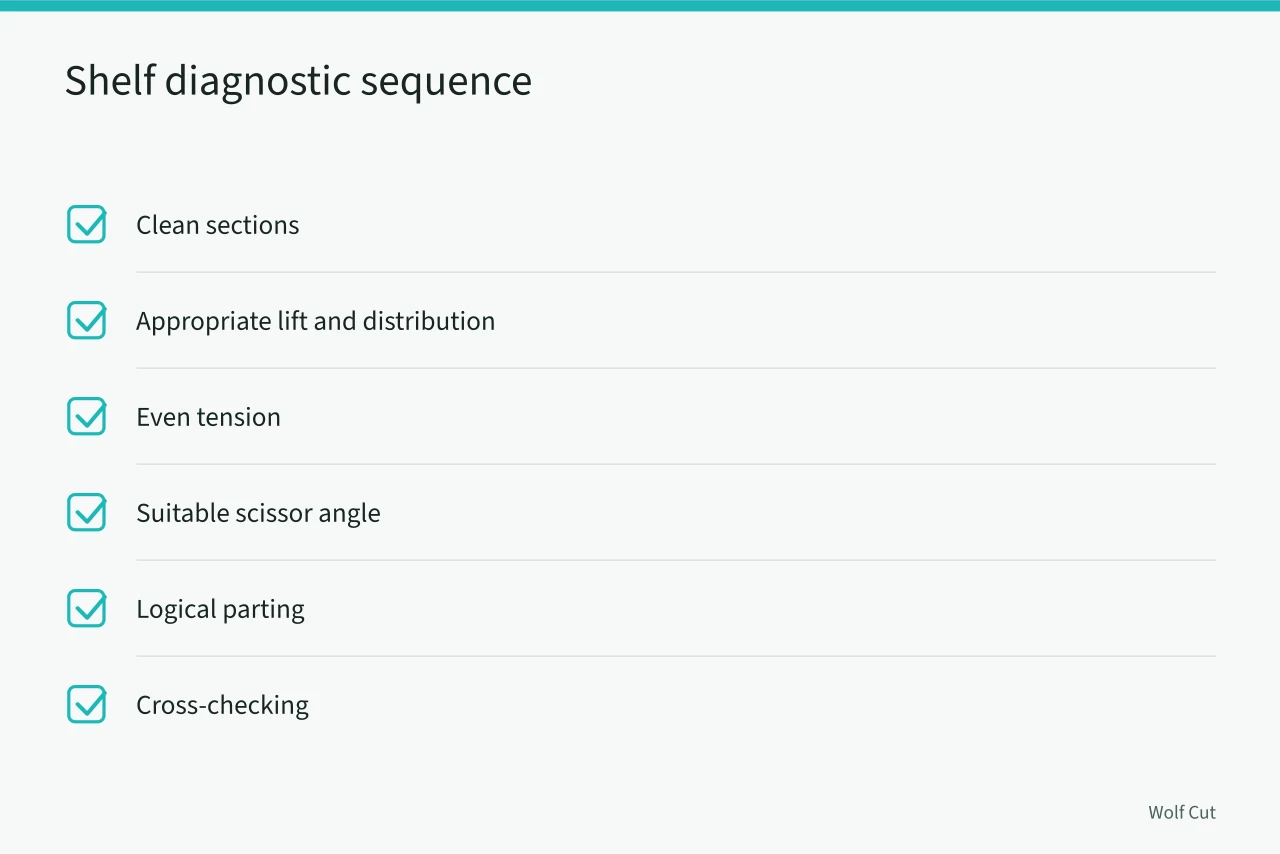
The Australian unit for creating layered haircut structures specifies clean sections, appropriate lift and distribution, even tension, suitable scissor angle, logical parting, and cross-checking. Use those variables as a diagnostic sequence. Recreate the section without cutting, compare it with the plan, and find where the relationship changes.
If enough length exists, soften the transition in small increments. If not, explain that a staged correction may preserve more overall length than cutting the entire shape up to the shelf.
Problem: the perimeter is uneven
First reset the client: centered shoulders, neutral head, natural fall, and no cape bunching under the hair. Check whether one ear sits higher, one shoulder lifts, or the hair bends against clothing. Compare stable landmarks, not the floor alone.
Release tension around ears and hairlines. Dry the perimeter if it was cut wet. Correct only the repeatable visual difference. Do not keep alternating sides until both become shorter than agreed.
Problem: a corner vanished
A square or strong outline can become round when the stylist follows the head too closely or overdirects inconsistently. Compare the sectioning map with the actual silhouette. If the corner was removed, it cannot be restored with more cutting. Preserve the remaining edge, adjust expectations, and plan growth.
Problem: the blades push hair
Check cleanliness, tension adjustment, sharpness, subsection size, and whether the hair is being compressed ahead of the blades. Do not squeeze harder to compensate for poor tool performance. Switch to a maintained shear and recut only the verified line. Tool condition and station setup belong to the scissor setup and cross-check list.
The Department for Education's hair and beauty technical content outline includes sectioning and cutting guidelines, graduation, haircut accuracy, and keeping hair damp during wet cutting. These controls support a methodical correction: restore the state and reference before changing the design.
Problem: one side dries shorter
Compare moisture, tension, curl, growth direction, and distribution on both sides. The wet cut may be technically equal while dry behavior differs, so discuss whether the goal is identical measured length or balanced visible shape.
The earlier brief should have caught this, covered in haircut planning problems. Make small dry adjustments with the agreed finish and record the asymmetrical technique needed to achieve visual balance.
Problem: repeated detailing weakens the cut
Stop, clean the visual field, and return to the design. A fringe can become too short and a perimeter too thin through many tiny "improvements." Set a final checkpoint, show the client, and end when the structure is sound.
Common questions
Can a lost guide be estimated from the other side?
Only after the design, head shape, and asymmetry are checked. Rebuild from the nearest verified section when possible.
Should a shelf always be blended out?
No. A staged correction may preserve more length, and some weight lines are intentional.
Why can equal sides look unequal when dry?
Growth direction, curl, density, head shape, posture, and styling can change the visible result.
What should happen if correction crosses the agreed limit?
Stop, explain the options and consequences, and obtain fresh agreement before cutting.