Guides
What does a wolf cut cost in Los Angeles, and what affects the price?
Wolf cut cost Los Angeles runs about $75 to $250 at a salon, and the tier of the shop drives most of that spread. Here is what each line item covers.
What to take away
- A wolf cut in Los Angeles runs roughly $75 to $250, with most chairs landing between $95 and $180.
- Neighborhood sets the floor: the Valley sits low, West Hollywood sits high, and DTLA sits between them.
- Layering, length and density drive chair time more than the name of the cut.
- Budget $40 to $90 every 8 to 12 weeks for upkeep, or the shape collapses into a shag.
- Quotes that skip a consultation, a wash or a blow-dry are not cheaper. They are shorter.
What the range covers
A Los Angeles wolf cut price is a package, not a single act. The ticket usually folds in a consultation, a shampoo, the cut itself, and a rough dry or full blow-dry. Some shops add a gloss or a texturizing spray and bill it separately.
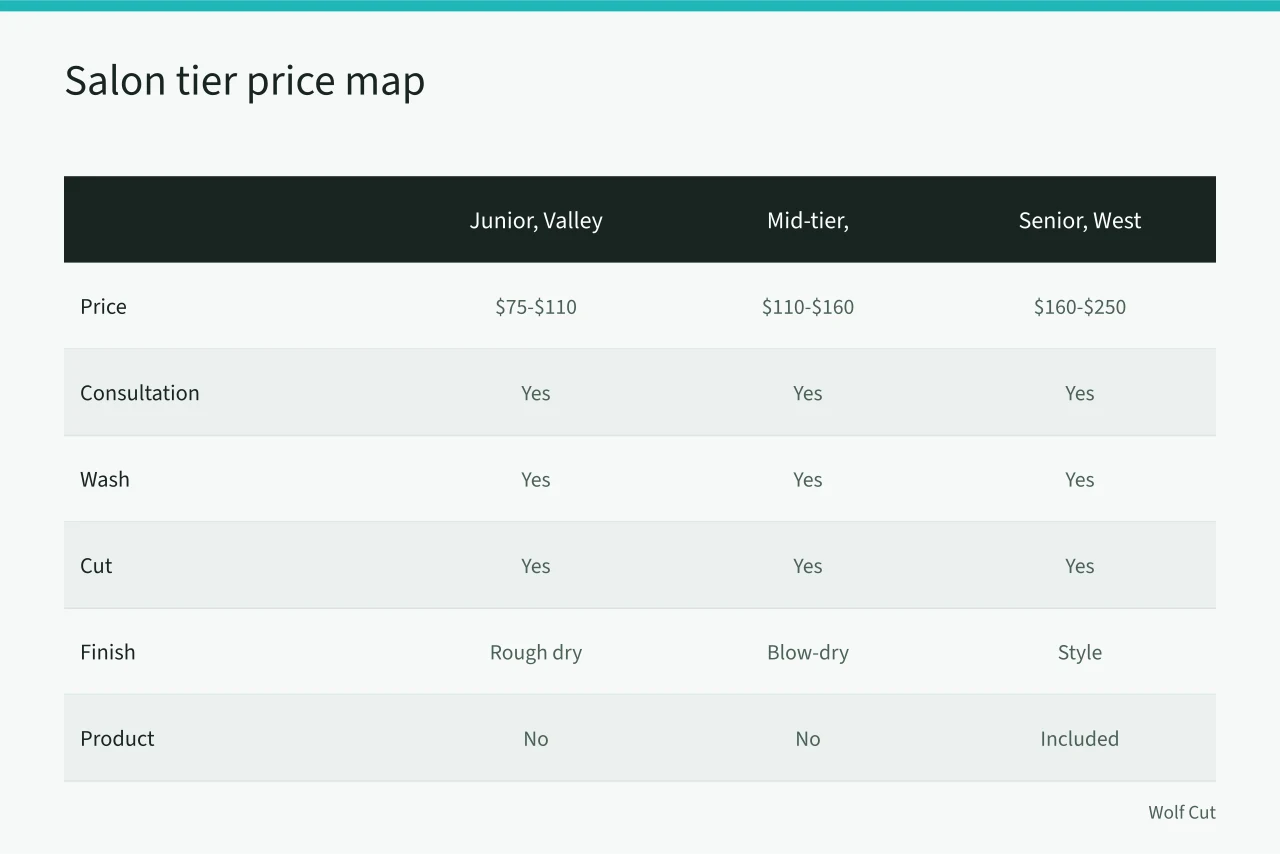
Price tracks the chair, not the trend. A junior stylist in a Valley strip mall and a senior stylist off Melrose can cut the same head of hair and charge three times apart. What changes is the rent behind them, their book of regulars, and how long they have held a California cosmetology licence.
| Salon tier and area | Typical wolf cut price | What the ticket includes |
|---|---|---|
| Junior stylist, Valley | $75 to $110 | Consultation, wash, cut, rough dry |
| Mid-tier chair, DTLA or Valley | $110 to $160 | Consultation, wash, cut, blow-dry |
| Senior stylist, West Hollywood | $160 to $250 | Consultation, wash, cut, style, product |
| Salon owner or educator | $250 and up | Full service plus a lesson in styling |
Those figures are illustrative ranges drawn from advertised menu prices across the three areas, not a survey. Treat them as a map of the terrain, not a quote.
Line by line
A wolf cut invoice has four moving parts. Each one can push the total up or down on its own.
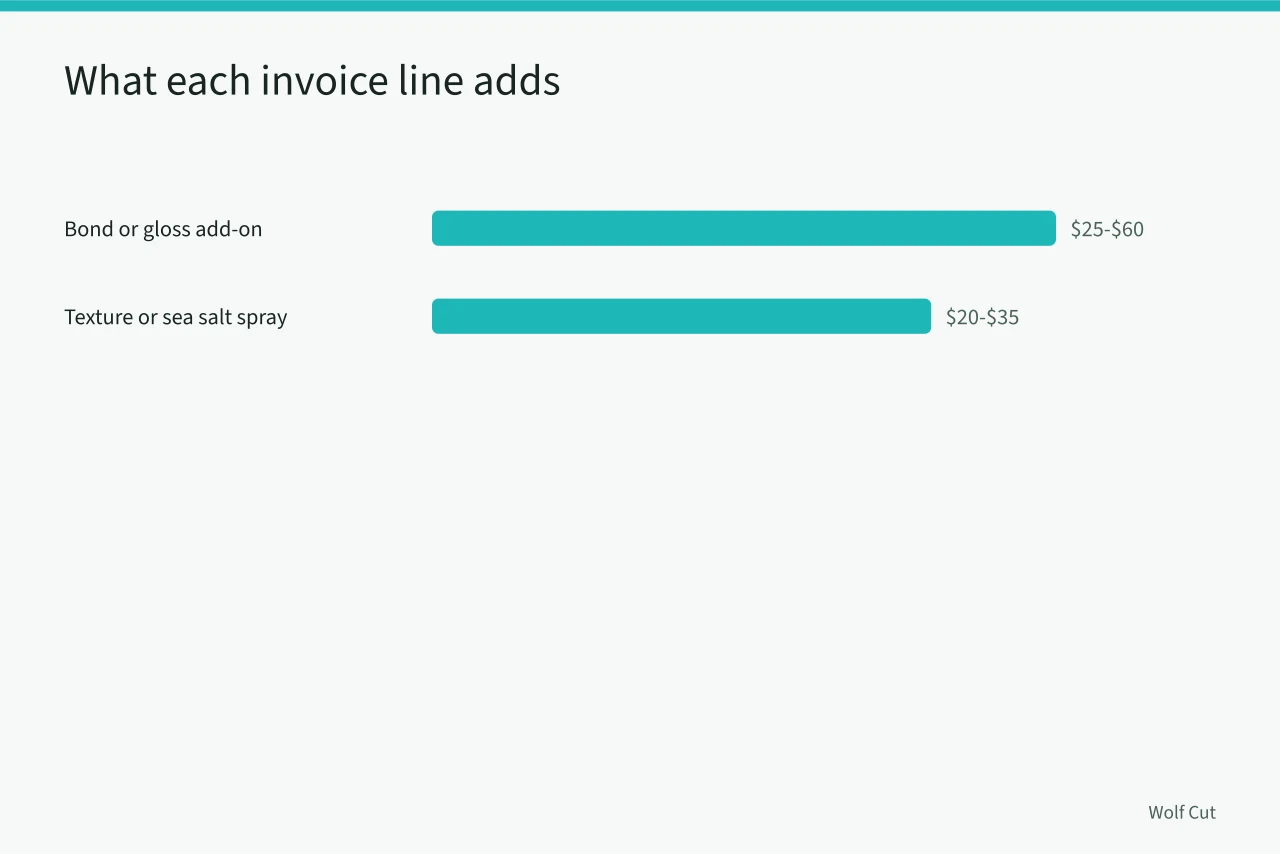
- Base cut fee. The stylist's hourly value, set by experience and demand. This is the largest line and the one most shops advertise.
- Wash and treatment. A shampoo is often included. A bond-building or gloss add-on is not, and usually adds $25 to $60.
- Blow-dry and finish. Air-dried hair hides mistakes, so most stylists insist on finishing the shape. Some charge for it.
- Product. A texture spray or sea salt mist runs $20 to $35 if you take it home.
California does not license by fee alone. A stylist needs a state licence from the Board of Barbering and Cosmetology, and that cost sits inside the chair rate. The Bureau of Labor Statistics tracks wages in this trade, which is one honest way to see why a senior chair costs more than a junior one.
What moves the number
Three drivers do most of the work, and each one is visible before you sit down.
Hair density and length. Thick, long hair takes more sectioning and more time. A wolf cut is a layered shape, so a stylist working through dense hair may add 20 to 30 minutes, and that is often $30 to $50.
Stylist seniority. A stylist with a full book and a decade behind the chair charges for access as much as skill. The gap between a junior and a senior in the same city is routinely $60 to $100.
Neighborhood rent. West Hollywood chairs pay more per square foot than Valley chairs, and the menu reflects it. If you want a sense of how regional cost of living bends service prices, Chicago offers a useful comparison point for the same trade.
A fourth factor is texture. Curly and coily hair needs dry cutting and a different section pattern, which is its own skill. The mixed-pattern curly shape case walks through how shrinkage changes the plan zone by zone, and why that work costs more.
What quotes leave out
Most phone quotes cover the cut and nothing else. Ask what happens after the wash.
- Is a blow-dry included, or billed at $30 to $50?
- Does the price change if my hair is past my shoulders?
- Is a gloss or bond treatment part of the service or an add-on?
- What is the cancellation fee, and how many hours notice does it need?
A quote that cannot name its own add-ons is not a price. It is a starting bid.
If you are weighing a wolf cut against a shorter layered shape, the fringe types compared piece sets out how much upkeep each option asks for, which matters more than the sticker price over a year.
Where people overspend
Overspending on a wolf cut rarely comes from the cut fee. It comes from the follow-up.
Buying a full product line on the first visit is the common one. One texture spray does the job. Three bottles do not make the shape last longer.
Booking a senior stylist for a shape a mid-tier chair can cut is the second. Layering is not a rare skill. If your hair is medium density and straight, a mid-tier chair in DTLA will do fine work for $110 to $160.
Ignoring the rebook window is the third. A wolf cut grows out at the layers first, and stretching past 12 weeks means paying for a correction rather than a trim. For a sense of how a damp climate changes styling and frizz control between visits, the Glasgow wolf cut climate guide is worth a read even from Los Angeles.
Common questions
Is a wolf cut more expensive than a regular layered cut? Usually by $20 to $40, because it takes longer to section and blend. The gap is time, not prestige.
Should I tip on top of the listed price? Yes, 15 to 20 percent is standard for a full service. The listed price is the stylist's fee, not their take-home.
Does a cheaper chair mean a worse cut? Not automatically. It often means less experience or lower rent. Look at their portfolio before you decide.
How often will I need to rebook to keep the shape? Every 8 to 12 weeks. Past that, the layers separate and the cut reads as a grown-out shag.