Maintenance
Part of Crown shape, side weight and daily styling: the wolf cut guide
8 things to weigh up on wolf cut consultation
Wolf cut checklist for reference images, density, shrinkage, crown and fringe decisions, cutting controls, dry checks, realistic styling, aftercare, and records.
What to take away
- Define the shape zone by zone before agreeing to the trend name.
- Check density, growth, shrinkage, condition, and existing layers in natural fall.
- Protect minimum lengths and perimeter strength with visible checkpoints.
- Review the cut before texture work and again after a realistic finish.
- Record structural choices so maintenance does not depend on memory.
Use this checklist as a salon control sheet. The shape it interrogates is described in the wolf cut guide. Adapt it to local requirements, salon policy, manufacturer instructions, and the stylist's training. A checked box should reflect a real observation or agreement, not a routine assumption. The cutting sequence that follows is in the customized wolf cut plan.
Consultation and reference images
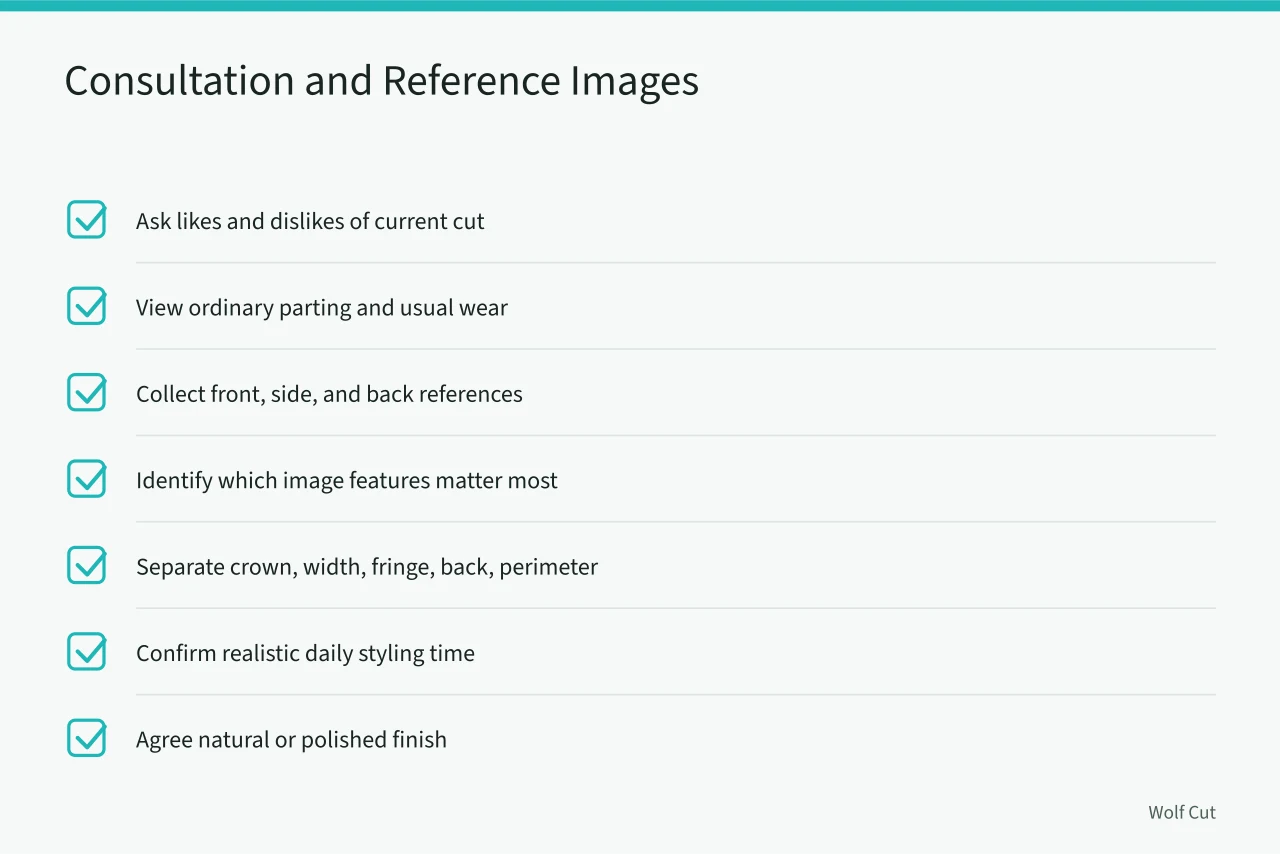
- Ask what the client likes and dislikes about the current cut.
- View the ordinary parting and the way the hair is usually worn.
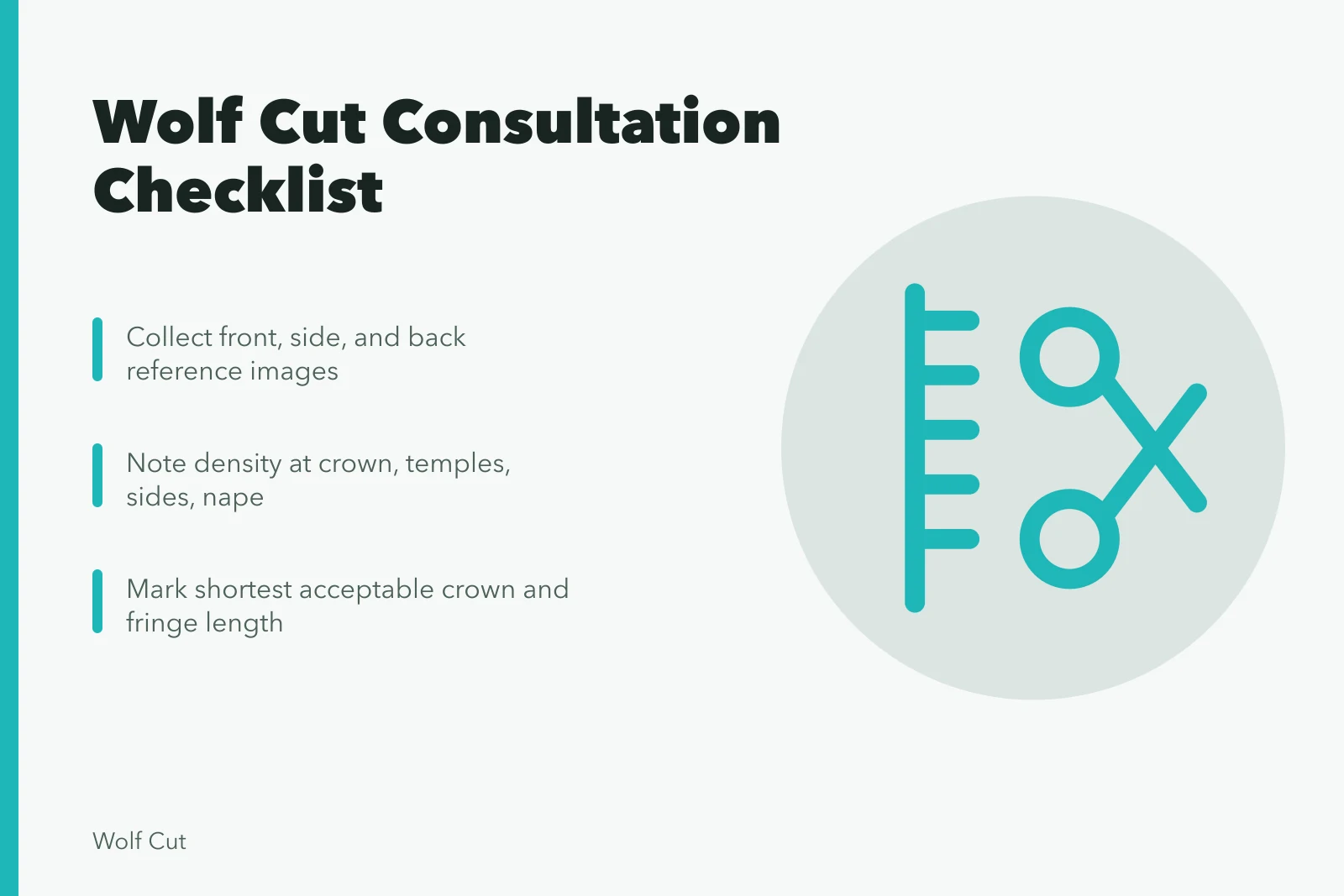
- Collect front, side, and back references where possible.
- Identify which image features matter most.
- Separate crown height, side width, fringe, back length, and perimeter.
- Discuss ear exposure, tie-back needs, eyewear, and workplace preferences.
- Confirm how much daily styling time is realistic.
- Agree whether a natural or polished finish controls the design.
The official assessment material for creative haircut design calls for research, a two-dimensional plan, client analysis, combined design features, selected techniques, and a record of preferences, adaptations, and outcomes. Those controls turn an inspiration image into a documented service. A head shape and movement map is the observation half of that record.
Hair and scalp assessment
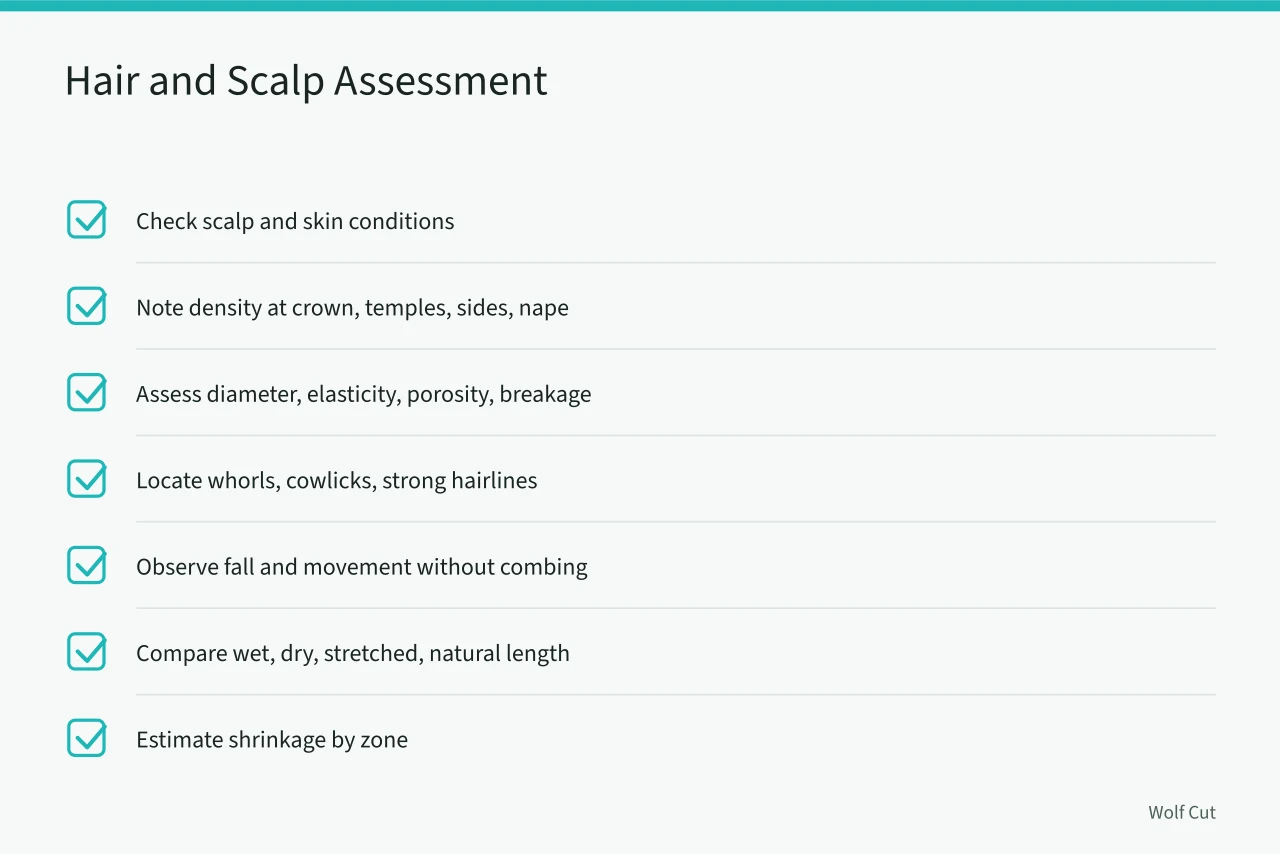
- Check scalp and skin for conditions that affect whether the service proceeds.
- Note density separately at crown, temples, sides, and nape.
- Assess strand diameter, elasticity, porosity, breakage, and chemical history.
- Locate whorls, cowlicks, strong hairlines, and recession.
- Observe fall and movement without repeated combing.
- Compare wet, dry, stretched, and natural length where relevant.
- Estimate shrinkage by zone rather than using one number.
- Identify existing disconnections, thinning, and perimeter weakness.
Pause if scalp findings are outside the stylist's scope. Do not diagnose a medical condition. Explain the service limit and refer the client to an appropriate clinician when needed.
Design agreement
- Mark the shortest acceptable crown length.
- Mark the shortest fringe or face-frame point.
- Choose full, soft, or disconnected side construction.
- Agree how much width remains above and behind the ear.
- Define the nape shape and longest back point.
- Set a minimum perimeter density.
- Name any area that will not be texturized.
- Explain likely air-dried and styled differences.
- Agree the order of irreversible changes.
Cutting setup
- Select clean, disinfected, maintained tools.
- Prepare lighting and a contrasting cape for edge checks.
- Adjust chair and client position for consistent access.
- Draw or record the zone map before sectioning.
- Choose wet, dry, or mixed working states by purpose.
- Set guides and distribution for each structural area.
- Keep protected perimeter hair separate from upper layers.
- Establish a clear stopping point before extra texture.
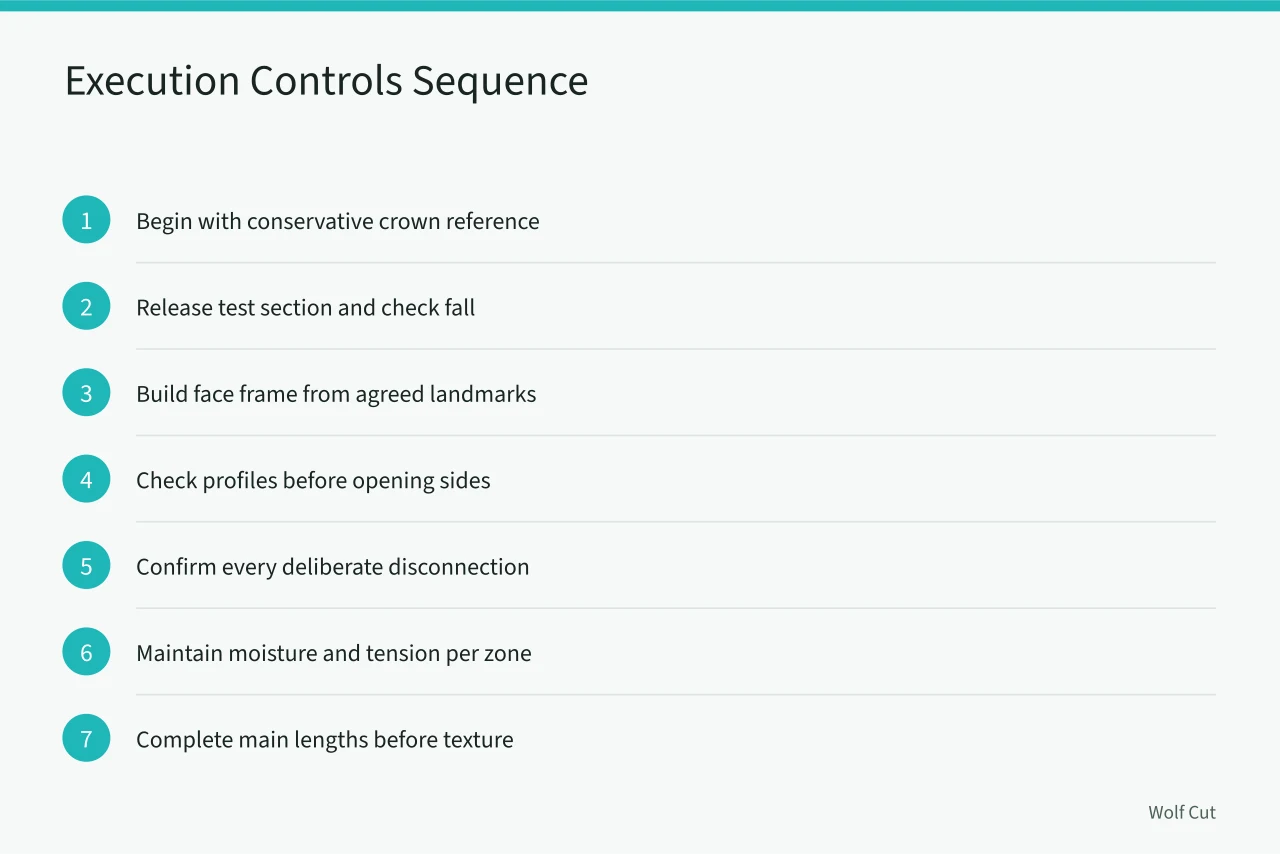
Execution controls
- Begin with a conservative crown or top reference.
- Release a test section and check natural fall.
- Build the face frame from agreed landmarks.
- Check the profiles before opening the sides further.
- Confirm every deliberate disconnection.
- Maintain consistent moisture and tension within each zone.
- Cross-check with a method suited to the planned structure.
- Stop and reassess if the perimeter becomes transparent.
- Complete main lengths before freehand texture work.
The Skills England standard for an advanced and creative hair professional includes in-depth consultation, complex hair analysis, adapted sectioning and guidelines, personalized cutting, safe work, client-specific tools and products, and evaluation. It supports checking the whole service rather than judging creativity by visual drama alone. The general version of that consultation is the pre-cut consultation and design plan.
Dry review
- Let the hair settle into its ordinary parting.
- Check front, profiles, back, crown, and overhead view.
- Compare side width and visible ear coverage.
- Test the fringe in likely partings and movement.
- Inspect the nape against the chosen outline.
- Move the hair to expose gaps or hard shelves.
- Check the perimeter against a contrasting background.
- Make small corrections before adding product.
Texture and finish
- State the purpose of each texture change.
- Avoid repeated removal from fragile or sparse areas.
- Use a product amount the client can reproduce.
- Keep heat and tension within safe, suitable limits.
- Show a practical crown and fringe routine.
- Explain what changes with air drying, diffusing, or brush work.
- Do not use styling to conceal an unbalanced structure.
Closeout and record
- Confirm satisfaction from every view.
- Record guides, distribution, connections, and disconnections.
- Record fringe, nape, perimeter, and texture decisions.
- Note dry adjustments and styling response.
- Give wash, detangling, drying, and product guidance.
- Discuss which zone is likely to need maintenance first.
- Obtain consent before taking or storing photographs.
Common questions
Is this checklist a cutting diagram?
No. It controls decisions and checks. The technical diagram must be designed for the client and intended shape.
What should be checked before texturizing?
Check the main lengths, side connection, crown balance, nape, and perimeter density in natural fall.
Should a stylist copy the reference image's sectioning?
Only if it suits the client's hair and the intended structure. The visible result matters more than an unseen pattern.
What belongs in the service record?
Record the structural plan, protected lengths, techniques, finish response, client feedback, and agreed maintenance.